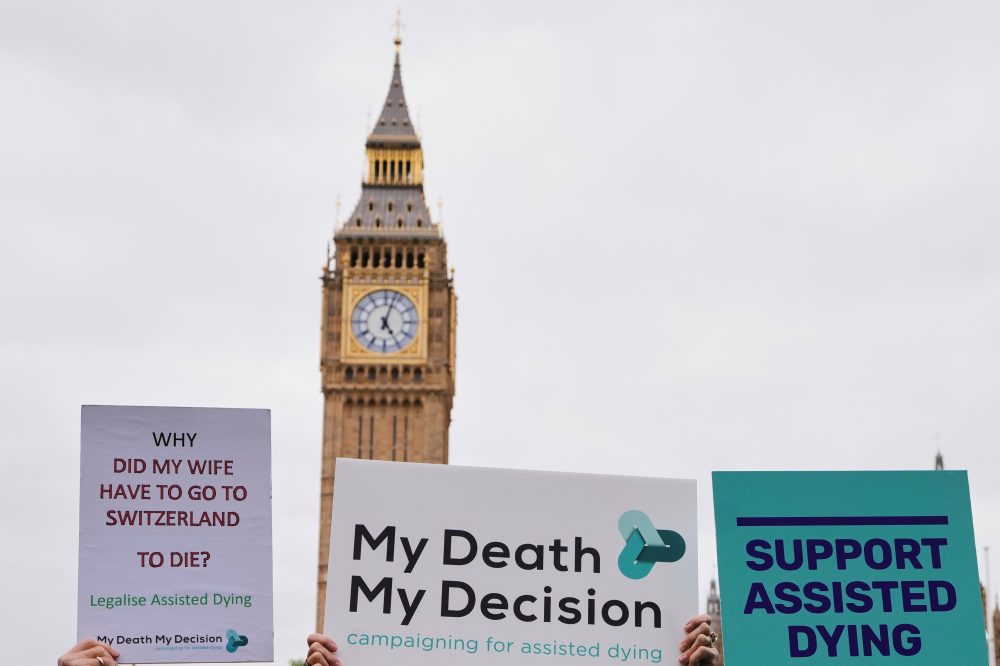

LONDON — Lawmakers in Jersey have become the second British territory to pass legislation permitting assisted dying, even as comparable measures for England and Wales remain stuck in parliamentary gridlock.
Following three days of legislative discussion, Jersey’s States Assembly approved its Assisted Dying Law Thursday with a vote of 32 in favor and 16 opposed. The measure now awaits the ceremonial sign-off from King Charles III before taking effect.
Under Jersey’s new law, terminally ill individuals who have resided on the island for at least one year may choose to end their lives if they have six months or less to live — or up to 12 months in cases involving neurodegenerative conditions. Medical doctors or registered nurses would be permitted to administer the life-ending medications.
This approach differs significantly from the stalled British Parliament legislation, which would require terminally ill individuals to self-administer approved substances rather than having medical professionals perform the procedure.
Critics of assisted dying measures contend that vulnerable populations including disabled, elderly, sick, and mentally distressed individuals might face coercion to end their lives to avoid becoming burdens on family members or society.
Jersey, home to approximately 100,000 residents and located in the English Channel near France’s northwestern coast, follows the Isle of Man in approving such legislation. The Isle of Man passed its assisted dying law in March of last year but continues waiting for royal approval, as the UK Ministry of Justice must first review the legislation.
According to government officials, the approval process can extend significantly for legislation deemed complex or sensitive, or when legal and constitutional questions arise.
Both island territories maintain self-governing status while depending on the United Kingdom for military defense and certain international relations matters.
The Terminally Ill Adults (End of Life) Bill received approval from the House of Commons in London last June but has encountered significant obstacles in the House of Lords, where more than 1,000 proposed amendments have created delays. Bill supporters characterize these amendments as deliberate obstruction tactics by opponents, while some House of Lords members argue they are conducting essential review processes to improve what they consider potentially dangerous legislation.
Welsh legislators provided their endorsement Tuesday for the UK Parliament to advance the assisted dying bill.
Scottish lawmakers are scheduled to vote on their own version of assisted dying legislation in March.