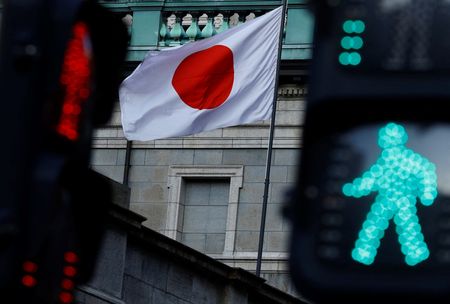

Market instability may prompt Japan’s central bank to reduce the pace at which it unwinds its enormous bond portfolio, potentially providing relief to worried investors as rising yields expose growing fiscal pressures and inflation concerns.
Three sources with knowledge of the Bank of Japan’s position say the institution maintains strict standards for direct market intervention, but could indicate plans to slow or halt its quantitative tightening efforts for the upcoming fiscal year if market conditions warrant such action.
The central bank has been gradually decreasing its bond portfolio, which stands at approximately 500 trillion yen ($3.14 trillion), since 2024 under Governor Kazuo Ueda as part of initiatives to return monetary policy to normal following years of extremely low interest rates.
Market observers anticipate the BOJ will raise interest rates during its June 15-16 meeting to address rising inflation, though it may indicate a more measured approach to reducing bond purchases given growing global economic uncertainty.
Officials have not yet determined the specific timeline for reducing purchases, but the central bank sees no urgency in shrinking its substantial balance sheet during periods of market volatility, according to the sources.
“The BOJ’s bond holdings have decreased quite a bit, so there could be a case to pause its taper to provide sufficient liquidity,” one of the sources said.
“A slowdown or pause in taper won’t be ruled out, especially if markets remain jittery,” another source said, a view echoed by a third source. The sources spoke on condition of anonymity as they were not authorised to comment publicly.
During the June policy meeting, the BOJ will examine its current bond reduction strategy that extends through March of next year and establish a new framework for fiscal 2027.
The central bank has gathered feedback from bond investors and will conduct two days of meetings starting Thursday to gather their perspectives on the preferred rate of bond purchasing. This input will significantly influence the final tapering decision.
The choice will challenge Ueda’s commitment to implementing a gradual but consistent exit from the extensive stimulus program that started in 2024.
The BOJ will probably maintain its current reduction plan through March and sees no immediate need for emergency bond purchasing operations – a mechanism reserved for addressing “rapid rises in long-term interest rates,” the sources indicated.
There is little justification for intervention when yields move based on fundamental factors like investor perspectives on fiscal and monetary policy, which demonstrates healthy market operation, they explained.
Market intervention could prove expensive by revealing the BOJ’s threshold and forcing it to defend that level through massive purchasing, analysts note.
“It’s a risky step that could backfire if markets perceive it as debt monetisation,” said Katsutoshi Inadome, senior bond strategist at Sumitomo Mitsui Trust Asset Management. “I don’t think we’re at a stage where the BOJ would intervene.”
The primary concern for markets involves how the recent bond market decline might impact the BOJ’s reduction plans for fiscal 2027 and beyond.
Through its quantitative tightening program launched in 2024, the BOJ has been steadily decreasing monthly bond purchases and currently reduces monthly buying by approximately 200 billion yen each quarter.
Analysts monitoring the BOJ identify three possible approaches: halting the reduction and maintaining purchases at the current level of roughly 2 trillion yen monthly, continuing to decrease monthly buying by 200 billion yen quarterly, or implementing a smaller reduction of 100 billion yen.
A halt would demonstrate the BOJ’s commitment to calming market anxiety. Continuing the current 200-billion-yen quarterly reduction would emphasize its intention to steadily advance quantitative tightening. Finding middle ground could mean slowing to 100 billion yen per quarter.
“With the bond market so unstable, my bet is that the BOJ will pause tapering,” said Naomi Muguruma, chief bond strategist at Mitsubishi UFJ Morgan Stanley Securities. Inadome sees a good chance the BOJ will taper at 100 billion yen per quarter.
The BOJ has stated that its quantitative tightening program does not affect short-term rates, which remain the primary tool of its monetary policy.
Simultaneously, the BOJ might halt or slow the reduction process if it chooses to increase short-term rates in June, to prevent appearing to tighten funding conditions excessively.
The Organization for Economic Co-operation and Development warned last week about risks related to the decreasing percentage of government bonds held by banks, insurance companies and pension funds following years of low rates.
The natural expiration of maturing bonds annually has caused the BOJ’s holdings to drop nearly 20% from their peak of around 590 trillion yen in late 2023.
However, the BOJ continues to own 49% of all government bonds available in the market, making its decisions extremely influential on yields and the cost of financing the country’s substantial debt.
Demonstrating the delicate nature surrounding quantitative tightening, even hawkish BOJ board member Hajime Takata has cautioned about bond market fragility.
“Since the reduction in purchases in effect supplies the market with JGBs, it’s necessary … to ensure stability and thereby avoid causing excessive volatility,” Takata said in February. “If such volatility were to occur, the JGB market may see a deterioration in functioning or become dysfunctional.”