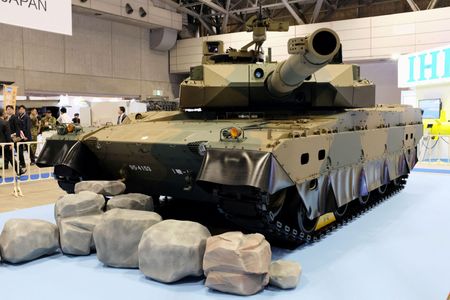

TOKYO – Over the past ten years, Japan has systematically removed some of the globe’s most restrictive weapons export prohibitions, marking a significant departure from the post-World War II pacifist approach that previously guided its defense policies.
The transformation began in 2014 when former Prime Minister Shinzo Abe eliminated an almost complete prohibition on arms exports that had been in effect since 1976. The new policy permitted certain transfers for humanitarian aid and international cooperation that would strengthen Japan’s security, along with collaborative development projects.
Two years later, the Philippines became the first nation to lease five previously-owned TC-90 training aircraft for maritime surveillance missions over the contested South China Sea, representing the initial major military equipment transfer following the policy revision.
However, Japan’s export aspirations faced an early disappointment in 2016 when Australia turned down a Japanese government-supported $40 billion proposal from Mitsubishi Heavy Industries to provide sophisticated diesel submarines. Australia instead chose a competing French design.
A breakthrough came in 2020 when Mitsubishi Electric achieved a historic milestone as the first Japanese corporation to sell brand-new defense equipment internationally, securing a contract to provide air-surveillance radar systems to the Philippines.
Japan’s defense collaboration expanded significantly in 2022 when it partnered with Britain and Italy in the Global Combat Air Programme, aimed at developing an advanced stealth fighter aircraft by the mid-2030s. This marked Japan’s first major joint defense initiative without U.S. involvement.
In 2023, Tokyo created the Overseas Security Assistance program, a framework for providing military support to allied nations in Southeast Asia and the Pacific region. This initiative has delivered patrol vessels to Indonesia and Bangladesh, unmanned aircraft to Tonga and Sri Lanka, and radar technology to Djibouti and the Philippines.
The same year brought the first modification to the 2014 export regulations, permitting equipment manufactured under license to be sold back to the originating country. This adjustment allowed Mitsubishi Heavy Industries to provide Patriot air defense systems to the United States, indirectly supporting Washington’s efforts to arm Ukraine.
A subsequent adjustment in 2024 authorized future international sales of the GCAP fighter aircraft, while maintaining restrictions on exports to nations engaged in active conflicts.
Japan achieved its largest military export success in 2025 when Australia selected an enhanced version of Mitsubishi Heavy Industries’ Mogami-class frigate in a $7 billion contract for 11 vessels to replace its aging Anzac-class fleet.
Also in 2025, Japan announced it would double OSA funding to partner nations, including several facing maritime pressure from China.
Looking ahead to 2026, Prime Minister Sanae Takaichi’s governing party recommended in April eliminating restrictions that currently limit arms sales to five categories: transportation, relief and rescue operations, early warning systems, surveillance, and mine clearance. These modifications, expected to receive government approval this month, will maintain the prohibition on conflict zone exports except under extraordinary circumstances.