
Iranian leadership announced Saturday that future diplomatic discussions with the United States remain on hold until both nations can establish a preliminary agreement framework.
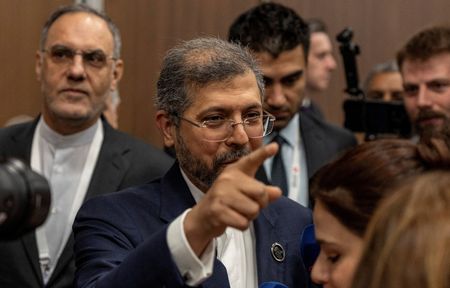
Deputy Foreign Minister Saeed Khatibzadeh made the announcement during a diplomatic conference in Antalya, Turkey, following last weekend’s unsuccessful high-level meetings in Islamabad – the most significant US-Iran diplomatic engagement since Iran’s 1979 Islamic Revolution.
“We are now focusing on finalising the framework of understanding between two sides. We don’t want to enter into any negotiation or meeting which is doomed to fail and which can be a pretext for another round of escalation,” Khatibzadeh told reporters at the Turkish forum.
While President Donald Trump indicated to Reuters that additional direct discussions might occur this weekend, diplomatic sources expressed skepticism about the logistical feasibility of reconvening in Islamabad.
Khatibzadeh explained that substantial advancement occurred during previous talks, but attributed the breakdown to what he characterized as unreasonable American positions regarding Iran’s nuclear activities.
“Until we agree the framework, we cannot set the date… There was significant progress made actually. But then the maximalist approach by the other side, trying to make Iran an exception from international law prevented us to reach an agreement,” he stated.
The Iranian official emphasized his country’s commitment to operating within established international legal boundaries.
“I have to be very crystal clear that Iran would not accept to be an exception from the international law. Anything that we are going to be committed will be within the international regulations and international law,” Khatibzadeh declared.
Addressing questions about the Strait of Hormuz situation, Khatibzadeh confirmed Iran had initially agreed to permit commercial vessel passage following Thursday’s US-mediated 10-day ceasefire between Israel and Lebanon.
However, he accused American officials of undermining that arrangement by attempting to exclude Iranian vessels from the safe passage agreement.
“The other side, the American side, tried to sabotage that by saying that it is open except for Iranians. So that was the reason we said that ‘if you are going to violate the ceasefire terms and conditions, if Americans are not going to honour their words, there will be repercussions for them’,” Khatibzadeh explained.