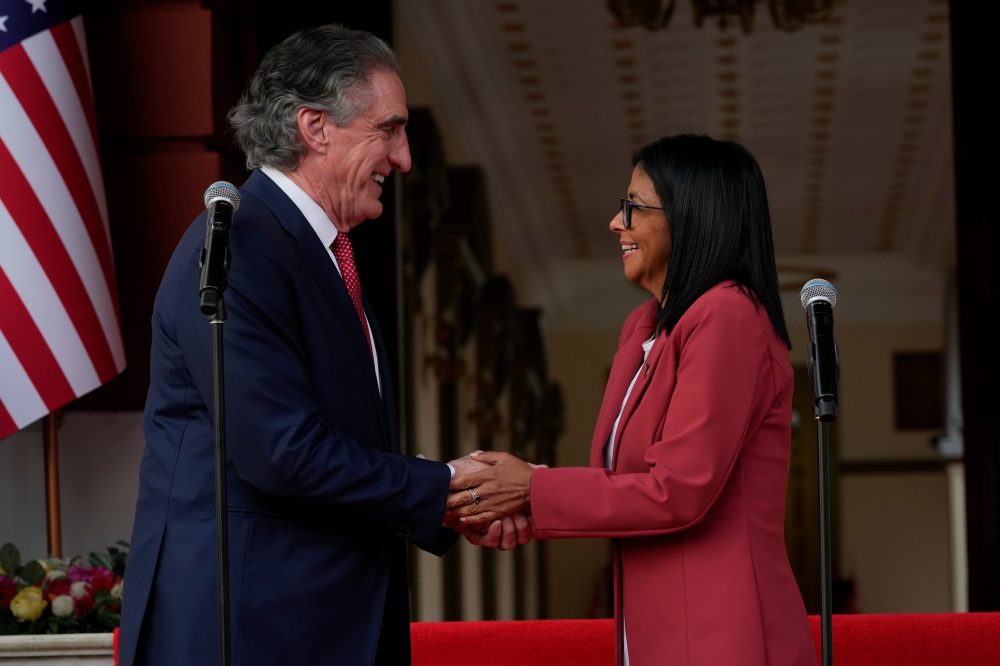

MAIQUETIA, Venezuela — Interior Secretary Doug Burgum announced Thursday that Venezuelan leadership has committed to providing safety guarantees for international mining firms considering investments in the nation, where valuable mineral deposits have traditionally been dominated by criminal organizations, armed groups, and unauthorized miners operating with government and military backing.
Following a two-day visit to Venezuela, Burgum informed the media that acting President Delcy Rodríguez’s administration recognized the security challenges facing potential investors. Legitimate mining development in these dangerous, remote locations represents a key component of the U.S. strategy to help restore stability to the crisis-stricken nation.
“We heard assurances in the meeting today and yesterday that if companies wanted to get to these areas, do due diligence, think about reopening mines, maybe even getting back to mines that they themselves were running 15 or 20 years ago, that this government would ensure their security,” Burgum said.
The Interior Secretary, who chairs President Donald Trump’s National Energy Dominance Council, argued that while illegal operations “created an economic opportunity where there was none,” legitimate investments would deliver a “superior economic opportunity.”
Burgum joins other U.S. officials who have recently visited Caracas to engage with Rodríguez, who assumed power after former President Nicolás Maduro was captured by American forces two months earlier. This diplomatic outreach supports the Trump administration’s efforts to counter China’s dominance in critical mineral supplies — many of which exist abundantly in Venezuela — while advancing plans to stabilize the South American nation that endured severe crisis throughout Maduro’s nearly 13-year presidency.
The Republican government is taking aggressive steps to secure essential mineral supplies required for electric vehicle production, defense systems, and advanced technology after China restricted exports in retaliation for Trump’s comprehensive tariff policies last year. Despite a recent agreement between the superpowers to ease trade tensions and mineral export limitations, China’s restrictions remain more stringent than pre-Trump levels.
Beyond petroleum reserves, Venezuela possesses significant deposits of gold, copper, coltan, bauxite, diamonds, and other valuable minerals, though the poorly regulated mining sector is notorious for dangerous working conditions. Coltan contains niobium and tantalum, both classified as critical minerals essential for smartphone manufacturing and electric vehicle batteries, while bauxite is refined into aluminum, another U.S.-designated critical mineral.
“I believe the steps we are taking demonstrate the goodwill to build this cooperation agenda in the energy and mining sectors, which will strengthen relations between our two countries for the benefit of the people of Venezuela and the people of the United States,” Rodríguez said on state television.
One day prior, Rodríguez revealed plans to request legislative action on comprehensive mining law reforms designed to encourage foreign investment. These modifications will follow the framework of recently enacted oil sector changes that enabled privatization, abandoning a core principle of the socialist government that has controlled the country for over twenty years.
Numerous international corporations with Venezuelan investments, particularly in mining and petroleum, lost their assets to government seizure approximately two decades ago. In 2016, Maduro’s administration created an extensive mining development zone across the country’s central region to compensate for declining oil revenues caused by poor management, corruption, and subsequent U.S. economic sanctions.
Mining activities for gold, diamonds, copper, and other materials have expanded dramatically since then. Most operations are unauthorized mines functioning under harsh conditions with criminal gang involvement, yet desperate Venezuelans continue seeking opportunities to escape poverty through potential quick wealth. Government officials and military personnel receive portions of illegal mining profits in exchange for permitting mine operations, providing fuel and equipment access, and facilitating mineral transportation.