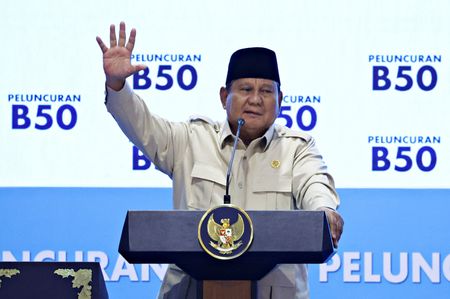

JAKARTA — A new survey has revealed a dramatic drop in support for Indonesian President Prabowo Subianto, with his approval rating falling to just 51.1% in July 2026 — a steep decline from the high marks he received earlier in his presidency.
Deni Irvani, executive director of Saiful Mujani Research and Consulting (SMRC), announced the findings during a livestreamed press conference on Sunday. He noted that Prabowo’s approval once stood at 81.2% in November 2025, before sliding to 66.4% in a survey conducted between late February and early March of this year.
“Public perceptions of a deteriorating national economy were the main factor behind the decline in satisfaction with his performance,” Irvani said.
The numbers paint a troubling picture for the president when it comes to economic sentiment. Nearly half of those surveyed — 49.4% — described economic conditions as either “bad” or “very bad.” Only 15.7% said the economy was performing well, a significant drop from 40% who felt that way back in November.
Irvani noted the survey supports what some economists have been saying — that while Indonesia’s official economic growth numbers may be accurate, they don’t reflect how ordinary people feel about their own financial situations.
Beyond the economy, unhappiness with the political environment and law enforcement have further eroded the president’s standing, Irvani added. Some 42.8% of respondents rated Prabowo’s handling of the political situation as “bad” or “very bad,” a sharp jump from 23% in November. Meanwhile, only 13.5% approved of his political performance, compared to 35.8% just months ago. On law enforcement, 37.6% of those surveyed said conditions were “bad” or “very bad.”
Prabowo came to power in October 2024 following a decisive general election victory. He campaigned on pledges to fight corruption and boost annual economic growth from 5% to 8%.
His administration has faced significant headwinds this year, including a weakening currency, a struggling stock market, and concerns about government overspending and the independence of the country’s central bank.
A signature piece of his campaign was a large-scale free-meals program that launched in January 2025. However, the initiative has been plagued by setbacks, and its budget has been cut on two separate occasions. Even with those reductions, Indonesia’s budget deficit is still projected to grow to 2.85% of GDP this year.
The SMRC poll gathered responses from 749 people between July 5 and 19, and carries an estimated margin of error of 3.7%.