
In the aftermath of two fatal shootings involving U.S. Immigration and Customs Enforcement officers during traffic stops, the Trump administration’s border czar announced Sunday that ICE will require its officers to use at least one body camera when conducting vehicle stops.
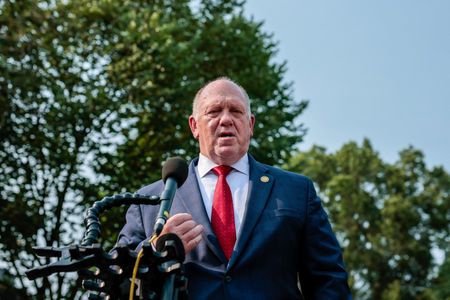
“They exonerate more law enforcement than they convict, and I want officers to wear body cameras because I want the American people to see what the officers saw when they took that action,” border czar Tom Homan said during an appearance on the “Fox & Friends Weekend” program.
Homan’s announcement follows two separate incidents earlier this month in which federal immigration officers fatally shot men during traffic stops — one in Texas and another in Maine — just six days apart. Neither incident was captured on body camera footage.
In a second interview, this time on CBS’s “Face the Nation,” Homan explained that funding for the cameras had been delayed due to the partial government shutdown earlier this year.
“The cameras have been purchased right now,” Homan said. “They’re training the trainer in deploying the cameras nationwide.”
The shootings drew fresh public attention to ICE’s tactics after an officer on July 13 fatally shot a Colombian driver in Biddeford, a coastal Maine town roughly 15 miles south of Portland. Six days prior to that, another ICE officer in Houston shot and killed a Mexican national.
Homan had announced last week that the agency would pause most vehicle stops nationwide to review its procedures. However, within 24 hours of that announcement, President Donald Trump ordered agents to resume those stops.
The two shootings triggered protests in Maine, Houston, and Boston, and renewed concerns about ICE officers operating without body cameras.
ICE first launched a body camera pilot program in 2024, placing cameras with officers in five cities: Baltimore, Buffalo, Detroit, Philadelphia, and Washington, D.C. The Trump administration moved last year to slow the program’s expansion, pushing Congress to slash its funding by 75%, according to a Reuters report from January.
In February, following the deaths of two U.S. citizens during an immigration enforcement operation in Minnesota, the then-head of the U.S. Department of Homeland Security, Kristi Noem, said the body camera program would be expanded to ICE agents across the country “as funding is available.”
At least seven people have been killed during federal immigration enforcement operations since January 2025, when President Trump launched a mass deportation effort after returning to office on a campaign pledge to crack down on immigration.