
BUDAPEST, Hungary — Hungary’s government announced Monday it is launching a formal investigation into a large investment deal with Chinese electric vehicle giant BYD, following the resignation of the former foreign minister who helped negotiate it — a man who last week left parliament to take an executive position at the automaker.
The announcement that Péter Szijjártó would be joining BYD, the world’s leading electric carmaker, set off a firestorm of conflict-of-interest accusations. Critics pointed to his role in steering significant government subsidies toward the company while he was still serving in office.
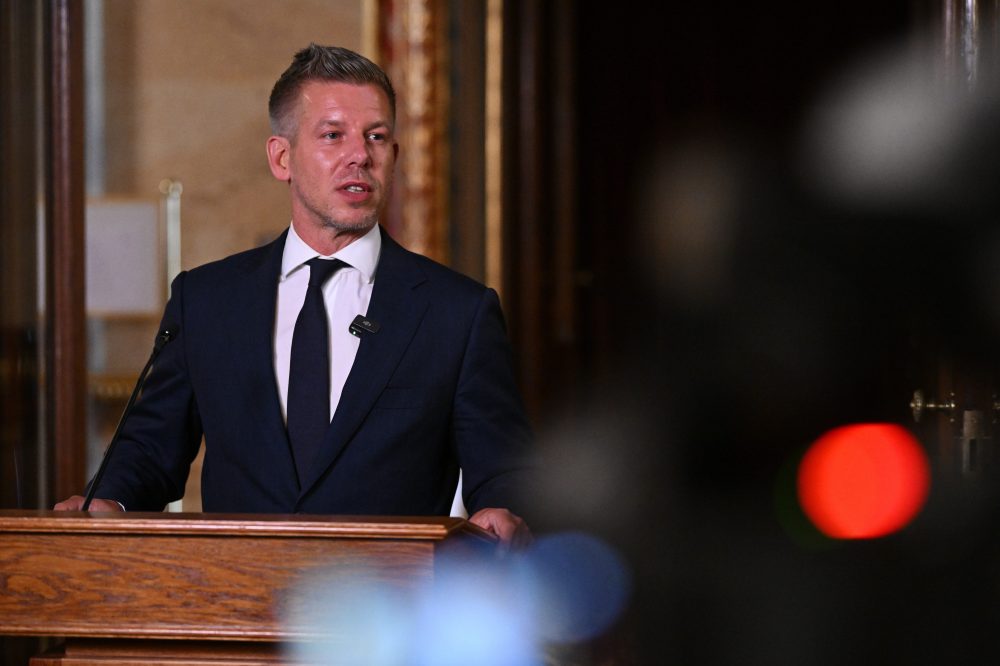
Prime Minister Péter Magyar addressed lawmakers Monday, saying Szijjártó — a close ally of former Prime Minister Viktor Orbán — had assisted BYD during his time in government “with hundreds of billions (of forints) in public money, diplomatic support and state infrastructure.”
“We will examine all the decisions, negotiations and state commitments made by Péter Szijjártó that were related to the BYD Hungary investment,” Magyar stated Monday.
Magyar said the scope of the investigation would extend beyond BYD, covering all subsidies, tax breaks, permits, environmental exemptions, and publicly funded investments granted to large multinational companies throughout Orbán’s time in power.
“We will investigate who made these decisions, who prepared them, what professional warnings were ignored, and how much burden they left on Hungarian taxpayers, workers, local communities and the environment,” Magyar said.
Neither Szijjártó nor BYD have offered any response to the conflict-of-interest allegations. The former foreign minister has described his new role as a “prestigious” chance to work for one of the “greatest success stories” in the global auto industry.
Throughout his time in government, Szijjártó played a central role in drawing Chinese investment into Hungary, including from BYD — the very company that has now hired him. BYD received substantial state support while he was in office.
Back in 2023, Szijjártó announced that BYD would build its first European manufacturing plant in Hungary, a move that allowed the company to sidestep European Union tariffs on Chinese-made electric vehicles — tariffs designed to shield Europe’s homegrown auto industry.
Then in 2025, Szijjártó announced that BYD would establish its European headquarters and a research and development center in Budapest, along with receiving 20 billion forints — roughly $63.7 million — in government support.
These deals were part of a broader strategy under the Orbán administration to position Hungary as a global center for lithium-ion battery production, primarily by recruiting Chinese battery manufacturers to open facilities across the country.
The push drew backlash from local residents, environmental advocates, and opposition politicians, who warned the industrial expansion would worsen existing environmental issues, strain Hungary’s water resources, and deepen the country’s economic dependence on China.
Szijjártó’s record as foreign minister also included maintaining unusually close ties with Russia, even after its full-scale invasion of Ukraine on February 24, 2022. Unlike nearly all of his European Union counterparts, he made repeated trips to Moscow to negotiate oil and gas purchasing agreements and to meet with Russian Foreign Minister Sergey Lavrov, whom he openly referred to as his “friend.”
He became embroiled in further controversy during Hungary’s 2026 election campaign when the Washington Post reported that he regularly called Lavrov during high-level EU meetings, providing “live reports on what’s been discussed.”
Szijjártó has rejected the report, though he acknowledged that he did speak with Lavrov before and after EU foreign minister meetings to discuss their agenda and outcomes.
At a government press conference last week, Magyar said that “as far as I know,” an investigation had already been opened into Szijjártó’s alleged ties to the Russian government.