
BUDAPEST, Hungary — Hungary’s leading opposition candidate is calling for a treason investigation following reports that the country’s government has been secretly feeding confidential European Union information to Russia for years.
Péter Magyar, who leads in polls ahead of next month’s parliamentary elections, responded Monday to a Washington Post investigation revealing alleged covert communications between Budapest and Moscow. Magyar accused Hungarian Foreign Minister Péter Szijjártó of “appearing to conspire with Russia, thus betraying both Hungarian and European interests.”
“Should these allegations prove accurate, this constitutes treason, punishable by life imprisonment. An incoming TISZA administration will launch an immediate investigation into this matter,” Magyar stated on social media.
Magyar’s TISZA party currently leads in polling just three weeks before elections that could remove Viktor Orbán’s nationalist Fidesz party from power after 14 years of rule.
According to the Post’s reporting, which relied on multiple current and former European security sources, Orbán’s administration has consistently given Moscow access to classified EU deliberations.
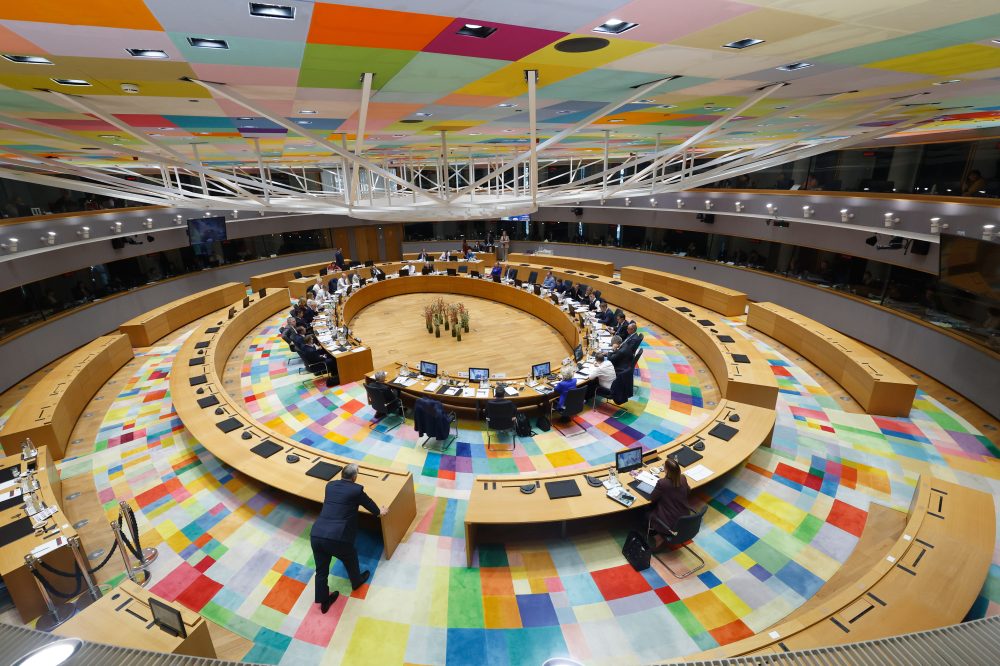
Sources told the newspaper that Szijjártó routinely contacted Russian Foreign Minister Sergei Lavrov during breaks at EU gatherings, including last Thursday’s summit of the bloc’s 27 leaders, delivering “real-time updates on discussions” and potential outcomes.
One European security official described how these communications meant “essentially every EU meeting for years has included Moscow’s presence at the table.”
Since Russia launched its full-scale assault on Ukraine in 2022, Szijjártó has traveled to Moscow 16 times officially, including a March 4 meeting with President Vladimir Putin. Szijjártó’s office has not yet responded to requests for comment.
Orbán dismissed the allegations, instead claiming the Post report demonstrates illegal surveillance of Szijjártó. “Surveillance of a government official constitutes a grave assault on Hungary. I have directed the Justice Minister to immediately examine the information concerning the surveillance of Péter Szijjártó,” Orbán posted on social media.
The European Commission announced it is seeking direct clarification from Hungary regarding these claims. “Trust between member nations and institutions forms the foundation of EU operations,” Commission spokesperson Anitta Hipper said Monday. “We anticipate the Hungarian government will provide explanations.”
Hungary’s relationships with other EU nations have deteriorated significantly since Russia’s Ukraine invasion, reaching a new low this month when Orbán reversed his commitment to a 90-billion euro ($104 billion) loan for Kyiv.
Polish Prime Minister Donald Tusk, a frequent Orbán critic, suggested the revelations were unsurprising. “Reports that Orbán’s team briefs Moscow comprehensively on EU Council proceedings shouldn’t shock anyone,” Tusk wrote Sunday on social media. “We’ve suspected this for quite some time. This explains why I speak only when absolutely required and share only essential information.”