
A groundbreaking study of a Greek volcano is changing how scientists understand dormant volcanic systems, revealing that these geological giants can remain quiet for more than 100,000 years before coming back to life.
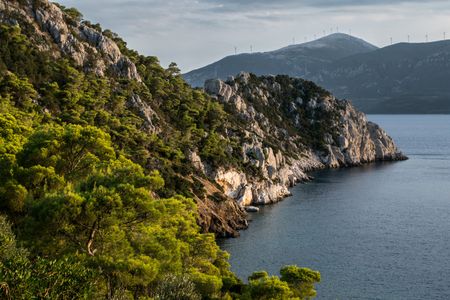
Researchers examining the Methana Volcano, situated approximately 37 miles southwest of Athens, have challenged the widespread belief that volcanic systems become “extinct” after remaining inactive for 10,000 years.
Scientists analyzed 700,000 years of volcanic activity at Methana, discovering eruptions punctuated by extended dormant phases. Their research revealed that the volcano’s most prolonged quiet period – spanning from roughly 280,000 to 168,000 years ago – wasn’t evidence of extinction but instead represented a time of significant underground magma buildup.
“This long period of quiescence at Methana happened during the prehistory, so we are piecing it together based on the chemical evidence preserved in the rocks and minerals. To understand what happened under Methana, we need to picture the volcano as the tip of an iceberg: at the surface we see only a little bit of it, while most of the igneous system is underground,” explained ETH Zürich volcanologist Răzvan-Gabriel Popa, who led the research published in Science Advances.
The Earth consists of multiple layers, including the surface crust where we live and the underlying mantle where magma originates. Volcanic eruptions occur when ascending magma overwhelms underground chambers and pushes excess material toward the surface, while lack of magma supply causes volcanoes to become quiet and eventually cease activity.
“What we have now found is that in subduction zones, volcanoes can go quiet even when the mantle produces a lot of magma, but with a twist: this magma is superhydrous, and the volcano doesn’t die, but it thrives, while taking a nap,” Popa noted.
These superhydrous magmas contain exceptionally high water content and appear to drive this dormancy process.
“They ascend through the crust, they start bubbling like a fizzy drink,” Popa described. “This gas bubbling triggers crystallisation, making the magma sticky and viscous, and it slows down a lot – by a factor of 100 to 1,000 – and becomes so lazy … it can’t continue towards the surface.”
According to Popa, this causes the magma to become stuck underground.
“Since the magma chamber can’t evacuate all that excess material, no eruption happens, and the reservoir accumulates this crystalline, sticky magma that helps it grow,” Popa said.
This process could eventually result in larger and potentially more powerful eruptions when the volcano does reawaken.
To piece together this volcanic timeline, researchers analyzed more than 1,250 zircon mineral crystals found in volcanic rocks and used alternative minerals like ilmenite when zircon wasn’t available to monitor magma chamber activity during quiet periods.
Popa noted that this “silent” magma accumulation can be monitored using advanced equipment.
“Magma accumulation at depth often triggers earthquakes that may be too small for us to perceive, but seismometers record them easily. The ground may also bulge by only a few centimetres per year, yet satellites and GPS can detect those changes,” Popa said.
Although Methana sits relatively near the Greek capital, Popa indicated the volcano doesn’t present major immediate dangers, with any future eruptions likely resembling past lava flows rather than explosive events.
Nevertheless, Popa suggested this phenomenon might be more common than previously understood, with numerous apparently inactive volcanoes potentially still developing underground magma chambers, especially in areas like Greece, Italy, North and South America, and Japan.
The research team plans to next investigate Ciomadul in Romania’s Eastern Carpathians, a volcano that has remained quiet for almost 30,000 years but may still contain an active underground magma chamber.
“It’s important for our society to understand that for volcanoes, quiet doesn’t always mean safe,” Popa concluded.