
Nearly four decades after the catastrophic Chernobyl accident sparked worldwide anxiety about atomic energy and hindered its expansion across Europe and beyond, nuclear power is experiencing a remarkable global resurgence. This renewed interest has gained significant momentum due to ongoing conflicts in the Middle East.
Currently, more than 400 atomic reactors operate across 31 nations, with approximately 70 additional units under development. These facilities generate roughly 10% of global electricity production, representing about one-fourth of all low-carbon energy sources worldwide.
Modern atomic facilities have undergone continuous enhancements, incorporating additional safety mechanisms while reducing construction and operational costs.
Although both the Chernobyl catastrophe and Japan’s 2011 Fukushima nuclear incident reduced enthusiasm for atomic energy, a comeback was anticipated years ago, according to Fatih Birol, executive director of the International Energy Agency.
Given the Middle East conflict, “I am 100% sure nuclear is coming back,” he stated.
“It’s seen as a secure electricity generation system, and we will see that the comeback of nuclear will be very strong, both in (the) Americas, in Europe and in Asia,” Birol told The Associated Press.
America leads global nuclear electricity production with 94 functioning reactors that generate approximately 30% of worldwide atomic power. The nation is expanding efforts to boost nuclear capacity with ambitions to increase it fourfold by 2050.
“The world cannot power its industries, meet the demands of artificial intelligence, or secure its energy future without nuclear power,” U.S. Undersecretary of State Thomas DiNanno said last month.
China currently runs 61 atomic reactors and dominates new construction globally, with nearly 40 facilities being built as the country aims to overtake America as the world’s top nuclear producer.
European Commission leader Ursula von der Leyen has admitted that reducing nuclear energy was Europe’s “strategic mistake” and has presented new programs to promote power plant construction.
Meanwhile, Russia has established a commanding position in exporting nuclear expertise, constructing 20 reactors internationally.
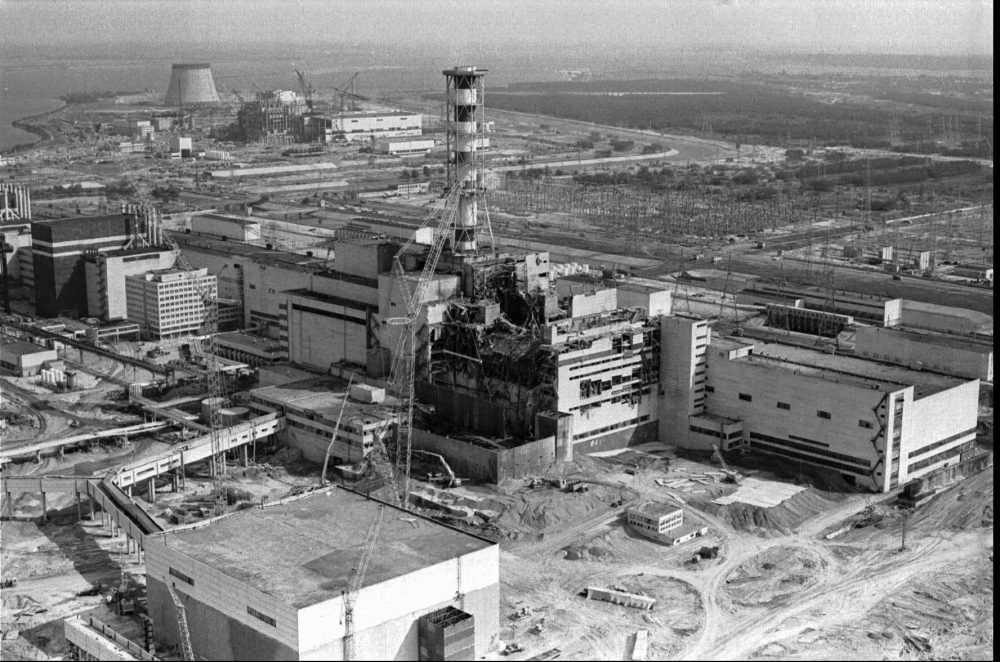
On April 26, 1986, Chernobyl’s fourth reactor exploded while Ukraine remained part of the Soviet Union. The incident contaminated surrounding regions and released radiation throughout Europe.
Ukraine continues to depend significantly on atomic plants for approximately half its electrical supply. These facilities have served a crucial function since Russia invaded Ukraine in 2022. Moscow’s military has seized Ukraine’s Zaporizhzhia Nuclear Power Plant, and Kyiv has accused Russia of launching a drone strike against the protective structure surrounding the damaged Chernobyl reactor.
Japan has reactivated 15 reactors following a comprehensive review of lessons learned from the earthquake and tsunami that damaged Fukushima, with 10 additional units awaiting restart approval.
South Africa maintains the African continent’s sole nuclear facility, though Russia is constructing one in Egypt, and several other African countries are investigating the technology.
“The momentum we are seeing today is the result of a growing recognition that reliable, low-carbon electricity will be essential to meet the world’s rising energy demand,” said Rafael Grossi, director general of the International Atomic Energy Agency.
Europe attempted to reduce its dependence on Russian energy following the Ukraine war, but the Middle East conflict highlighted its reliance on fossil fuels.
The European Commission has changed its view of atomic energy, now considering it part of clean power alongside wind and solar to achieve environmental objectives.
In 1990, nuclear energy provided roughly one-third of Europe’s electricity; currently it supplies only about 15%, and von der Leyen has recognized that depending on imported fossil fuels creates a disadvantage.
“I believe that it was a strategic mistake for Europe to turn its back on a reliable, affordable source of low-emissions power,” she said recently. “In the last years, we see a global revival of nuclear energy. And Europe wants to be part of it.”
The EU is exploring Small Modular Reactors, anticipated to begin operations in the early 2030s. These units are considered more economical and quicker to construct, offering greater flexibility than conventional reactors.
France and several other EU nations, including Sweden and Finland, have championed atomic power. Conversely, Germany, Austria and Italy are among EU countries that have prohibited its use.
In a significant policy change last year, Belgium overturned legislation requiring reactor closures and extended their operational periods. Spain continues planning to eliminate its nuclear capacity and shut down seven functioning reactors between 2027 and 2035.
Operating 57 reactors across 19 facilities, France depends on atomic power for nearly 70% of its electricity.
Multiple French administrations have supported nuclear energy as fundamental to the nation’s energy independence, remaining undaunted by Chernobyl. In 2022, President Emmanuel Macron announced plans for six new pressurized water reactors to reduce greenhouse gas emissions and support the shift to low-carbon energy.
The COVID-19 pandemic, along with gas supply shortages caused by the Ukraine conflict, “revealed the limits of deploying renewable electricity and Europe’s dependence on gas,” said Nicolas Goldberg, a partner at Paris-based Colombus Consulting.
“France has therefore been reinforced in its strategy of maintaining its existing nuclear plants, which means extending their lifespan as much as possible,” he said.
Years of anti-nuclear demonstrations in Germany, intensified by previous accidents, pressured successive administrations to abandon technology that opponents viewed as dangerous and unsustainable. Germany deactivated its final three atomic reactors in 2023, completing plans developed by various governments over twenty years.
A substantial nuclear comeback in Europe’s largest economy remains unlikely, despite recent discussions among some in Chancellor Friedrich Merz’s center-right coalition about openness to potential future small modular reactors.
“The decision is irreversible — I regret it, but that’s how it is,” Merz said, noting the plant operators’ “consistent answer was: ‘We are too far along with demolition.’”
Russia has aggressively expanded atomic power capacity both domestically and internationally.
The country operates 34 reactors, including eight Chernobyl-type RBMK reactors, known as light water graphite reactors, which produce about one-quarter of all nuclear generation. These have undergone extensive upgrades, adding safety features to address the inherent design flaw that, combined with human error, caused the Chernobyl disaster.
Major construction projects include new units at Kursk, Leningrad and Smolensk locations, a planned Far East facility, and potential floating nuclear units.
Russia is also constructing 20 reactors across Europe, Africa, Asia and the Middle East, having signed agreements to begin construction in several additional countries.
Russia has completed the first atomic reactor for neighboring ally Belarus, which experienced contamination across one-third of its territory from Chernobyl.
“Belarusian authorities are using the changed context and the so-called ‘nuclear renaissance’ to claim that we are acting like everyone else in the world, rather than solving the problems of Belarusians in the contaminated territories,” said Irina Sukhiy, founder of the Belarus ecological group Green Network.