
KYIV, Ukraine — Within just one week, the firing of Ukraine’s defense minister triggered a sweeping shake-up of the country’s military leadership, pushing out veteran commanders and ushering in a younger generation at the top.
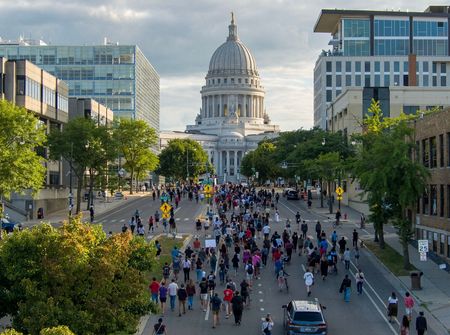
When Ukrainian President Volodymyr Zelenskyy chose to remove his well-regarded defense minister, Mykhailo Fedorov, from his post, the decision ignited days of street protests. Those demonstrations quickly turned their focus toward the military’s commander-in-chief and exposed a deepening divide over the direction of Ukraine’s armed forces.
Crowds took to the streets to condemn the top commander, Oleksandr Syrskyi, while rallying strongly behind the ousted Fedorov, who had become one of the most influential voices for military reform in the country. Protesters called for Fedorov to be brought back. His removal came after months of increasingly sharp disagreements between the two men.
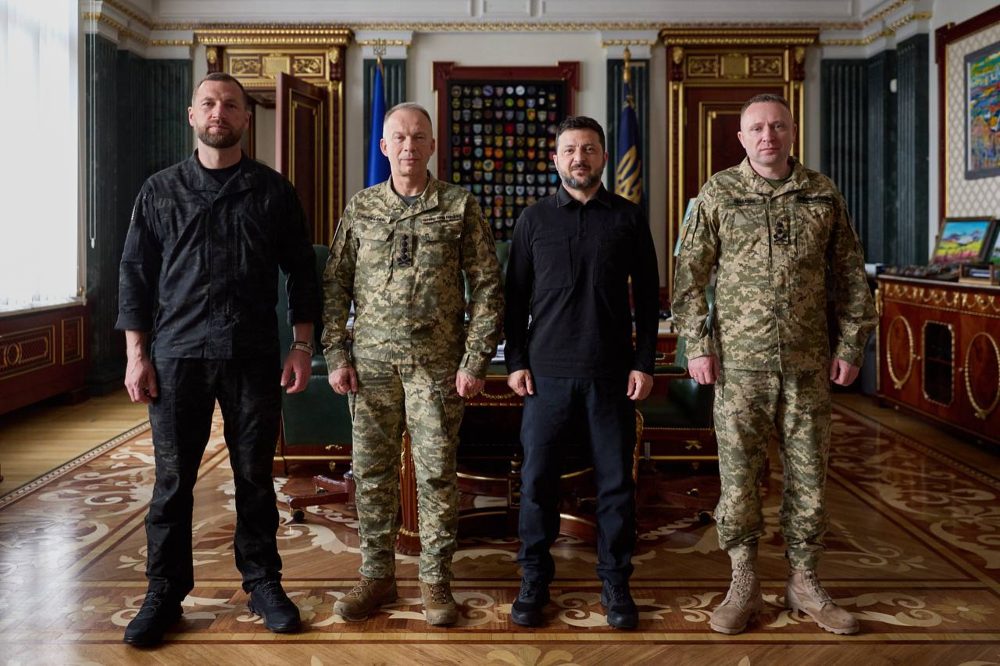
For Zelenskyy, this marked the second time within a year that a wartime decision sparked public backlash — the first being his move in mid-2025 to limit the authority of anti-corruption bodies. As he had done before, the president moved swiftly to manage the political damage. He removed Syrskyi from command and appointed Mykhailo Drapatyi, a battle-tested commander who built his reputation in the years after Russia’s initial invasion in 2014.
Drapatyi’s rise to the top marked a clear break — both in generation and in philosophy — from Syrskyi, whose military thinking was rooted in Soviet tradition. Even so, public backing for Fedorov has continued to grow, and the protests have only raised his political profile further.
A large portion of the public’s frustration had been aimed at Syrskyi, who came to represent broader grievances that had been building within Ukraine’s military since Russia launched its full-scale invasion in 2022.
Drapatyi’s appointment has helped ease some of that discontent. Widely trusted by both soldiers and fellow officers, he represents a younger class of commanders who earned their credibility through combat rather than through inherited rank in the Soviet military system.
“He enjoys a high level of trust within the military. I think this appointment could boost what is often called morale, that is, strengthen the fighting spirit,” said Oleksandr Musiienko, a military analyst based in Kyiv.
One Western defense official described the gap between Fedorov and Syrskyi as being like “different planets.” That official spoke anonymously, as they were not cleared to speak to journalists.
Fedorov had pushed for a warfare approach driven by data and technology, which put him at odds with Syrskyi’s more conventional ground-forces strategy. Analysts suggested Drapatyi could serve as a bridge between those two camps — low-key but highly respected, he has earned the confidence of frontline commanders while supporting many of the reforms that Fedorov had championed.
“He has shown an ability to adapt to the realities of modern warfare, to changing battlefield conditions and to shifting and reallocating resources,” Musiienko said.
For many in Ukraine, Syrskyi had come to stand for the rigid, Soviet-style command structure that Fedorov’s reform agenda sought to dismantle. When Fedorov publicly named Syrskyi as the main barrier to those changes, it brought long-standing public grievances into the open.
Those grievances included the military’s deeply entrenched bureaucracy, a command style under Syrskyi that critics called overly centralized and prone to micromanagement, and persistent difficulties with military mobilization.
Syrskyi also faced harsh criticism for his connection to the 425th Separate Assault Regiment, known as Skelya, which many Ukrainians came to see as a symbol of tactics that sacrificed soldiers’ lives for minimal territorial gain.
The regiment also became the center of a major public scandal after an investigation by the Ukrainian outlet Babel published allegations of widespread abuse, torture at training camps, and dozens of deaths that occurred outside of combat. Those allegations prompted a formal investigation, led to the suspension of the regiment’s commander, and intensified scrutiny of the military’s command culture overall.
Some lawmakers and analysts viewed the episode as evidence that democratic accountability remains alive in Ukraine, even under martial law and with elections suspended. They argued that Zelenskyy showed he is still capable of responding to public demand.
Other lawmakers, however, warned that the situation could set a dangerous precedent — one where public sentiment, rather than institutional processes, determines who holds the military’s highest positions.
Tetiana Shevchuk, a board member of Ukraine’s Anti-Corruption Action Center, noted that protest has become one of the few avenues available to citizens in the absence of elections.
“Frustrations built up to the point where people felt the only way to be heard was to take to the streets. That’s not a healthy precedent, but it should also be a signal to the government to address problems before they reach that stage,” Shevchuk said.
Ukrainian social media quickly filled with memes poking fun at the president’s apparent search for a new army chief — jokes that highlighted the political cost the episode carried for Zelenskyy. Some memes depicted him interviewing unlikely candidates, including Jon Snow from the television series “Game of Thrones,” as well as an alien and a dolphin.
Zelenskyy has also recently navigated a damaging corruption investigation involving several of his closest allies, including his former chief of staff, Andriy Yermak, who was let go amid growing public pressure.
Shevchuk said the protests were not simply about bringing Fedorov back — they reflected public support for the reforms he had been pursuing.
“Fedorov was pushing the idea that Ukraine had to preserve every soldier’s life and become more efficient than Russia,” Shevchuk said. “Over the past six months, people finally felt Ukraine was gaining an advantage. For the first time in a long time, there was hope that this war was winnable — that we weren’t just taking loans while slowly losing territory.”
Then Zelenskyy dismissed him.
Despite Drapatyi taking over, the political drama is far from finished. Fedorov has shown little interest in accepting any other government role unless he is reinstated as defense minister — the same demand protesters continue to make. Where his career goes from here, and whether he returns to government at all, could define the next chapter of this unfolding situation.
The episode has also significantly raised Fedorov’s political standing. Once known mainly as the architect of Ukraine’s digital transformation and as a figure subordinate to Zelenskyy, he now commands a wide base of public support — a development that inevitably invites questions about his long-term political ambitions.
During his six months as defense minister, Fedorov pursued an aggressive modernization agenda. He redirected funds that had been set aside for personnel costs toward long-range strike capabilities, fiber-optic drones, reconnaissance systems, and other advanced technologies. He also highlighted expanded drone acquisition, new contracts tied to Patriot air-defense systems, successful ballistic missile tests, and a broad overhaul of military procurement.
Fedorov additionally proposed restructuring military service contracts to make frontline duty more sustainable, including higher pay, more leave time, and greater flexibility for infantry soldiers — changes that resonated strongly with troops.