
Global financial markets took a beating Thursday, with stocks falling sharply on both sides of the Atlantic as surging oil prices and troubling earnings reports from two major U.S. technology giants sent investors scrambling.
Oil prices jumped 6 to 7 percent on the day, with Brent crude climbing above $100 a barrel and West Texas Intermediate topping $90. That represents a gain of roughly 40 percent compared to the same time last year, driven in part by escalating conflict in the Middle East. Meanwhile, European natural gas prices have surged 60 percent over the past month alone, reaching their highest level since shortly after the U.S.-Iran war began.
The tech sector took a particularly hard hit after results from Alphabet and Tesla, reported after Wednesday’s closing bell, confirmed what many analysts had been warning: both companies are burning through cash at a troubling pace. Alphabet’s free cash flow turned negative in the first quarter for the first time since the company went public more than two decades ago. Tesla posted its first negative free cash flow in two years. Alphabet shares fell 7 percent Thursday, while Tesla dropped a staggering 15 percent.
Once celebrated for their hefty profit margins and strong cash generation, major technology companies are now turning to debt and stock sales to finance their artificial intelligence spending, which is expected to exceed $700 billion this year. Microsoft, Meta Platforms, and Amazon are all scheduled to report their results next week.
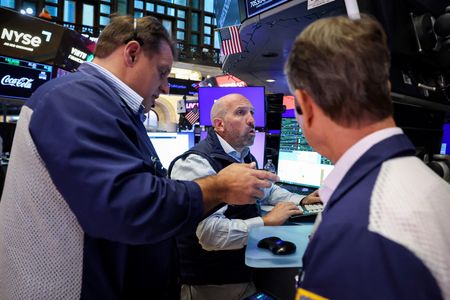
The broader market felt the pain as well. The S&P 500 dropped 1.2 percent and the Nasdaq fell 2.2 percent. The so-called “Magnificent 7” group of tech stocks and consumer discretionary shares each lost around 5 percent — their steepest single-day declines since April of last year. On the brighter side, defense contractor Lockheed Martin gained 10 percent and Intel rose 12 percent after the bell.
In the bond market, U.S. Treasury yields climbed to their highest levels in 18 months. The 30-year “real yield” — which accounts for inflation — reached its highest point since 2008, nudging toward 3 percent. An auction of 10-year inflation-protected Treasury securities also produced the highest yield since 2008, in what analysts described as an ugly result. Rates traders are now pricing in roughly 60 basis points of Federal Reserve interest rate hikes by April.
The pain isn’t limited to Wall Street. Gas prices have climbed above $4 per gallon, and 30-year mortgage rates have reached their highest level in a year — with both continuing to rise.
Any relief that investors felt from last week’s cooler-than-expected U.S. inflation reports appears to have faded fast. Weekly jobless claims fell to 187,000 last week, the lowest level since the summer of 1969, suggesting the U.S. economy remains resilient — a sign that the Federal Reserve may feel justified in continuing to raise interest rates.
In Europe, the European Central Bank held interest rates steady Thursday but signaled that a rate hike at its next meeting in September remains very much on the table. ECB President Christine Lagarde noted that a rate move had been discussed at Thursday’s meeting and that the full impact of the latest oil price surge has not yet been felt. Rates traders are currently pricing in a 70 percent chance of a September hike, with roughly 75 basis points of total tightening expected over the coming year.
In currency markets, the U.S. dollar surged toward 164 yen, marking a new 40-year high. The euro fell to a three-week low following the ECB’s decision, and the South African rand was the worst-performing currency in the world, dropping 3 percent after that country’s central bank also held rates steady.
Looking ahead, markets will be watching Friday’s release of purchasing managers’ index data from Japan, the euro zone, the United Kingdom, and the United States, as well as Japanese inflation figures and UK retail sales data. ECB chief economist Philip Lane is also scheduled to speak, and earnings reports are due from American Express and Verizon.