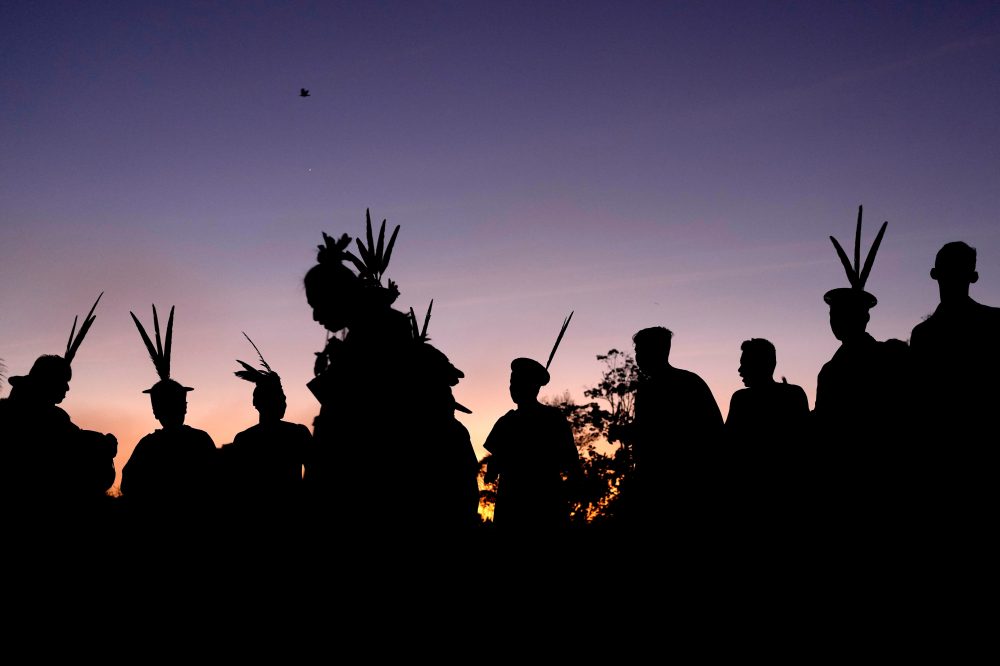

SAO PAULO (AP) — For decades, the Ashaninka Indigenous people have been held up as a shining example of what Amazon communities can achieve. After reclaiming their land along Brazil’s border with Peru from settlers roughly 30 years ago, they built their own system of governance, cultivated crops, and worked to preserve the surrounding forest. Now, that way of life is facing a dangerous and violent challenge.
Criminal gangs and drug traffickers have been steadily pushing into Ashaninka territory, using the region’s rivers and surrounding land as corridors for moving drugs. Ashaninka leaders say violent incidents have occurred as recently as this month, and they have been pressing Brazilian officials for protection — including a face-to-face meeting with government representatives in the capital on Thursday. While security forces have been sent to the area, Indigenous groups across the region say those deployments tend to be short-lived, even as the dangers persist.
What is happening to the Ashaninka is not an isolated situation. Experts describe it as part of a wider shift along the Amazon border, as criminal networks expand through what is known as the Solimoes River route.
Indigenous lands play a central role in this criminal corridor. Researchers note that protecting Indigenous territory is among the most powerful tools available for slowing deforestation in the Amazon — the largest rainforest on Earth and a critical stabilizer of the global climate. But the same thick, remote forests that these communities safeguard also make them targets: the dense tree cover in hard-to-reach areas provides ideal cover for drug traffickers.
Even as the Ashaninka and other Indigenous groups have called on authorities for help, they say the Brazilian government’s response has fallen well short of what is needed.
“There is an institutional and intercultural blind spot in the public security services provided to Indigenous peoples,” said Maj. Jonatas Soares, a police officer stationed in the border city of Tabatinga, in Brazil’s Amazonas state near Colombia and Peru.
“The state formally recognizes their territories, yet it fails to translate that presence into continuous protection tailored to their specific needs,” he added.
The Solimoes River route consists of a network of navigable waterways stretching from the Peruvian border all the way to Manaus, Brazil. Over the past ten years, it has emerged as a primary pathway for cocaine produced in Peru, Colombia, and Bolivia, with the drugs ultimately reaching Brazilian ports on the Atlantic coast before being distributed domestically and shipped abroad — especially to Europe.
According to Col. César Mello, a retired Amazonas state police officer and professor at the Federal University of Para and the University of the State of Amazonas, the Brazilian gang known as Red Command now controls most of this route.
Col. Mello explained that the isolation of Indigenous territories, combined with limited government oversight, language barriers, and cultural differences, “make Indigenous peoples a vulnerable population and an attractive source of labor for criminal organizations.”
Criminal groups frequently target Indigenous youth, luring them with money and social status in communities where few economic opportunities exist. When recruitment fails, violence follows, Col. Mello said.
The Ashaninka have long stood as an obstacle to trafficking networks on both sides of the Peru-Brazil border. In the past, drug traffickers approached the community asking to build a secret airstrip on their land — a request the Ashaninka flatly rejected.
“We have a long history of opposing any kind of illegal activity,” said Francisco Piyãko, coordinator of the Organization of Indigenous Peoples of the Jurua River.
Tensions in the area boiled over earlier this month when a group of armed men reportedly stormed the Kampa Indigenous territory, which sits along the Amonia River in the western Amazon. On July 6, five Spanish-speaking men armed with machine guns entered the territory, threatening families and searching for the community’s top leaders.
Piyãko filed a formal complaint with Acre state authorities and the Brazilian Army, which triggered the deployment of security forces.
“It’s one thing for outsiders to enter our territory to steal resources, like timber and wildlife. But this was different. They entered our land looking for our leaders, intending to kill them,” Piyãko said.
Brazil’s Ministries of Indigenous Peoples, Foreign Affairs, and Justice did not respond to requests for comment from The Associated Press. The Brazilian Army and the Acre state government’s press office also declined to reply.
Earlier this year, Brazilian Supreme Court Justice Flávio Dino directed the federal government to step up its efforts against criminal organizations operating in the Amazon, pointing to official records and investigations documenting their growing footprint and the threat they pose to Indigenous communities.
Despite the fear stirred by recent events, the Ashaninka community remains determined to hold their ground. Piyãko was clear, however, that facing down armed criminal organizations is not a burden Indigenous people should bear alone — it is the responsibility of both the Brazilian and Peruvian governments.
“They allowed this to happen through their absence, so they bear that responsibility,” he said.