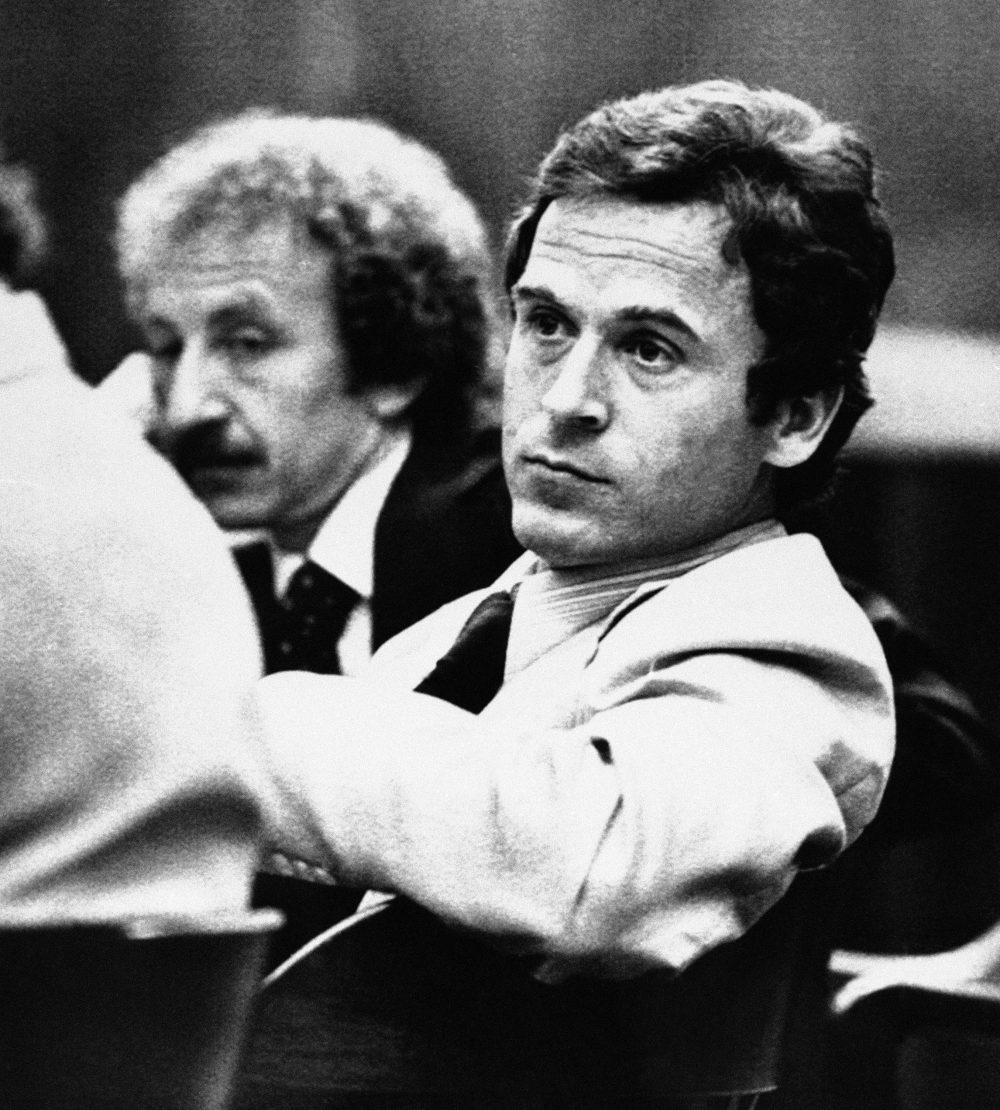

The murderous spree carried out by Ted Bundy lasted a minimum of four years and resulted in dozens of casualties, with no fewer than 30 women and girls confirmed dead — plus multiple others who managed to flee or survive despite sustaining severe harm.
Although the notorious killer was executed nearly four decades ago, the number of his verified victims keeps increasing as DNA analysis technology improves. Utah authorities announced Wednesday that Bundy was linked to the previously unsolved murder of a teenage girl from Utah in 1974. Officials anticipate resolving another cold case soon through the development of Bundy’s complete DNA profile, according to Utah County sheriff’s Sgt. Mike Reynolds.
Among America’s most deadly serial killers, Bundy ranks high — although several others likely exceeded his victim total, such as Gary Ridgway, who confessed to 49 murders; Samuel Little, who killed over 60 people; and Donald Harvey who admitted guilt in 37 deaths.
Bundy captured public attention partly due to his perceived charm and good looks during his 1979 court proceedings.
The following details outline key facts about Bundy and his criminal acts.
While the exact start of Bundy’s violent behavior remains unclear, documented deaths connected to him started in Washington state during 1974. Having been raised in Tacoma, Washington, many of his earliest documented brutal crimes occurred in the Seattle area.
In January 1974, an 18-year-old University of Washington student was asleep in her residence near campus when an intruder entered and assaulted her, causing a skull fracture. Though she lived, she sustained lasting damage. Authorities suspected Bundy’s involvement in this attack, which matched his later established method of breaking into young women’s residences, beating and sexually assaulting them, then either abandoning them to die or disposing of their bodies in remote locations.
The following month, Lynda Ann Healy, also a University of Washington student, disappeared from her residence. Investigators discovered traces of blood on her bedsheets, and her body was recovered the following year at Taylor Mountain, an isolated location outside a nearby city. Remains of several other Bundy victims were also discovered at this location.
During subsequent months, additional women were kidnapped from Washington state and Oregon. In several instances, witnesses observed the women speaking with a man wearing a fake arm sling.
By October, teenage girls in Utah were also disappearing. The body of 17-year-old Melissa Anne Smith was discovered on a Summit Park, Utah hillside, with her head severely beaten by a crowbar.
Carol DaRonch, an 18-year-old, was abducted by Bundy when he posed as a police officer investigating vehicle break-ins. She escaped by leaping from his car after he attempted to restrain her with handcuffs. DaRonch’s later testimony proved crucial in Bundy’s conviction.
Bundy’s killing continued through the following year across Utah, Colorado and Idaho.
Bundy faced his first arrest related to the disappearances in August 1975, when officers stopped him and discovered incriminating evidence including rope, handcuffs and a ski mask in his car.
The next year, he was convicted of kidnapping and attacking DaRonch. Bundy received a 15-year prison sentence for this offense, and during his incarceration faced charges connected to an earlier nursing student’s death.
He was transported to Aspen, Colorado, for proceedings in that matter in 1977, where he escaped by climbing through a second-floor courthouse window. Authorities recaptured him approximately one week later, but he escaped again six months afterward by breaking through his jail cell ceiling.
Bundy then fled nationwide, ultimately reaching Tallahassee, Florida. On January 15, 1978, he invaded the Chi Omega sorority house at Florida State University, beating two women to death with a large tree branch and severely injuring two others. He subsequently attacked another sleeping woman at a nearby residence.
Less than one month afterward, he kidnapped, sexually assaulted and murdered 12-year-old Kimberly Leach in Lake City, Florida. She is believed to be his final victim: Bundy was captured when police stopped him in Pensacola while he drove a stolen car.
Bundy’s case and his confident courtroom demeanor attracted significant media coverage during his 1979 trial for the Chi Omega killings.
“I don’t know what it is he has, but he’s fascinating,” one teenage spectator told an AP reporter covering the trial. “He’s impressive. He just has a kind of magnetism.”
Even Judge Edward Cowart called Bundy a “bright young man” who could have succeeded as an attorney. However, the judge also recognized Bundy as a horrifically violent murderer and sentenced him to death for “extremely wicked, shocking evil and vile” crimes.
Bundy was put to death by electric chair in Florida on January 24, 1989. During his final days, he provided multiple confessions, including to previously unknown crimes. Not all of these cases have been verified.
Recent DNA analysis confirmed that over 50 years ago, Bundy also murdered 17-year-old Laura Ann Aime.
Aime vanished in Utah on Halloween night 1974, and her remains were located one month later beside a highway. Investigators believed she was held captive for several days following her kidnapping.
While Bundy had been suspected in this case for years, insufficient evidence prevented charges during his lifetime. Fortunately, case evidence was properly maintained, and improvements in DNA forensic science eventually enabled investigators to develop a DNA profile matching Bundy and officially resolve Aime’s case.