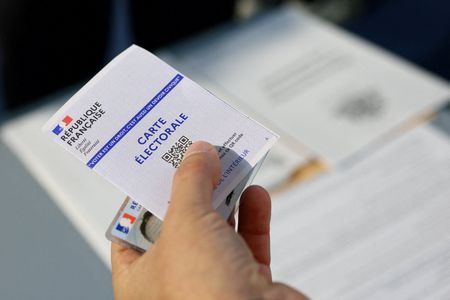

French citizens went to the polls Sunday to choose mayors in runoff elections spanning Paris, Marseille, and more than 1,500 additional municipalities across the nation. These contests will measure the political power of far-right movements and traditional parties before the 2027 presidential campaign begins.
Municipal leaders oversee nearly 35,000 communities throughout France, ranging from major metropolitan areas to small villages with just dozens of inhabitants, and rank as the country’s most trusted public officials.
While numerous candidates secured victories during last Sunday’s initial voting round, competitive contests in France’s largest urban centers advanced to these decisive runoff elections.
A critical battle is unfolding in Marseille, France’s second-largest city, where the far-right National Rally (RN) faces off against the current Socialist mayor. An RN triumph there would represent a significant breakthrough for the party.
Polling data from Paris indicates the race between conservative and left-wing candidates remains too close to call, with results falling within statistical margins of error.
Ballot casting began at 8 a.m. local time and concluded between 6 p.m. and 8 p.m., with election outcomes expected throughout the evening hours.
The anti-immigration, European Union-skeptical RN has historically found limited success in municipal campaigns.
Initial round results delivered mixed outcomes for the organization, which secured reelection in multiple cities but failed to achieve substantial victories outside its established strongholds in southern and northern regions.
“It’s true that these 2026 municipal elections do not mark a landslide for the National Rally – far from that. But … it stands to confirm its territorial integration in France,” said Anne Muxel, a political science research director at Sciences Po university.
The RN’s prospects for capturing Marseille suffered when hard-left candidate Sebastien Delogu of France Unbowed (LFI) exited the second round, citing concerns that a divided left-wing vote might benefit the RN.
Meanwhile, in the French Riviera destination of Nice, Eric Ciotti, a renegade conservative allied with Le Pen’s movement, appears positioned to defeat a centrist-backed opponent.
Paris has remained under left-wing leadership since 2001, with the Socialist candidate leading after the first round. However, a far-right contender withdrew from the runoff to support Rachida Dati, a conservative former interior minister, creating an extremely tight competition for control of the capital.
These thousands of individual municipal elections typically center on hyperlocal concerns and don’t predict the April 2027 presidential winner.
Yet they reveal important trends regarding popularity levels and potential coalition arrangements within France’s increasingly divided political environment, along with voter responses to these developments.
A significant factor involves the impact of inter-round alliance formations or their absence.
Negotiations among local party organizations since Sunday’s first round have exposed fractures within the left, as Socialists formed partnerships with their hard-left rivals from LFI in certain cities like Lyon and Toulouse, while avoiding such agreements in places including Marseille and Lille.
Although LFI traditionally performs weakly in local contests, the party emphasized these elections more heavily this cycle, and its influential role in determining winners demonstrates its expanding political influence.
“We can clearly see that, because of the relatively good performance of France Unbowed in the municipal elections, this party and (leader) Jean-Luc Melenchon once again gain a position of power in what the balance of power in the left could constitute,” Sciences Po’s Muxel said.