
French officials announced Friday they have prepared an alternative UN Security Council resolution aimed at establishing an international mission to reopen the Strait of Hormuz, while a competing US-Bahrain proposal faces significant opposition that could prevent it from coming to a vote.
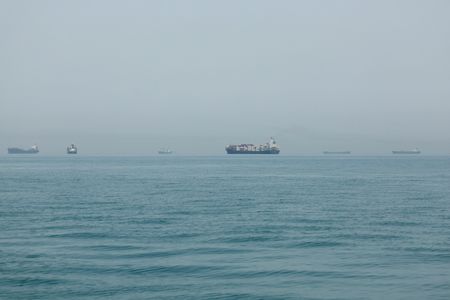
The strategic waterway’s effective blockade has become a central issue in the ongoing three-month conflict between the United States and Iran, with the closure causing oil prices to skyrocket as the narrow passage serves as a crucial route for global energy shipments.
The American-Bahraini proposal has been under consideration for over two weeks, but voting has been repeatedly postponed due to signals from China and Russia that they may block the measure.
The US-Bahrain draft calls for Iran to stop attacks and mining operations in the waterway. Both China and Russia previously blocked a similar American-supported measure in April, claiming it unfairly targeted Tehran.
According to two European diplomats, Washington has gained support from nearly 140 nations to co-sponsor their proposal in an attempt to prevent a veto.
France, which also holds veto power, has declined to support the American proposal.
“There is a draft resolution between the U.S. and Bahrain currently under discussion. This forms the basis of the current discussions. The date for the vote has not yet been announced,” stated France’s Foreign Ministry spokesman Pascal Confavreux.
French President Emmanuel Macron has indicated Paris plans to advance its own UN initiative, building on Franco-British cooperation to establish an international mission for restoring navigation freedom in the strait when circumstances allow and following discussions with both Washington and Tehran.
“We are working on an international mission to restore freedom of navigation. We have also prepared, as a permanent member, a draft resolution that could be discussed if the conditions are right,” Confavreux explained.
The American diplomatic effort at the United Nations marks a notable shift from recent months, during which Washington primarily operated outside UN structures, conducting military operations against Iran without council approval and encouraging allies to participate in informal naval patrols to maintain navigation rights.