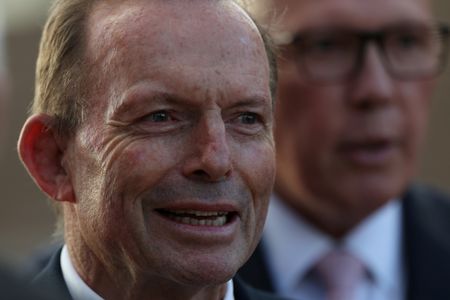

Australia’s opposition Liberal Party has chosen former Prime Minister Tony Abbott as its new president, marking a decisive shift toward conservative politics as the party struggles to recover from major electoral defeats.
The center-right Liberals, who once controlled Australian politics, have faced significant challenges following devastating losses in 2022 and 2025 elections. During those contests, they surrendered large portions of their traditional urban strongholds to centrist independent candidates and Labor opponents.
Current polling data indicates the party now trails behind an emerging populist right movement, spearheaded by the One Nation party.
Party leader Angus Taylor, who took over from a more moderate predecessor in February, has already committed to reducing immigration, lowering taxes, expanding mining and gas operations, and slowing emission reduction efforts – all positions that align with Abbott’s views.
In a recent blog entry, Abbott expressed his support for the new direction, stating: “The Taylor-led Coalition is resolved to be a clear alternative, keeping government within limits and unleashing the talents of the Australian people, via our proven ability to drill, dig, and grow our way to prosperity.” Abbott did not respond to requests for comment.
The former prime minister faced no opposition and received confirmation during Friday afternoon’s party meeting, according to a party spokesperson.
Zareh Ghazarian, an associate professor of politics at Monash University, characterized the situation bluntly: “This is a party really on the ropes.”
“It needs to do something to get out of this rut,” he explained. “Bringing in a high-profile national president would potentially be a way to do that, putting the party on a more attacking footing.”
Abbott’s new role operates outside parliamentary duties. He will oversee party operations and influence governance decisions, membership matters, fundraising efforts, and strategic planning.
Recent polling highlights the magnitude of the Liberal Party’s predicament. A survey conducted this week suggests that if elections were held today, the party would secure just 12 seats in the 150-member federal parliament – its worst showing ever – while completely eliminating its coalition partner, the Nationals.
Meanwhile, Pauline Hanson’s One Nation, an anti-immigration movement experiencing renewed support, would capture 53 seats to become the nation’s primary right-wing faction and main opposition force, according to the Access Group and Redbridge poll.
Abbott addressed this challenge directly in his blog, writing: “It’s been the Liberal Party’s political timidity that’s driven the rise of One Nation, with conservative voters despairing of ever again having a champion to vote for.”
The 68-year-old Abbott brings a reputation as a conservative Catholic, devoted monarchist, and fitness enthusiast. Party members regard him as one of their most effective campaigners and the most recent Liberal leader to successfully win power from opposition status.
His 2013 electoral victory came through a landslide campaign built around memorable three-word messages targeting illegal immigration, carbon taxes, and government expenditures: ‘stop the boats’, ‘axe the tax’, and ‘stop the waste’. Despite this success, party colleagues removed him from leadership and the prime minister’s office after only two years through an internal vote.
When asked for response, a spokesperson for Taylor referenced a recent media appearance where he expressed enthusiasm for Abbott’s appointment. “He’s going to work with me and rebuild the party,” Taylor stated during the interview.
Sarah Cameron, who lectures in public policy at Griffith University, suggested that while Abbott might help the Liberal Party secure conservative backing, Australia’s mandatory voting system typically rewards parties that appeal to moderate voters.
Abbott himself lost his parliamentary seat seven years ago to centrist independent candidate Zali Steggall.
Steggall told reporters that voters “made a decisive choice in 2019 to reject the politics Mr Abbott represented: division, climate denial and culture wars.”
“Reinstalling one of the key architects of the Liberal Party’s decline suggests the party has learnt very little,” she concluded.