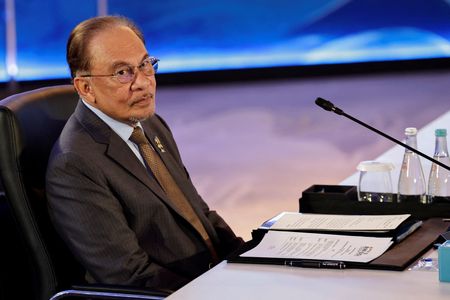

Malaysian Prime Minister Anwar Ibrahim faces mounting political challenges as members abandon his party to join a rival organization established by a former ally, according to political observers and legislators.
Ibrahim assumed leadership in November 2022 following more than twenty years leading opposition efforts against government corruption.
Although his administration has brought political stability back to Malaysia, questions have emerged regarding his anti-corruption commitments, the pace of government reform efforts, and increasing discord within his governing coalition.
Rafizi Ramli, a former economic minister previously considered a possible successor to Ibrahim, declared earlier this month his intention to leave the prime minister’s People’s Justice Party (PKR), resign from parliament, and lead the relatively unknown Malaysia United Party, known as Bersama.
According to party officials, Bersama has attracted over 18,000 membership requests, with approximately one-third coming from previous PKR members.
Although most departing PKR members have been grassroots supporters or local officials rather than parliamentarians – who are legally prohibited from switching parties while serving – the scale of departures has sparked concerns about Ibrahim’s capacity to maintain power should internal coalition conflicts trigger early elections.
Hassan Abdul Karim, a PKR legislator and long-time Ibrahim ally, stated on social media Thursday that he had stopped attempting to prevent member departures because leadership ignored their grievances. Despite maintaining faith in PKR, he described the party as currently “hurt, wounded and critically injured.”
Hassan told Reuters separately that Bersama might attract substantial support from undecided voters, younger citizens, and those focused on economic issues.
“If more PKR members of parliament who support Rafizi leave the party, Anwar will lose legitimacy as prime minister,” he said.
Ibrahim’s office did not provide comment when contacted.
PKR secretary-general Fuziah Salleh, who also serves as a deputy minister, told Reuters there was “no noticeable exodus of members leaving PKR to join Bersama.”
Government spokesperson and PKR information chief Fahmi Fadzil also minimized reports of mass departures this week, noting that 5,000 people had joined during the previous two months and total membership exceeded one million.
The resignations do not immediately threaten Ibrahim’s position as prime minister, since he retains parliamentary majority support.
However, University of Nottingham Asia political analyst Bridget Welsh said the PKR division would hurt the party’s electoral prospects and diminish Ibrahim’s chances for a second term as prime minister.
“Equally important, are perceptions of how Anwar is managing his own party, as problems within PKR do not reflect well,” she said.
While the next general election is scheduled for early 2028, Ibrahim indicated earlier this month he might call early voting if administrative divisions continue expanding.
Dissatisfaction has increased among the premier’s reform-minded supporters regarding the government’s handling of an anti-corruption agency scandal, while coalition partners have occasionally disagreed over approaches to ethnic and religious matters in the diverse, Muslim-majority nation.
Two legislators told Reuters in March that national elections might occur as early as July alongside several anticipated state elections.
“We believe that a political party must practise the values of reform and democracy that it proclaims to the people. Unfortunately, we no longer see these principles being practised consistently in PKR today,” 21 local PKR members stated in a joint Monday announcement of their immediate party departure.
Multiple regional PKR leaders have also resigned this month in similar circumstances, with one stating that Rafizi’s Bersama represents a continuation of PKR’s founding principles.