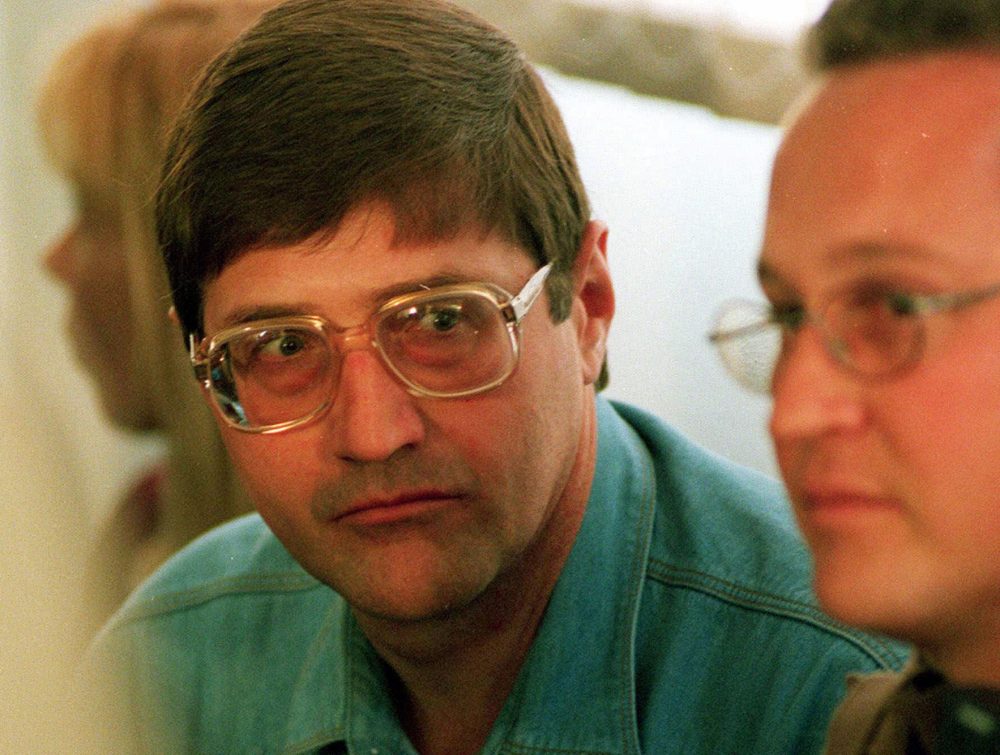

JOHANNESBURG — A former South African police commander with one of the most chilling nicknames from the apartheid era appeared Monday before an investigation examining the brutal 1985 murders of four activists, as the nation continues examining unpunished crimes from its segregated past.
Eugene de Kock, known as “Prime Evil” for his deadly campaign against apartheid opponents, claimed he wasn’t directly involved in the high-profile murders of the Cradock Four. However, he revealed that security forces maintained photographs of approximately 6,000 anti-apartheid supporters labeled as “known terrorists” who were targeted for surveillance and execution when arrests weren’t feasible.
According to de Kock’s testimony, the four victims weren’t on these lists. The murdered men — Matthew Goniwe, Fort Calata, Sicelo Mhlauli and Sparrow Mkonto, three working as educators — were seized by officers during a traffic stop and subsequently killed. Authorities discovered their charred remains in what became one of apartheid’s most disturbing incidents.
During his appearance, de Kock revealed that an officer connected to the murders approached him seeking assistance with a cover-up operation.
“He wanted to know if I could get another firearm,” de Kock stated, explaining he was also asked “if we could interfere with the ballistics.”
The 77-year-old former head of an elite anti-insurgency police division received two life sentences plus 212 years behind bars in 1996 following convictions for murder, abduction and additional charges related to capturing, torturing and executing activists. Authorities granted him parole in 2015.
Security officers escorted de Kock to the courthouse in Gqeberha, the southern city where the four men died. Court officials obscured his appearance in the official video feed after the judge determined he shouldn’t be visible, according to the Foundation for Human Rights representing victims’ relatives.
Previous investigations during apartheid were broadly viewed as deliberate cover-ups. A 1987 probe concluded unknown individuals committed the murders. Another investigation launched in 1993 determined unnamed police personnel were responsible.
This current examination began last year following persistent demands from the families. Six former officers linked to the killings escaped prosecution despite being named and rejected for amnesty during South Africa’s Truth and Reconciliation proceedings in the late 1990s. All six have since passed away.
South African officials have renewed investigations into additional apartheid-era atrocities recently, including Nobel Peace Prize recipient Albert Luthuli’s 1967 death, attorney Griffiths Mxenge’s 1981 murder, and the 1977 custody death of legendary anti-apartheid leader Steve Biko.
President Cyril Ramaphosa launched a separate investigation last year to determine whether post-apartheid administrations under his political party deliberately obstructed inquiries and prosecutions of crimes from the segregation period.