
For six decades, tens of thousands of American employers have been required to file annual reports detailing the racial, ethnic, and gender makeup of their workforces. That requirement may soon be history.
The Trump administration is pushing to eliminate a longstanding rule requiring private-sector companies to submit yearly workforce demographic reports to the Equal Employment Opportunity Commission — the federal agency charged with enforcing anti-discrimination laws on the job.
The EEOC’s Republican majority voted 2-1 on Tuesday to rescind the data collection requirement. The proposal now enters a 30-day public comment period before it can be finalized. Observers describe the move as a significant but understated step in the administration’s broader reshaping of civil rights enforcement — one that would end a practice that survived 10 previous administrations, both Republican and Democratic.
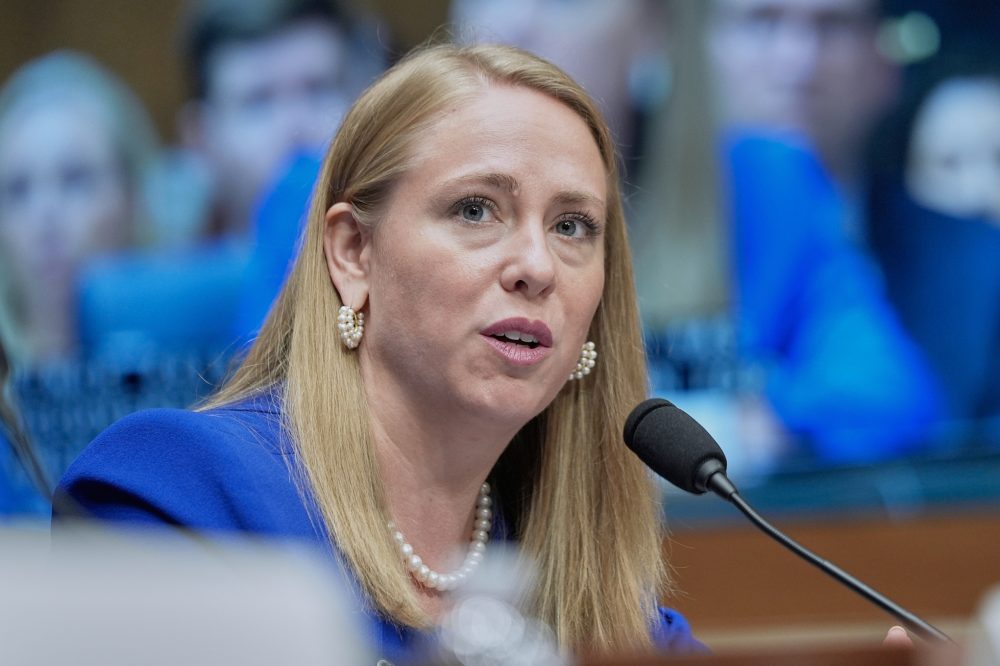
EEOC Chair Andrea Lucas, a vocal opponent of diversity and inclusion initiatives who has encouraged white men to file discrimination complaints, argued that requiring companies to submit the annual demographic breakdowns could actually push employers toward discriminatory behavior in their efforts to diversify.
“It may promote racial stereotyping at work, and it may encourage employers to engage in discrimination,” Lucas said at a hearing held before the vote.
Former Democratic EEOC commissioners and civil rights groups have sharply criticized the proposal. They argue it will strip the agency of a vital instrument for detecting patterns of discrimination and monitoring the progress of women and racial minorities in the workplace since the 1964 Civil Rights Act — the law that established the EEOC and banned employment discrimination based on race, color, sex, national origin, and religion.
The agency currently handles more than 88,000 worker complaints annually and has long relied on the demographic data to set enforcement priorities and support certain investigations.
Commissioner Kalpana Kotagal, the only Democrat remaining on the EEOC since the Trump administration moved to gain control of the agency, cast the lone dissenting vote.
“Today, the commission discusses whether to turn back time to a period before the civil rights movement, kneecapping its ability to protect workers,” Kotagal said.
The reporting requirement has been in place since 1966. It applies to companies with at least 100 employees and federal contractors with at least 50 workers, all of whom must submit a form known as the EEO-1 each year.
The form covers 10 job categories ranging from top executive and senior management positions down to laborers and service workers. Employers must report how many male and female workers they employ in each category, along with a breakdown by race and ethnicity.
Collectively, the data covers more than 50 million workers and approximately 73,000 employers across the country.
During the Biden administration, the EEOC launched an online tool that allowed the public to explore historical demographic trends across industries and job types. The most recent publicly available data covers 2023. The Trump administration collected EEO-1 data for 2024 but has not released it publicly, and collection for 2025 would have begun this year.
The data has revealed that white men dominate executive and senior management positions at private companies, though women and minorities have made some progress — particularly following the #MeToo and Black Lives Matter movements.
Women remain underrepresented at the top levels of corporate America. Although they account for nearly half of the workforce at the surveyed companies, women held only 34.5% of executive and senior manager positions in 2023, up from 29.2% a decade earlier.
White and Asian women saw the fastest gains and by 2023 were no longer underrepresented in senior roles relative to their overall workforce numbers. Black and Hispanic women, however, remained significantly underrepresented in executive and senior management roles despite modest improvements.
Asian men have been proportionally represented in senior positions for years, while Black and Hispanic men remained underrepresented as of 2023. White men were the only group overrepresented in top roles — making up one-third of the overall workforce at surveyed companies while holding 52.7% of executive and senior management positions.
Lucas argued that the annual reporting requirements place “hundreds of millions of dollars” in costs on employers — a burden she said was unjustified without “any allegation, indication, or evidence of discrimination.”
The move aligns with recommendations made by Project 2025, the conservative Heritage Foundation’s policy blueprint that has shaped a number of the Trump administration’s actions.
A group of former Democratic EEOC commissioners and legal counselors pushed back, saying there is little evidence that companies routinely use the employment data to implement quotas or engage in race-based hiring.
“This is simply inaccurate and unsupported speculation, at odds with the ways in which this data is actually collected, managed and used,” the former officials said in a statement.
They contend that tracking demographic data encourages companies to proactively review their hiring, promotions, and benefits policies to ensure they are not creating unnecessary barriers. The agency has also used the data to publish special reports on employment trends in specific industries and roles.
The EEOC is barred from publicly releasing individual company EEO-1 forms, releasing only aggregated figures. In recent years, however, a growing number of major companies began voluntarily disclosing their forms in response to pressure from shareholders and Democratic officials seeking transparency around diversity efforts. That trend has begun to reverse.
Corporations have started pulling back from publishing both EEO-1 forms and their own internal diversity reports — a shift that conservative advocates and the Trump administration have pointed to as evidence that companies use discriminatory tactics to increase representation of women and minorities.
In 2025, 24 companies in the S&P 100 — the largest publicly traded U.S. companies — chose not to disclose their EEO-1 data after having done so the previous year, according to Andrew Jones, principal researcher at The Conference Board Governance & Sustainability Center. Still, 60 S&P 100 companies did release the data.
Even if the reporting requirement is eliminated, companies are likely to continue maintaining their own demographic records. Under Title VII, employers must retain records that could be relevant to any discrimination investigation, and the EEOC retains the authority to request them.
“What we are generally advising is to stay the course,” said Jennifer Robins, counsel in law firm Saul Ewing’s Labor and Employment Group. “Private litigants, employment discrimination lawsuits are not going away, and this data is helpful to defending oneself.”
The EEOC has itself demanded extensive demographic data from companies in connection with Lucas’s own high-profile cases, including an investigation into the diversity, equity, and inclusion practices of sports giant Nike, which Lucas has alleged discriminate against white employees.
Lucas emphasized Tuesday that the EEOC would continue seeking data as part of its investigations. Commissioner Kotagal warned employers that future agency leadership could reinstate the EEO-1 reporting requirement.