
Scorching temperatures, bone-dry air, and powerful winds are driving a rapidly spreading wildfire in Utah, where the governor has declared a state of emergency and placed temporary restrictions on fireworks. The dangerous conditions across the western United States are raising alarms that even the smallest spark could trigger a disaster.
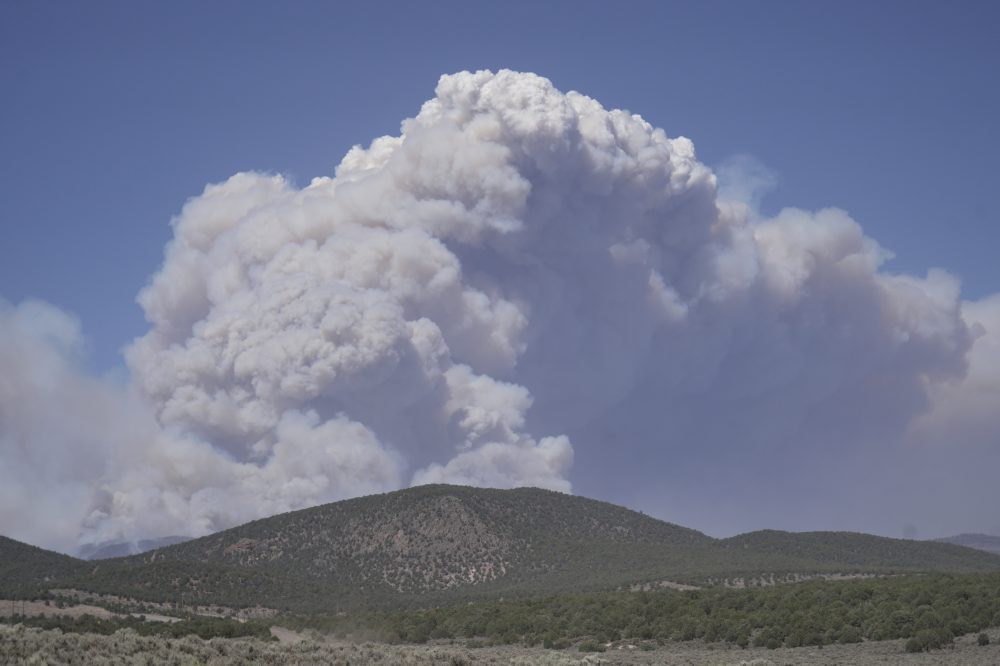
Fire crews on the ground are facing what fire managers and experts are calling unprecedented challenges. On Friday, aircraft including air tankers and helicopters had to be grounded as winds intensified over the Cottonwood Fire, currently the largest active wildfire in the country. Wind gusts reached 45 miles per hour and humidity dropped to single-digit levels, leaving firefighters with almost no tools to slow the blaze as it tore through the treetops.
“We are not expecting the weather to be kind to us for the next couple of days,” said Alyssa Mason, a spokesperson assigned to the fire. “We are seeing extreme fire behavior out there with some crown runs and definitely some spotting.”
Located in a lightly populated stretch of southern Utah, the Cottonwood Fire expanded Friday to more than 112 square miles. Among several major wildfires currently burning in Utah, it has severely damaged the Eagle Point ski resort in Beaver County and triggered evacuations in the area. In the nearby community of Marysvale, thick smoke blocked out the sun Friday while ash fell from the sky.
“We’re looking at a full 48 hours of critical weather that we have not seen in Utah in the last five years,” meteorologist Jason Straub told residents at a community meeting in Beaver County Friday evening.
Straub also warned that a cold front arriving Sunday could shift wind directions and push the fire into new territory before conditions begin to settle down next week.
Most of the smoke has been drifting eastward, which means air quality at well-known tourist destinations like Zion and Bryce Canyon national parks — both located well south of the fire — has not been severely impacted, though some haze has been reported near Bryce Canyon. The massive smoke plume, however, has been visible from great distances, reaching as far as Colorado.
Utah state forester Jamie Barnes said earlier this week that the situation is unlike anything seen in recent memory, acknowledging that fires are now spreading farther and faster “under conditions that defy historical expectations.”
Across the country, close to 3 million acres have burned since January, putting the nation ahead of the 10-year average. The National Interagency Fire Center reported that firefighters are working to contain fires stretching from Alaska all the way to Florida.
Low humidity and strong winds have triggered red flag warnings across a broad region running from Idaho down through southern Arizona and New Mexico. Wind forecasts in some areas call for gusts of 25 to 35 miles per hour, with the harshest conditions expected from northern Arizona through central and southern Utah.
At Grand Canyon National Park in Arizona, officials were bracing Saturday for a potential power outage. The local utility provider warned it would likely shut off electricity as a precautionary measure to reduce wildfire risk. Park visitors were advised to download maps and other key information ahead of their visit and to arrive with fully charged devices, since backup power systems may be limited.
Planned power shutoffs have become increasingly common across the West as wildfire danger has grown. Utility companies typically treat them as a last resort, weighing factors like wind speed, available fuel, and the lay of the land before making a decision. Rocky Mountain Power has issued a public safety power shutoff watch and warning for parts of central, southern, and eastern Utah through the weekend.
Tim Brown, a research professor and director of the Western Regional Climate Center, said extreme fire behavior will continue as long as the region stays hot, dry, and windy. He pointed to persistent drought conditions gripping Utah, Colorado, Arizona, and New Mexico as a major contributing factor.
“I would not be surprised to see a lot of restrictions come out as we get closer to the July Fourth weekend,” Brown said. “People really need to be aware of their surroundings if they’re going to be out in the forested campground areas and grassland areas.”
Gov. Spencer Cox has put fireworks restrictions in place through July 5, noting that “this year is different” as the country prepares to mark its 250th anniversary. Although the cause of the Cottonwood Fire has not been determined, the governor’s order pointed out that humans have been responsible for most of the wildfires in Utah so far this year.
Even in Florida, where multiple brush fires have broken out, officials are urging residents to forgo personal fireworks and leave the displays to professional, carefully organized shows.
Back at fire camp, spokesperson Mason described how Utah’s snowpack and stream flows peaked unusually early in March, creating what she described as extreme dryness across the region. That was followed by wind storms unlike anything previously recorded.
“If anything happens out there, any kind of spark hits fuels,” she said, “it is more than likely going to start a fire and more than likely going to get pretty big pretty quick.”