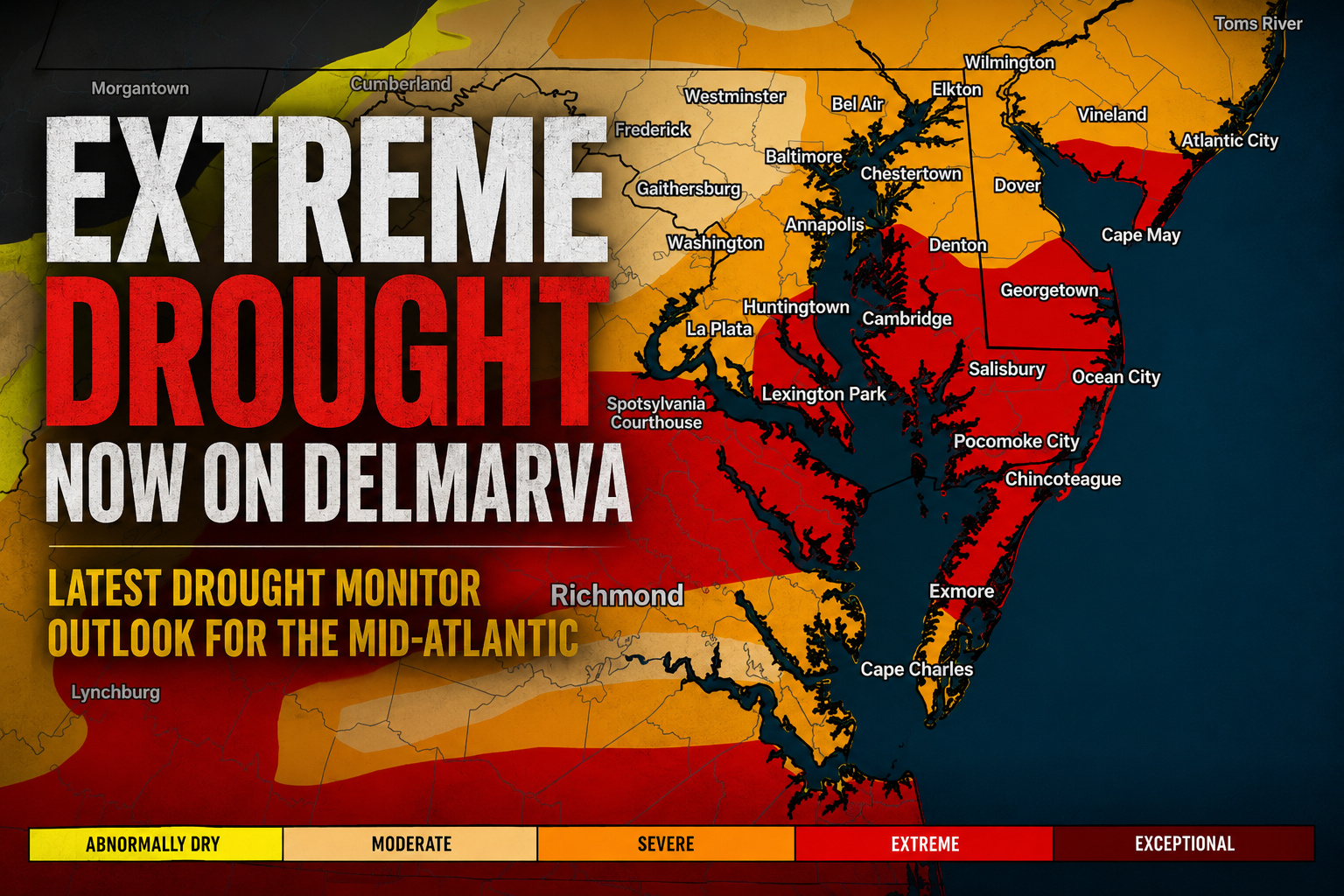

The latest U.S. Drought Monitor paints an increasingly concerning picture across the Mid-Atlantic, with portions of the Delmarva Peninsula now classified under Extreme Drought (D3) conditions as prolonged rainfall deficits continue to take a toll on the region.
The expansion of Extreme Drought marks another significant step in a worsening pattern that has developed over recent months. Much of the Mid-Atlantic continues to experience varying levels of drought intensity, with widespread Moderate to Severe Drought surrounding the hardest-hit areas and abnormally dry conditions extending well beyond them. The U.S. Drought Monitor is updated every Thursday using a combination of precipitation data, soil moisture observations, streamflow measurements, groundwater information, and reports from local experts. Recent updates show the continued deterioration of conditions across parts of Delmarva and the surrounding region.
For residents across Delaware and Maryland’s Eastern Shore, the impacts are becoming increasingly visible. Dry soils, stressed vegetation, declining streamflows, and growing concerns for agriculture are all consequences of the prolonged lack of meaningful rainfall. The ongoing dryness also raises the risk of brush and woodland fires, especially during periods of low humidity and gusty winds.
Water managers and agricultural interests will be closely monitoring conditions through the summer, particularly if the region experiences additional stretches of hot weather with limited precipitation. While scattered thunderstorms can provide localized relief, they often fail to deliver the widespread soaking rainfall needed to significantly improve long-term drought conditions.
The drought also comes after an exceptionally dry spring across parts of the Mid-Atlantic. Climate data indicate that Delaware experienced one of its driest meteorological springs on record, helping to intensify moisture deficits that have persisted into early summer.
Looking ahead, meaningful and widespread rainfall will be needed over an extended period to reverse the growing deficits. Until then, residents should remain mindful of local burn restrictions, practice water conservation when possible, and stay informed as drought conditions continue to evolve across the region.