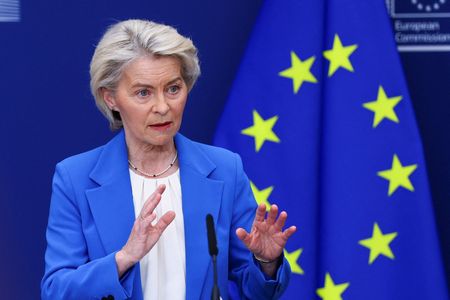

European Commission President Ursula von der Leyen celebrated Hungary’s stunning electoral upset as a triumph for democratic values, drawing parallels between Viktor Orban’s defeat and pivotal moments in Hungarian history including the 1956 revolt against Soviet control and the nation’s 1989 communist collapse.
Citizens across Hungary awakened to dramatic political change following the center-right opposition’s overwhelming electoral success, creating ripple effects from Washington to Kyiv while boosting financial markets and sparking celebrations throughout Budapest.
Speaking to media in Brussels on Monday, von der Leyen addressed the Hungarian people directly: “I really want to say to the Hungarian people, you’ve done it again!”
She continued her remarks by referencing Hungary’s history of resistance: “Again against all odds, like you did in 1956 when you courageously stood up, like you did in 1989 when you were the first to cut the barbed wire that was dividing our continent.”
Throughout his tenure, Orban served as Vladimir Putin’s primary European Union supporter, frequently opposing the bloc’s initiatives and hampering assistance efforts for Ukraine during its ongoing conflict with Russia.
Political experts suggest that Orban’s departure following his 16-year leadership could bring Hungary closer to European Union consensus positions.
The 1956 Hungarian revolution against Soviet rule ended in violent suppression by Red Army forces.
When the uprising reached its 50th anniversary, Orban’s Fidesz movement attempted to connect itself with the rebels’ anti-communist principles, drawing criticism from leftist, liberal, and some conservative groups.
While supporters viewed Orban as a patriotic figure who had been an outspoken anti-communist activist during the Cold War era, domestic and international critics argued his policies pushed Hungary toward authoritarian governance.