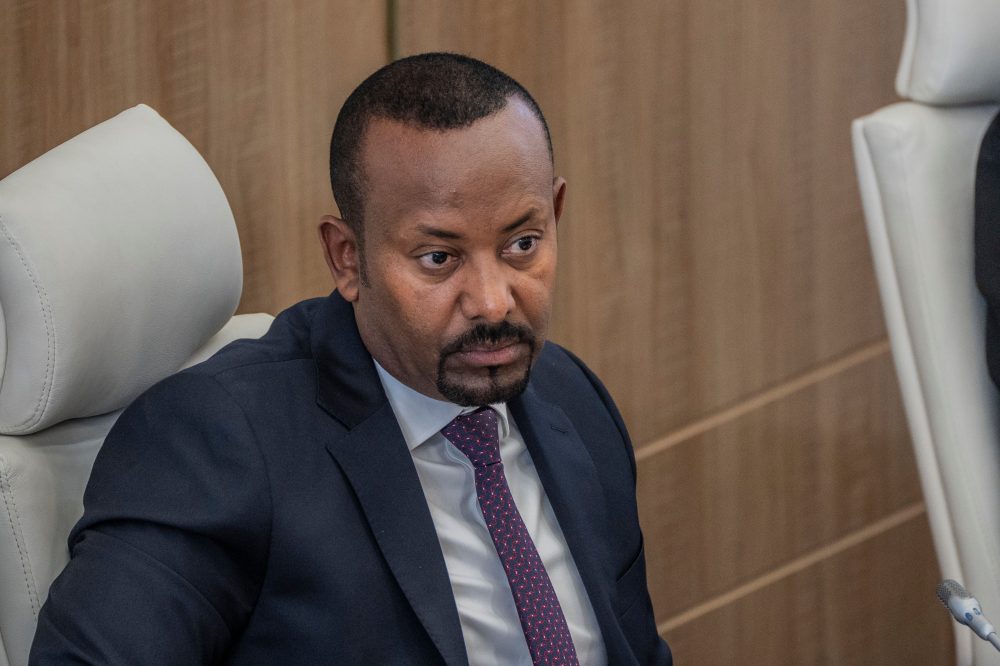

KAMPALA, Uganda — Ethiopian Prime Minister Abiy Ahmed finds himself at the center of growing tensions that could spark another conflict in the volatile Horn of Africa region.
While his admirers view him as a visionary leader working to restore Ethiopia’s historic prominence, critics characterize Abiy as an agitator whose demands for sea access through hostile neighboring territory could ignite widespread warfare.
Last Sunday in southern Ethiopia, Abiy orchestrated a military display featuring the nation’s special forces conducting tactical exercises in what observers interpreted as a clear message to Eritrea. A prominent banner declared Ethiopia would break free from its landlocked status “you like it or not,” accompanied by images of soldiers forcing entry to reach Assab port.
Since Eritrea’s independence from Ethiopia in 1993 following prolonged guerrilla conflict, Assab has remained under Eritrean control. Ethiopia currently routes most of its commerce through Djibouti’s port, paying approximately $1.5 billion annually in fees — an amount that until recently exceeded the nation’s total foreign currency reserves, according to London-based Africa Practice consulting.
This financial burden previously motivated Abiy to pursue a contentious sea access agreement with Somaliland two years ago, which infuriated Somalia and escalated regional tensions since Somalia maintains jurisdiction over the semi-autonomous territory.
Though the Somaliland controversy has subsided, Abiy’s current focus on Assab has generated legitimate concerns about potential warfare between him and Eritrean President Isaias Afwerki, along with possible allies including rebellious leaders from Ethiopia’s northern Tigray region.
The International Crisis Group warned in its latest analysis that while such “a catastrophic turn of events is by no means inevitable,” without international diplomatic intervention, the opposing forces “could find themselves party to a new regional war that would prove difficult to contain or end.”
Abiy emerged from relative anonymity to assume leadership in 2018 at age 41, initially viewed as a reform-oriented pragmatist. His efforts to mend Ethiopia’s strained relationship with Eritrea, which had been deteriorating since the 1990s, contributed to his 2019 Nobel Peace Prize recognition.
However, he surprised many in 2020 by launching military action against Tigray’s rebellious leadership, escalating into a devastating civil war. Ethiopian forces, supported by Eritrean allies, fought against the Tigray People’s Liberation Front (TPLF), the regional governing body. The conflict, characterized by sexual violence and other atrocities committed by all parties, concluded with a peace accord in 2022.
Now, Abiy’s pursuit of sovereign control over Assab has reportedly triggered military reinforcements along the Ethiopian-Eritrean border, according to regional experts.
Professor Kjetil Tronvoll of Oslo New University College, who specializes in peace and conflict studies, indicates that Tigray’s rebellious leadership and Eritrea appear to be “coordinating” their efforts against Ethiopian forces.
UN Secretary-General António Guterres has called on both Ethiopia and Eritrea to honor the border agreement established 25 years ago, while other regional powers have advocated for diplomatic negotiations.
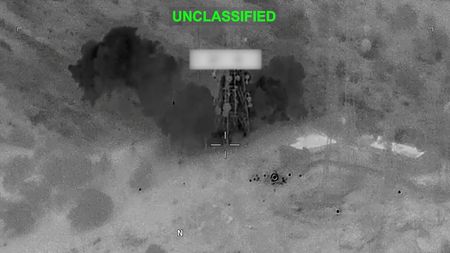
Meanwhile, verbal confrontations accompany intermittent fighting within Ethiopian borders. Tigrayan officials blame Ethiopian federal forces for conducting drone strikes, while Ethiopia alleges that Eritrea is “actively preparing to wage war against it” and has positioned forces in Tigray, which borders Eritrea.
Eritrea contends that Ethiopia harbors a “long-brewing war agenda” to capture Assab — an accusation that Abiy appeared to validate through his military demonstration in Hawassa, attended by senior government and military leadership.
Following his rise to power, Abiy positioned himself as a philosophical architect of Ethiopian revival. Through his “medemer” concept — an Amharic term meaning strength through unity — the prime minister envisioned what he called a “beautiful symphony of progress.”
Leading the ruling Prosperity Party, Abiy has championed completion of the massive Nile River dam project despite strong Egyptian opposition over water flow concerns. His vision includes transforming Addis Ababa into an attractive capital with green spaces and modern architecture, alongside plans for nuclear energy development and 1.5 million new homes. This year marked the groundbreaking of what would become Africa’s largest airport, a $10 billion project near Addis Ababa.
Yet he confronts two major obstacles: Ethiopia’s status as the world’s most populous landlocked country with over 130 million residents, and ongoing ethnic tensions fueling conflicts in the Amhara and Oromia regions, where government forces continue battling insurgents.
Pursuing warfare over port access would undermine Abiy’s ambitious development agenda by diverting military personnel and resources to another armed confrontation with Eritrea, whose officials dismiss him as reckless.
Eritrean leaders argue that Abiy’s public provocations serve to distract from domestic difficulties and that his infrastructure initiatives contradict reports of food insecurity affecting parts of Ethiopia. Yemane Gebremeskel, Eritrea’s government spokesperson, regularly refers to Abiy’s Prosperity Party as the “Potemkin party.”
In a Monday statement, Gebremeskel accused the party of continuing to “spew and ramp up, at almost every public occasion, toxic and provocative vitriol against the sovereignty and territorial integrity” of neighboring countries.