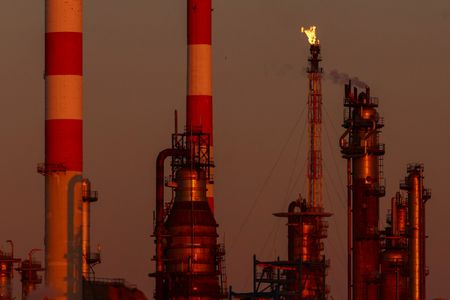

Energy markets are preparing for another volatile week as crude oil costs appear headed for additional increases Monday, according to industry experts speaking Sunday. Petroleum futures had already climbed to nearly four-year peaks by Friday’s market close following escalating tensions between Washington and Tehran over critical energy infrastructure.
President Donald Trump issued an ultimatum Saturday, warning he would “obliterate” Iranian power facilities unless Tehran completely reopened the Strait of Hormuz shipping lane within two days. The aggressive stance marked a dramatic shift just one day after Trump discussed “winding down” the ongoing conflict, which has now entered its fourth week.
Iranian officials responded Sunday with their own warnings, threatening to strike American-connected infrastructure throughout the Gulf region, specifically targeting energy production and water desalination plants if Trump follows through on his ultimatum.
Friday’s trading session saw Brent crude futures for May delivery jump 3.26% to close at $112.19 per barrel, marking the highest level reached since July 2022.
Market analyst Tony Sycamore from IG warned that “President Trump’s threat has now placed a 48-hour ticking time bomb of elevated uncertainty over markets.” He predicted oil prices would surge Monday unless the administration reverses course on the ultimatum.
Energy Aspects founder Amrita Sen emphasized the gravity of the situation, stating “It clearly means more escalation which means higher oil prices. Some are incorrectly thinking, however, that Iran may cave.” She added that “Trump is trying to show he can out-escalate and that way ends in scorched earth for Gulf infrastructure.”
The ongoing conflict has already severely disrupted regional energy operations, with Iranian forces targeting petroleum facilities across Saudi Arabia, Kuwait, Bahrain, the United Arab Emirates and Qatar in response to attacks on their own infrastructure. The Hormuz closure has eliminated four complete days of worldwide oil supply, representing approximately 440 million barrels lost during the 22-day conflict period.
While Tehran has struck numerous facilities, officials have avoided targeting major desalination operations in Saudi Arabia and the UAE that provide drinking water for millions of residents. According to Atlantic Council analysis, significant damage to these water treatment facilities could render Gulf cities unlivable within weeks, potentially forcing mass population relocations and widespread electrical grid failures.
Last week’s trading showed Brent crude gaining roughly 8.8%, while West Texas Intermediate front-month contracts dropped about 0.4% compared to the previous Friday’s close. The price gap between WTI and Brent reached its widest margin in eleven years during Wednesday’s session.
International Energy Agency director Fatih Birol told the Financial Times Friday that restoring Middle Eastern Gulf supply chains could require up to six months once hostilities cease.
Reports from Axios Friday indicated the Trump administration is exploring options to either occupy or establish a naval blockade around Iran’s Kharg Island facility as leverage to force reopening of the Strait of Hormuz.