
A proposal that would push back new federal protections for North Atlantic right whales by nearly a decade has cleared a major congressional hurdle, drawing strong backing from the commercial fishing and lobster industries — but fierce opposition from environmental advocates.
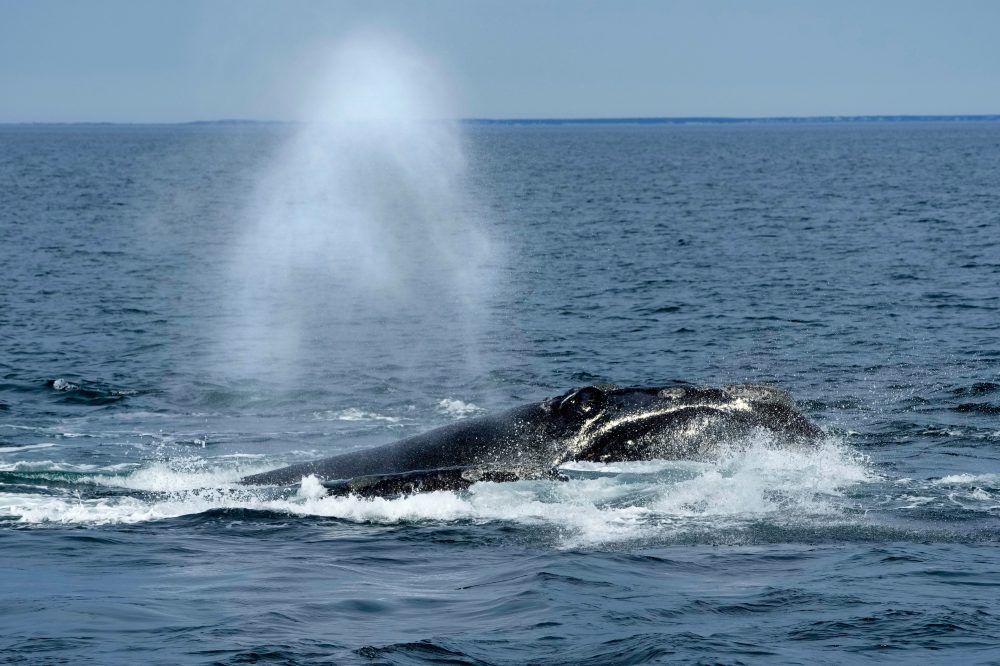
Only about 380 North Atlantic right whales remain in existence. Conservationists warn the animals face deadly risks from becoming entangled in fishing gear or being struck by vessels, and say further delays in stronger protections could push the species toward extinction.
The federal government had already put a hold on any new right whale regulations through 2028. On July 15, the House Natural Resources Committee voted to stretch that pause all the way to 2035. A full congressional vote could come as early as this summer, and with Republicans controlling Congress, the measure is widely expected to pass.
The Trump administration has expressed support for the legislation, which was introduced by U.S. Rep. Jared Golden, a Democrat from Maine, alongside Republican Rep. Mike Lawler of New York. Golden says the extended delay is meant to allow more time to collect data on the most effective ways to protect the whales.
“Mainers are not asking for much. We just need more time,” Golden said.
The loudest opposition to stricter regulations has come from lobster and crab fishing operations in New England states, particularly Maine and Massachusetts. Those industries argue they already operate under some of the most rigorous conservation standards anywhere in the world, and warn that additional rules could threaten their livelihoods.
The current moratorium on new rules has been in effect since 2022. Environmental organizations say that while lawmakers have debated and delayed, right whales have continued to die from encounters with commercial fishing gear.
The whale population dropped by roughly 25% between 2010 and 2020. While numbers have ticked upward slightly in recent years, the population still falls well short of the approximately 480 whales counted in 2010.
“They needed more protections in 2022 when Congress ignored a mountain of evidence and decided that insufficient efforts were enough,” said Gib Brogan, senior campaign director with the conservation organization Oceana. “Now, once again, lawmakers are trying to pass the buck.”
The fishing industry, however, maintains that existing rules are doing their job — and points out that extending the moratorium would not roll back any current protections.
“The current conservation framework remains fully in place, and this legislation does not weaken protections for the North Atlantic right whale,” said Beth Casoni, executive director of the Massachusetts Lobstermen’s Association.
Right whales were once plentiful along the East Coast before commercial whaling brought them to the brink of extinction. Today, scientists say the animals face ongoing threats not only from fishing gear and ship strikes, but also from warming ocean temperatures driven by human-caused climate change.