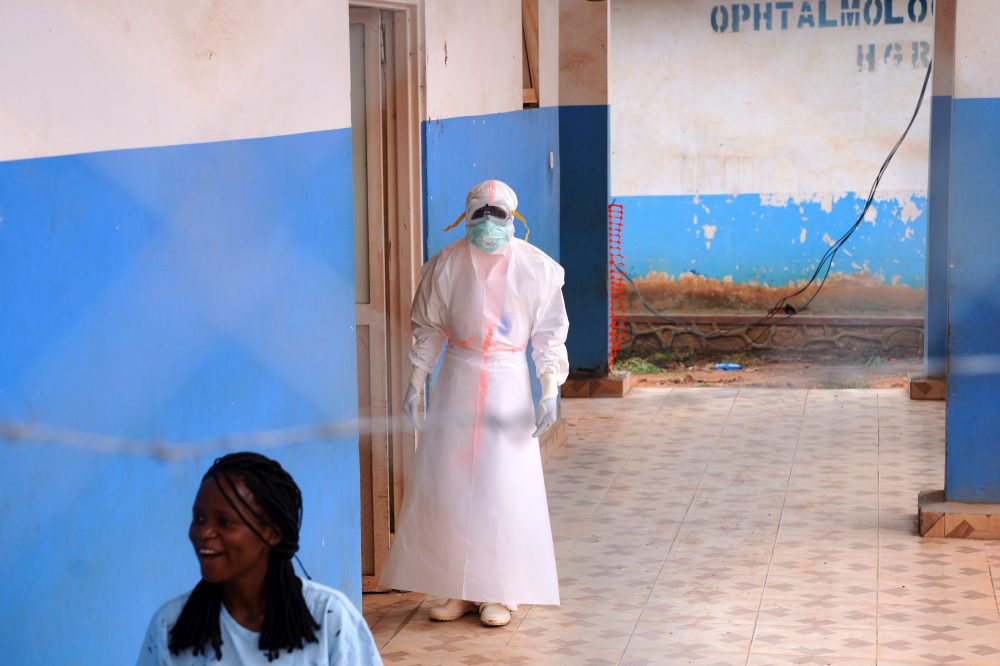

DAKAR, Senegal — What is now being called the fastest-growing Ebola outbreak in recorded history has claimed more than 1,000 lives in eastern Congo, as health authorities work urgently to stop a virus that currently has no approved vaccine or cure.
Congo’s public health institute released figures on Wednesday showing 2,536 confirmed Ebola cases and 1,033 deaths, with at least 738 patients either in isolation or receiving hospital care.
The outbreak was officially declared on May 15 and stands apart from most previous Ebola events because the specific strain involved — the Bundibugyo virus — lacks any approved medical countermeasures.
The vast majority of cases, nearly 90%, are centered in the remote Ituri province. However, infections have also been confirmed across five provinces, including the major city of Kisangani, and the outbreak has crossed into neighboring Uganda.
Congolese officials say the sharp spike in new cases may be beginning to slow, but they are careful to point out the outbreak has not yet reached its peak. The country’s public health institute reports that transmission is still ongoing, with recent ups and downs in case counts likely tied to delays in reporting and the ongoing process of compiling data.
Contact tracing efforts continue to fall short, with only about 77% of known contacts being monitored nationally — well below the 95% threshold that health officials say is necessary to stop the spread.
Researchers at the U.S. Centers for Disease Control and Prevention used computer modeling last month and determined that under a worst-case scenario, this outbreak could rival the deadliest in Ebola history. The West Africa epidemic of 2014 to 2016 resulted in more than 11,000 deaths and took roughly eight months from the first case to reach the 1,000-death milestone.
How the current outbreak began remains unknown. The World Health Organization says the large majority of cases are emerging from unidentified chains of transmission.
The WHO continues to rate the risk from this outbreak as “very high” within Congo and “high” in Uganda and surrounding nations, pointing to cross-border spread, frequent movement of people, and continued transmission in eastern Congo. However, the agency says the global risk of wider spread remains low, noting that Ebola is transmitted through direct contact with an infected person’s bodily fluids — not through the air — making it far less contagious than respiratory illnesses.
The CDC echoed that view in its most recent situation report. “You cannot get Ebola from being near someone,” the agency stated. The CDC also noted that people carrying the Ebola virus are not contagious until they show symptoms, which makes identifying cases and tracing contacts more manageable than with diseases that spread before symptoms appear.
In Uganda, 20 cases have been confirmed, including two deaths. All were linked to infections imported from Congo and are concentrated in the capital city of Kampala. No new cases have been reported since June 21, and the WHO has discharged its last remaining patient there, starting the 42-day countdown that precedes an official declaration that an outbreak has ended.
A doctor traveling from Congo tested positive for Ebola in France in June. That individual has since made a full recovery and was released from the hospital earlier this month.
The United States is currently barring most travelers who have recently been in Congo from entering the country and requires American citizens to spend 21 days outside of Congo before they can return home. Travelers from Uganda and South Sudan who are permitted entry are directed through specific airports for Ebola screening.
U.S. plans to construct an Ebola quarantine facility in Kenya for Americans evacuated from Congo have run into legal challenges and a series of protests in Kenya, some of which have turned violent.
A lack of public trust and local resistance remain among the most serious barriers to controlling the outbreak, according to health workers and authorities. Rumors surrounding Ebola treatment centers, fears about being isolated, and opposition to safe burial practices have led some people to avoid testing or delay seeking care until they are critically ill.
Armed conflict has also hampered the response. Fighting involving Rwanda-backed M23 rebels, attacks by the Islamic State-linked Allied Democratic Forces, and large-scale displacement of people have made surveillance, contact tracing, and access to affected communities much more difficult.
Trish Newport, emergency program manager for Medicines Sans Frontieres, also known as Doctors Without Borders, has been working in Congo throughout the crisis. “There’s never been an Ebola outbreak that started with so many cases because it was so late to be identified,” she said.
Earlier this month, researchers launched the first-ever clinical trial of potential treatments specifically for the Bundibugyo virus, enrolling patients at an Ebola treatment center in Ituri province. The WHO said the trial could take months and may require up to 1,000 participants before researchers can determine whether either of the two experimental treatments being tested actually works.