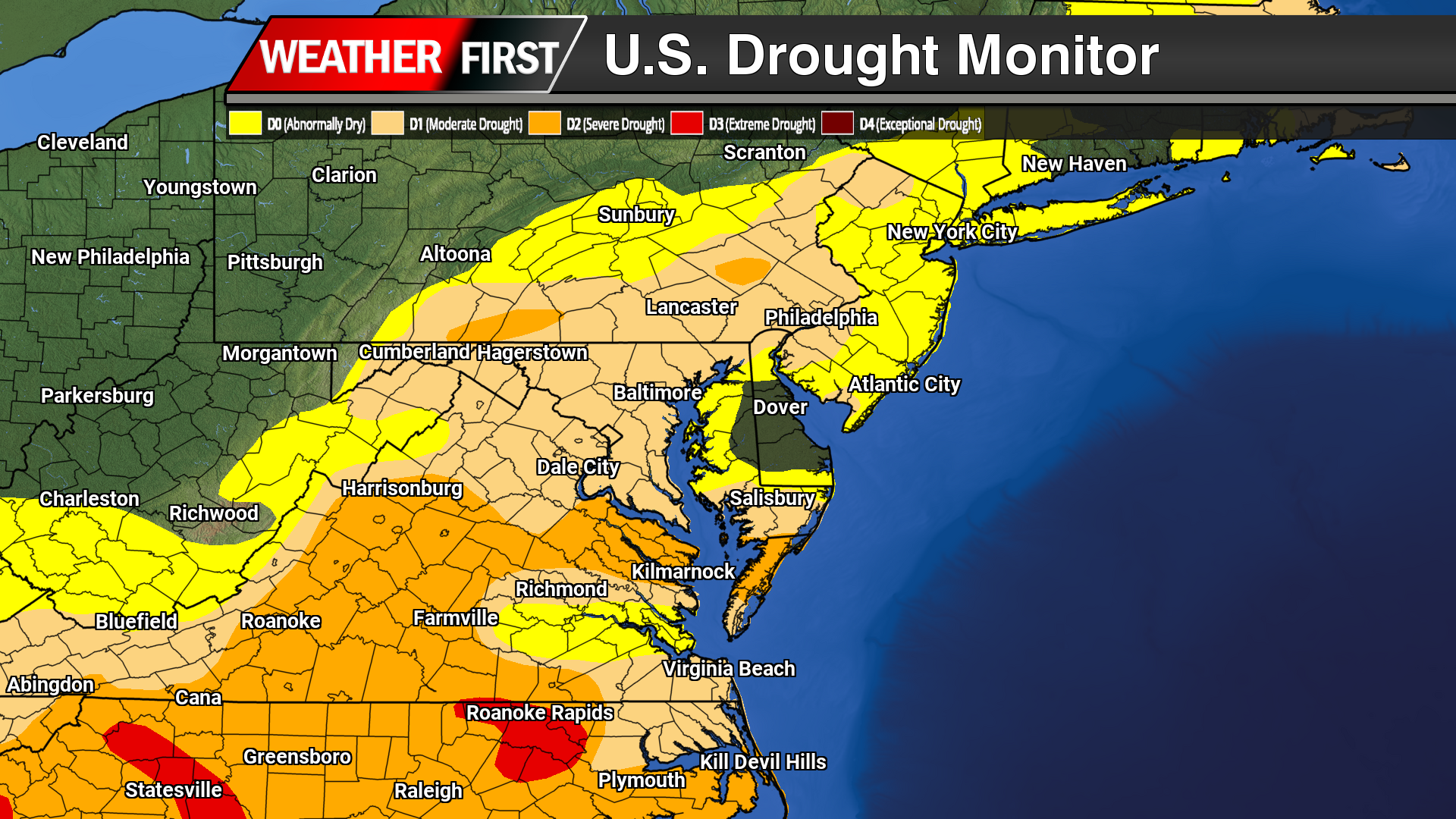

Drought conditions continue to impact portions of the Mid-Atlantic, though there are signs of gradual improvement in some areas, according to the latest update from the U.S. Drought Monitor.
Across the region, which includes Delaware, Maryland, New Jersey, Virginia, and Washington, D.C., varying levels of dryness remain in place. The Drought Monitor classifies conditions on a five-level scale, ranging from “abnormally dry” (D0) to “exceptional drought” (D4), highlighting both ongoing concerns and localized improvements.
Recent data shows that parts of the Mid-Atlantic have seen modest improvement compared to previous weeks, particularly in areas that have received more consistent rainfall. However, drought conditions are still firmly established in several locations, especially where long-term precipitation deficits and low soil moisture persist.
In Maryland and Delaware, drought conditions have been a lingering issue over recent months, with significant portions of land previously categorized under moderate drought. While conditions can vary locally, impacts such as reduced soil moisture and stressed vegetation remain concerns as the region heads deeper into the spring growing season.
New Jersey continues to deal with broader water supply concerns, with the state remaining under a drought warning. Officials note that despite some recent rainfall, long-term dryness continues to strain reservoirs and groundwater supplies, prompting ongoing calls for water conservation.
Further south, parts of Virginia and the Delmarva Peninsula have also experienced ongoing drought impacts, including reduced streamflow and dry soils. Earlier assessments have shown moderate drought conditions affecting much of eastern Virginia and portions of Maryland’s Eastern Shore.

Even where conditions have improved slightly, experts caution that recovery from drought is a slow process. Soil moisture, groundwater levels, and reservoir storage all take time to fully rebound, especially following extended dry periods.
Looking ahead, the broader seasonal outlook suggests the potential for some improvement across the Mid-Atlantic, particularly if wetter patterns develop later this spring. However, continued monitoring will be essential, as periods of warm and dry weather could quickly reverse any recent gains.
For now, much of the Mid-Atlantic remains in a state of watchful recovery, with drought conditions still a key concern as the region transitions into the peak of the growing season.