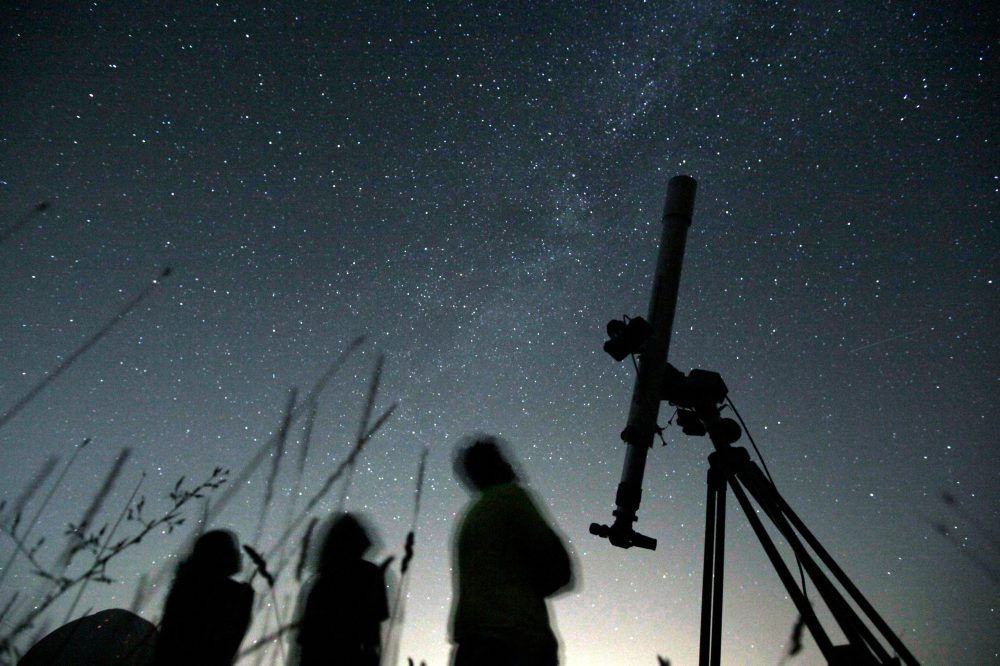

Delaware residents have a special opportunity this weekend to witness a rare astronomical event as six planets gather together in the evening sky.
This celestial phenomenon, called a planetary parade, occurs when several planets appear clustered together on the same side of the sun, creating the illusion of alignment when viewed from Earth.
According to NASA, while two or three planets are commonly visible after dark, gatherings of four or five that can be seen without equipment happen only every few years. Last year brought exceptional displays featuring six and even all seven planets.
This Saturday evening, four planets will be visible to Delaware stargazers without any special equipment, weather permitting. Mercury, Venus, Jupiter and Saturn can all be spotted with the naked eye, while Uranus and Neptune will require binoculars or a telescope to view.
For the best viewing experience, head outside approximately one hour after sunset and find a location away from tall structures and trees that might obstruct your view. Direct your gaze toward the western horizon where Mercury, Venus and Saturn will appear low in the sky, while Jupiter, Uranus and Neptune will be positioned higher up.
Sara Mazrouei, a planetary scientist at Humber Polytechnic in Canada, offers this helpful tip for distinguishing planets from stars: “If it’s twinkling, it’s a star. If it is not twinkling, it’s a planet.”
The planetary display should remain visible throughout the weekend and for several days following. Eventually, Mercury will disappear from view as it drops below the horizon.
NASA notes that at least one bright planet can typically be observed on most clear nights throughout the year.
Emily Elizondo, a planetary scientist from Michigan State University, suggests that observing multiple planets simultaneously offers a meaningful connection to ancient astronomers. These early stargazers worked to understand the cosmos “just by looking up at the stars and the planets,” Elizondo explained, “which is something that we can do today.”