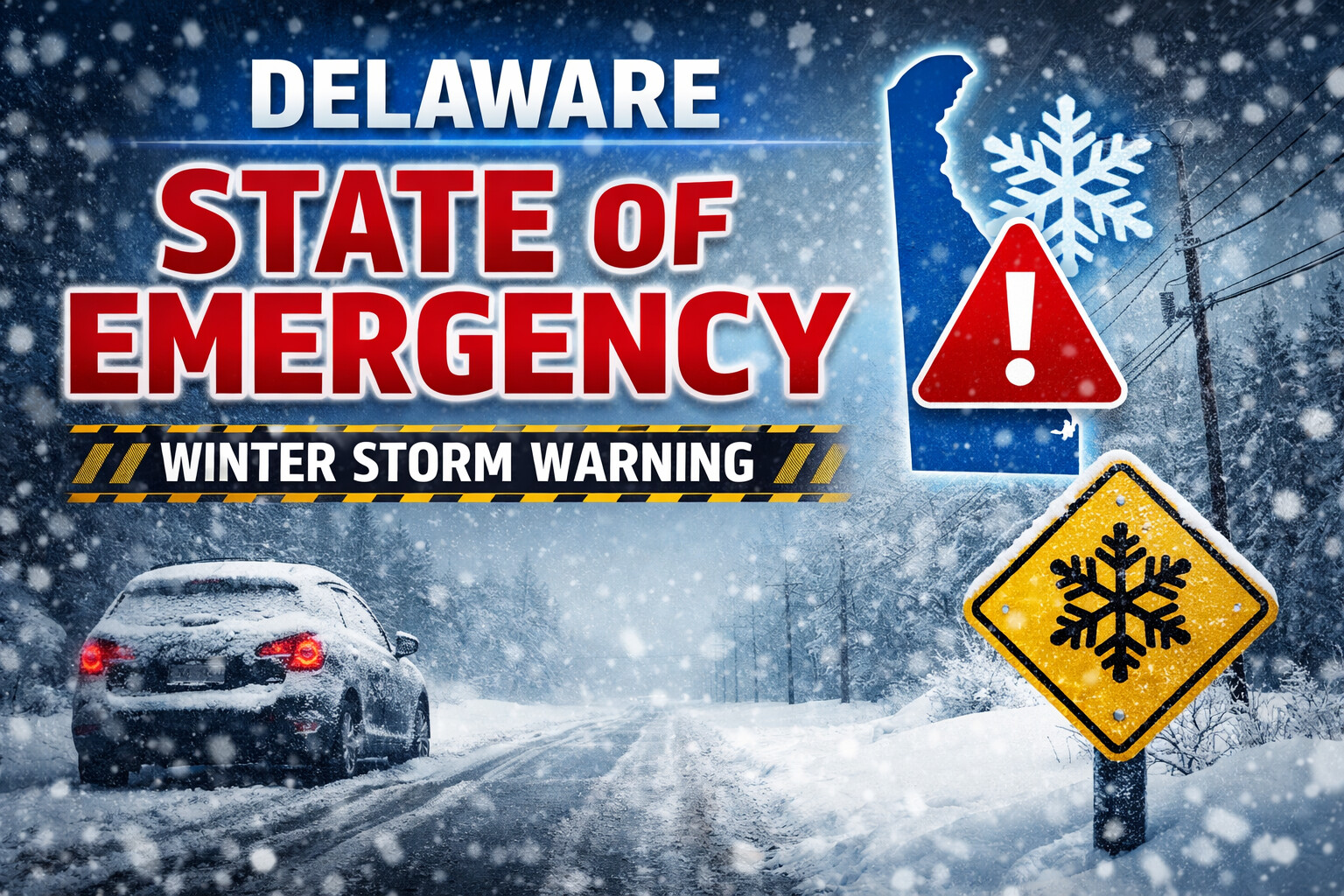

The State of Delaware has declared a State of Emergency as a powerful winter storm approaches the region, mobilizing state and local agencies to prepare for potentially hazardous conditions. In response, the Delaware Emergency Management Agency (DEMA) has activated the Emergency Operations Center (EOC) to coordinate preparations and response efforts across the state.
Governor Matt Meyer emphasized the importance of readiness as this system moves in, saying that Delawareans should feel secure and well supported as severe winter weather conditions develop.
What the Declaration Means
A State of Emergency gives state leaders the authority to streamline decision-making and resource deployment, improve coordination with local governments and emergency responders, and position personnel and equipment strategically ahead of the storm. The EOC activation brings key agencies together to share data, track impacts in real time, and ensure rapid communication on public safety actions.
Expected Weather and Conditions
Forecasters are tracking a strong winter system expected to bring heavy snow, a wintry mix, and significant icing across much of Delaware. Snow totals could reach near a foot in some areas, with the exact amounts depending on storm track and temperature changes. After the storm’s passage, temperatures are projected to plunge into the teens and low 20s, increasing the risk of slick conditions and prolonged cold.
This system is part of a larger winter storm affecting the Mid-Atlantic and Northeast, with similar emergency declarations and warnings issued in neighboring states as snow and ice threaten travel and infrastructure.
Preparedness Actions Urged for Residents
Officials are urging Delaware residents to take proactive steps now to prepare for potential disruptions:
- Stock up on essential supplies like non-perishable food, water, prescription medicines, and pet needs.
- Prepare your home for extended cold by checking heating systems, weatherproofing doors and windows, and ensuring fuel supplies are adequate.
- Assemble emergency kits for vehicles and households with flashlights, batteries, blankets, first-aid kits, and a battery-powered weather radio.
- Avoid nonessential travel when conditions worsen. If travel is necessary, leave extra time, go slowly, and carry emergency gear in your vehicle.
DEMA also reminds residents to dress appropriately outdoors in layers and take measures to prevent cold-related health issues like hypothermia and frostbite.
What to Watch For
Officials warn that travel could become dangerous or impossible at times during the storm, particularly on Sunday and into early next week. Power outages and hazardous road conditions are possible, especially where heavier snow and ice accumulate.
State and local partners will continue monitoring conditions, issuing updates through emergency alerts, social media, and official channels. Residents should stay tuned to local forecasts and guidance from DEMA, the National Weather Service, and transportation authorities.