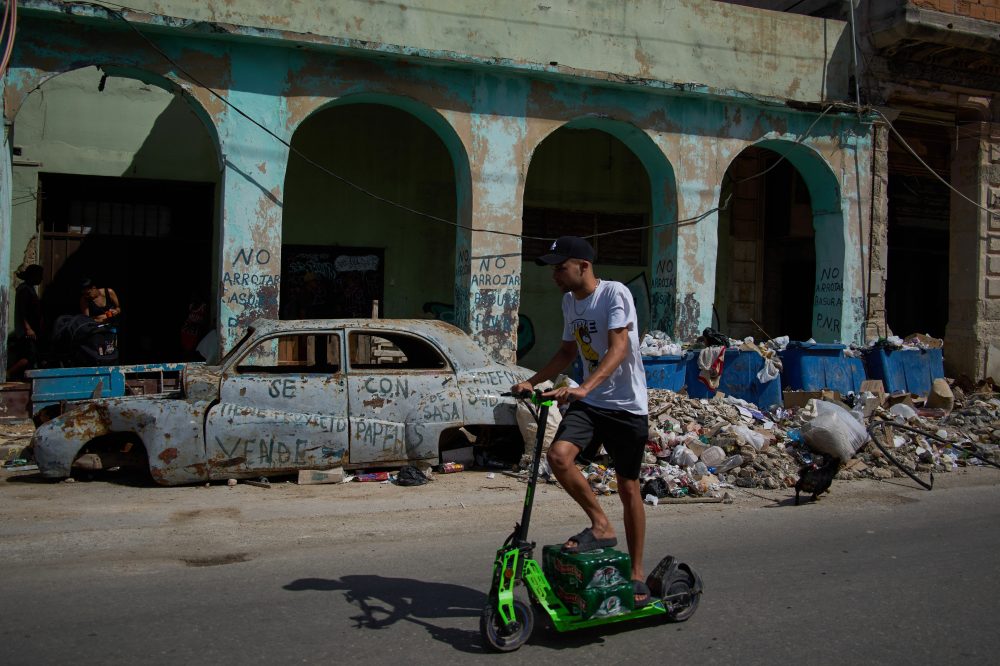

Western Cuba plunged into darkness Wednesday as a widespread power failure left millions of residents from Havana to central provinces without electricity, marking another crisis for the island nation’s struggling energy infrastructure.
The outage originated when Cuba’s largest thermoelectric facility, the Antonio Guiteras power plant located east of the capital, experienced a critical failure. According to state media reports, a burst pipe in the plant’s boiler system caused water leakage and triggered a fire that emergency crews successfully contained without extensive damage.
Radio Rebelde, the government broadcasting service, cited energy officials who warned that restoring the massive power plant to full operation could require a minimum of 72 hours. The facility’s technical director, Román Pérez Castañeda, explained to the station that repair teams must first identify the exact location of the malfunction, develop a repair strategy, complete the fixes, and then restart and synchronize the entire unit.
The electrical failure impacted a vast area stretching from Pinar del Rio in the west to Camaguey in the central part of the island, according to statements from Cuba’s national electric utility posted on social media platform X.
Recovery efforts began slowly, with government officials announcing by late Thursday that power had been restored to approximately 2.5% of Havana, representing about 21,100 customers. Authorities emphasized that restoration work would proceed gradually based on what the damaged system could handle.
Prime Minister Manuel Marrero Cruz expressed confidence in repair efforts, writing on X: “We trust in the experience and effort of the electrical workers to overcome this situation in the shortest possible time.”
Energy and Mines Minister Vicente de la O Levy provided updates on restoration progress, noting that one affected power facility had resumed operations. “We are working to restore the National Electric System amid a complex energy situation,” he posted on social media.
The blackout created immediate hardships for residents trying to navigate daily life without power. Odalis Sánchez, a 63-year-old woman recovering from surgery, found herself stranded on the street with her grandson when the outage hit. Unable to walk due to her recent operation, she struggled to find transportation home.
“I need to be able to get home to see what I can do,” Sánchez explained. “Without power, you can’t do anything. My grandson also is studying and I have to make him food. Public transportation isn’t helping.”
The transportation crisis deepened as fuel shortages prevented buses from running, forcing approximately 200 people at a nearby bus stop to seek alternative rides, including hitchhiking.
This represents the second major power failure to hit Cuba’s western territories in just three months. In early December, a nearly 12-hour blackout affected the same region when a transmission line fault between two power plants caused system overloads and the collapse of the western energy sector.
Cuba’s energy challenges have intensified following recent U.S. actions targeting Venezuela in early January, which disrupted crucial oil shipments from the South American ally. The situation worsened when President Donald Trump threatened to impose tariffs on any nation providing oil supplies to Cuba.
Despite the difficulties, some residents maintained their determination to persevere. Ernesto Couto Martínez, 76, who was searching for transportation home, said he would face the latest crisis “with the spirit that all Cubans have.”
“We must keep fighting. There’s no other way,” he stated. “We have to move forward, blockade or no blockade.”
The island nation implemented strict fuel conservation measures last month and announced that jet fuel would be unavailable at nine airports across Cuba until mid-March. Even before the recent U.S. actions against Venezuela, Cuba was already battling an deteriorating electrical grid, power generation shortfalls, and irregular fuel deliveries.