
Officials in Cuba report that approximately 3 million residents deal with water shortages on a daily basis, a crisis they link to severe fuel shortages caused by what government leaders call a U.S. energy blockade. The information emerged during a government roundtable discussion held late Wednesday.
Cuba’s water infrastructure currently functions with just 37% of necessary fuel supplies as the nation grapples with its most serious energy emergency to date.
Antonio Rodríguez, who heads the state-operated National Institute of Water Resources, explained that the water sector faces particularly severe impacts since it ranks among the nation’s biggest energy users.
Information from the forum, which addressed intermittent water access affecting the country’s population of nearly 10 million, appeared Thursday on the government website Cubadebate.
Rodríguez explained that electricity powers water pumping operations, while fuel is essential for all agency functions including clearing blocked pipes, maintaining septic systems, and fixing water line breaks. The import of necessary chemicals has also stopped completely.
The agency previously bought equipment and materials valued at approximately $100 million each year, but last year’s purchases dropped to roughly $10 million due to a complete halt in credit availability, according to Rodríguez. Suppliers are delaying contracts while evaluating delivery timing and potential banking payment challenges, plus restrictions on shipping options, he noted.
The situation grows more complex due to deteriorating infrastructure and overloaded pumping facilities, particularly in major urban areas including Havana, Santiago de Cuba and Matanzas, Rodríguez stated. Numerous apartment buildings and high-rises also need electricity to operate pumps that move water to rooftop storage tanks.
While the water emergency isn’t entirely new, conditions have deteriorated significantly in recent months.
Beginning in January, the U.S. administration strengthened existing sanctions against Cuba while pushing for political changes on the island. U.S. President Donald Trump also issued late January warnings about potential tariffs on nations that sell or supply oil to Cuba, which only produces 40% of its fuel requirements.
Citizens who have already endured five years of economic hardship, rising prices and supply shortages now face daily electrical blackouts lasting as long as 20 hours.
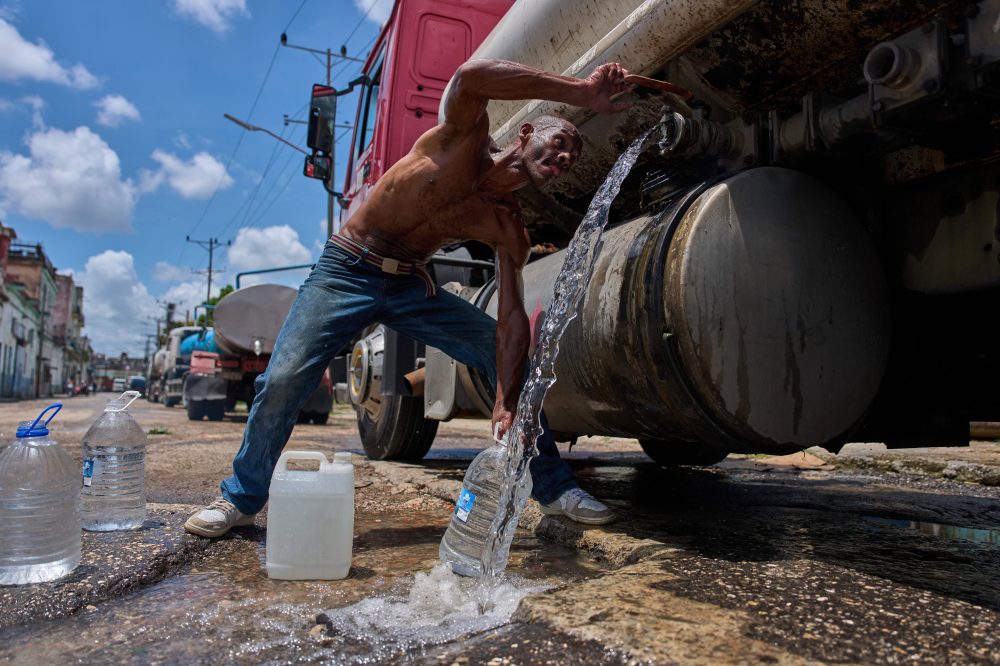
Multiple Havana neighborhoods depend on tanker truck water deliveries, though service remains unreliable.
“It’s been five days since the water came in,” said Magaly Ribial, a 60-year-old teacher, speaking Thursday while gathering water from a tanker truck positioned near her residence in Old Havana.
At the same time, 95-year-old Dayse Izquierdo finds it difficult to transport water and depends on what neighbors share when the tanker truck, locally known as a “pipa,” makes its rounds.
Several residents reported traveling from distant parts of the city after learning that water trucks would visit particular neighborhoods.
“The water situation is widespread,” explained 55-year-old Carlos Molina. “I come from another municipality to collect water because there is none there.”
Rodríguez pointed out that solar panels and alternative energy sources power only a minimal fraction of agency operations.
Officials are working on an expedited solar energy initiative, though specialists emphasize that such technology demands significant financial investment.