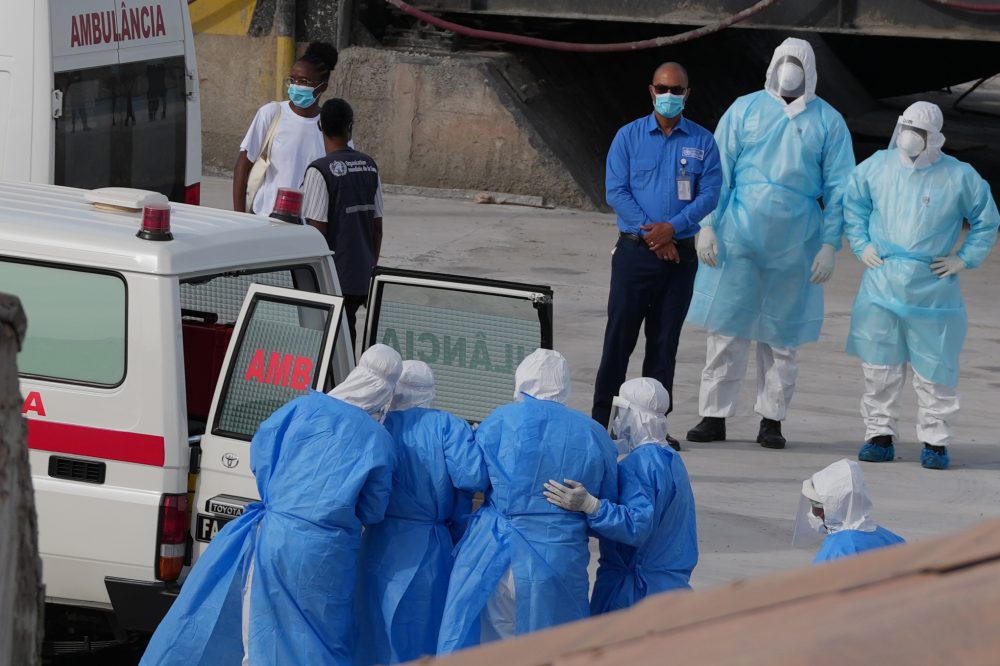

PRAIA, Cape Verde (AP) — Medical authorities evacuated three individuals Wednesday from a cruise vessel experiencing a fatal hantavirus outbreak, transporting them by air to the Netherlands as the ship carrying approximately 150 passengers makes preparations to sail toward Spain’s Canary Islands.
The outbreak has claimed three lives, with the World Health Organization confirming eight total cases have been documented.
Those aboard the Dutch vessel MV Hondius remain confined to their quarters while the ship stays positioned near the Cape Verde islands off West Africa’s coast. The vessel departed Argentina on April 1 for what was planned as a multi-week polar expedition.
This uncommon virus typically transmits when individuals breathe in contaminated particles from rodent waste. While person-to-person transmission can occur, the WHO notes such instances are uncommon.
WHO Director-General Tedros Adhanom Ghebreyesus stated that “the overall public health risk remains low.”
Oceanwide Expeditions reports the three individuals are being transported via specially outfitted aircraft to “locations able to provide specialized care and appropriate medical screening.”
A Dutch medical facility has confirmed it will receive one patient, while German officials say they are making arrangements to collect a second person from the Netherlands.
The Dutch cruise operator indicates two of those medically evacuated “remain in a serious condition.” The third shows no symptoms but had “closely associated” with a passenger who passed away May 2.
The company also announces it is “expanding medical care on board with two infectious disease physicians, arriving today by plane from the Netherlands.”
Leiden University Medical Center confirms the department receiving the patient is fully prepared.
In a website statement, the hospital declared, “In addition to isolation rooms for patients, all protective equipment for our staff is available. Treatment takes place in strict isolation, following the applicable protocols. The LUMC has specialized isolation facilities.”
The facility also seeks to calm concerns among other hospital visitors, noting patients or visitors “run no risk of infection. You do not need to take any special measures. You can continue to visit as usual.”
In Germany, Düsseldorf University Clinic announced that one of the three evacuated passengers who had contact with a hantavirus case aboard the vessel would arrive at the hospital for testing later Wednesday.
The clinic stated the individual would be transported to Düsseldorf from an undisclosed Dutch airport with assistance from the city’s fire department specialists.
Hospital officials emphasized the patient shows no symptoms and testing serves as a precautionary measure.
The vessel’s arrival “won’t represent any risk for the public,” Spanish Health Minister Mónica García announced.
She explained the ship will dock at a secondary port on Tenerife island, positioned 10 minutes from an airport. From that location, approximately 140 passengers will return to their respective countries.
García noted the European Union’s civil protection program will oversee the operation to send passengers and crew members home.
The 14 Spanish citizens aboard will travel by military aircraft to the mainland, where they will enter quarantine if deemed necessary.
Fernando Clavijo, regional president of Spain’s Canary Islands, said Wednesday the Hondius had requested authorization to dock at Tenerife on May 9.
Clavijo expressed surprise that passengers were being required “to travel for three days” rather than flying home from Praia’s airport.
He also criticized that central Madrid authorities had not briefed him on vessel circumstances, limiting local health officials’ preparation capabilities.
“We still don’t know the status of all the passengers,” he stated. “There is no protocol for this.”
Oceanwide Expeditions announced Tuesday evening that two specialized aircraft were traveling to Cape Verde to evacuate two individuals requiring urgent medical attention and one person who had traveled with a German woman who died aboard Saturday. They were scheduled for transport to the Netherlands, though exact timing remained unclear.
Following the medical evacuation, the vessel plans to navigate to the Canary Islands, either Gran Canaria or Tenerife, requiring approximately three days, the company stated, adding that “discussions are ongoing with relevant authorities.”
Spanish health officials had indicated in an earlier announcement they were monitoring and that “the most appropriate port of call will be decided. Until then, the Ministry of Health will not adopt any decision, as we have informed the World Health Organization.”
The World Health Organization reported the ship’s itinerary included stops throughout the South Atlantic Ocean, encompassing mainland Antarctica and remote islands including South Georgia, Nightingale Island, Tristan da Cunha, St. Helena and Ascension.
The cruise operator has disclosed limited details about two stops: at St. Helena, where the body of a Dutch man suspected as the initial hantavirus case was removed from the vessel. His wife also departed at St. Helena and flew to South Africa, where she died.
The company reported a British man was subsequently evacuated at Ascension Island and taken to South Africa, where he remains in intensive care.
The company has not disclosed whether other individuals left the cruise vessel at those or additional locations.
Spanish authorities will welcome the cruise ship to Spain’s Canary Islands, as the vessel remained off West Africa’s coast for a third day Wednesday awaiting evacuation of ill passengers.
Fernando Clavijo, regional president of Spain’s Canary Islands, expressed Wednesday his concern the ship’s arrival could endanger the local population and demanded an urgent meeting with Spanish Prime Minister Pedro Sánchez.
“Neither the populace nor the government of the Canary Islands can rest assured because it is clear that the danger to the population is real,” Clavijo told Onda Cero radio.
South African health authorities confirmed they identified the Andes strain of hantavirus in two passengers from the vessel, and Swiss authorities reported identifying the same virus in their affected patient.
The World Health Organization states the Andes virus, a specific hantavirus species, occurs in South America, mainly in Argentina and Chile.
The Andes virus can transmit between people, though this is uncommon and disease spread typically remains contained because transmission occurs only through close contact, such as sharing sleeping quarters or food, experts explain.
The South African Department of Health said results came from testing performed on passengers after their removal from the ship and transport to South Africa.
One passenger, a British man, remains in intensive care at a South African hospital. Testing was conducted on the other passenger after her death in South Africa.