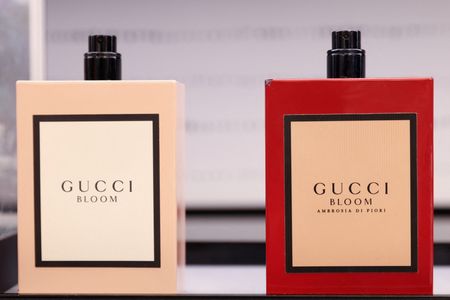

Beauty giant Coty has reached a $400 million agreement to surrender its Gucci Beauty licence one year before it was set to expire, a move that will sting the company’s bottom line in the short term but may ultimately help it chart a healthier course forward.
The deal comes as interim CEO Markus Strobel, a veteran of Procter & Gamble, works to steady a company whose stock has already lost 80% of its value since early 2024. Strobel stepped into the top role in January, replacing former chief executive Sue Nabi.
By agreeing to return the licence to its owner Kering by mid-2027, Coty stands to lose approximately $115 million in annual adjusted earnings — roughly 15% of its total profits — according to estimates from Barclays analyst Lauren Lieberman.
In exchange, Coty will receive $250 million upfront, with an additional $150 million due before October 2027. The company may also generate further cash through inventory sales and is expected to reduce spending on staff and marketing tied to the Gucci brand.
Kering had previously agreed to sell the Gucci fragrance and cosmetics licence to L’Oreal as part of a broader deal involving Kering’s entire beauty business.
Alfonso Emanuele de Leon, a partner at FA Hong Kong Consultancy and a veteran of the beauty industry, called the arrangement a clear positive for all parties involved. “This is a win-win-win decision,” he said.
The funds will allow Coty to begin chipping away at its net debt, which currently sits at around $2.9 billion. Rating agencies have been watching the company closely, concerned that losing the Gucci licence could temporarily squeeze profit margins.
Despite the setback, some industry observers believe Coty is better positioned than the market gives it credit for. The company had already anticipated the licence’s 2028 expiration and spent 2024 signing deals with brands including Swarovski, Etro, and Marni.
Under Strobel’s leadership, Coty has been doubling down on upscale fragrances, relaunching Marc Jacobs makeup, and working to reposition its mass-market brand CoverGirl to appeal to older, more affluent Gen X shoppers.
Akeel Sachak, partner and global head of consumer at Rothschild & Co., pushed back on the idea that losing Gucci spells disaster for Coty. “The loss of the Gucci licence will not be as prejudicial as people imagine,” he said. “Coty still has a strong fragrance business and has been diversifying in anticipation of the licence ending. It is less dependent on Gucci than the market is pricing in.”
Coty built itself into a major player in the beauty world after purchasing Procter & Gamble’s perfume, hair care, and makeup divisions for $12.5 billion back in 2015. Since then, it has sold off its hair care unit and is currently reviewing its consumer cosmetics brands — including CoverGirl and Rimmel — though high inflation and interest rates have made valuations difficult.
The company is considered relatively insulated from the wave of consolidation hitting the broader consumer goods industry, in part because top shareholder JAB Holding controls a majority stake.
Michael Ashley Schulman, a partner at Cerity Partners who previously invested in Coty at other firms but no longer holds the stock, said the company could come out stronger if it uses the proceeds to accelerate growth in licences such as BOSS, Marc Jacobs, and Kylie Cosmetics.
Schulman drew a comparison to the film industry, noting that the most successful studios build deep catalogues rather than staking everything on one blockbuster franchise. “Coty is losing its Cinderella, but even Disney knows the strongest franchise is built on a deep roster of timeless names, not a single princess,” he said.