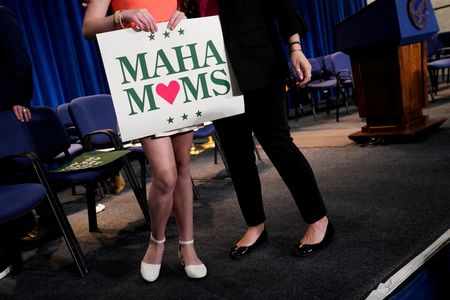

A fresh survey indicates that supporters of the “Make America Healthy Again” movement will prioritize cost reduction over other health concerns when casting their ballots in November’s midterm elections.
According to research conducted by KFF, a nonpartisan health policy organization, reducing expenses ranks as the primary health concern for MAHA supporters across party lines, with at least half stating this issue will significantly influence their voting decisions and candidate preferences.
Cost concerns continue to challenge a president who made affordability a central campaign promise. Trump’s approval numbers have dropped to record lows as the conflict with Iran drives up living expenses, with gas prices climbing and restaurant sales declining due to the war’s economic impact.
These financial worries are anticipated to damage Republican chances of keeping congressional control this year.
The KFF survey found that 61% of all participants said medical costs would significantly affect their November voting choices, placing this concern above food safety and vaccination policy issues.
“This poll really shows that the issues the MAHA movement has elevated resonate broadly with the American public, but even for voters who support MAHA, healthcare costs are the dominant priority by a wide margin,” said Audrey Kearney, senior survey analyst at KFF.
Researchers conducted the study April 14-19 through online and phone interviews with 1,343 U.S. adults representing the national population. Approximately 500 participants identified as MAHA movement supporters, according to KFF.
The organization discovered that 42% of MAHA voters selected cost reduction as their top federal health priority when forced to choose one issue. This compared to 21% who emphasized limiting chemical food additives and 10% who prioritized reviewing vaccine safety protocols.
Survey results carried a margin of error of plus or minus 3 percentage points.
Trump previously stated he would allow Health Secretary Robert F. Kennedy Jr. to “go wild” on health policy matters. Kennedy’s efforts to reduce recommended childhood vaccinations and modify dietary guidelines have satisfied MAHA supporters.
However, the administration has also frustrated movement members with certain decisions, including a February directive protecting domestic production of a commonly used herbicide and April’s appointment of a former COVID response official to head the Centers for Disease Control and Prevention.
“He shook Bobby Kennedy’s hand and said he’d let him go wild. And nothing has been done to reduce our children’s exposure to toxic pesticides,” Zen Honeycutt, who founded Moms Across America, told Reuters.
The KFF poll revealed that public majorities believe insufficient regulation exists for chemical food additives and agricultural pesticides.
The Trump administration received poor approval ratings on two key MAHA priorities. Survey results showed 38% of respondents approved of vaccine policy management and 46% supported food policy handling.
Kennedy’s approval ratings have stayed relatively stable since September and January polling, with roughly four in ten voters supporting his performance as health secretary, KFF reported.
Honeycutt expressed continued support for Kennedy while hoping the administration will change direction on pesticide policies.
“This administration has done more for health than any other administration ever in recorded history,” Honeycutt said. “It was brilliant of Trump to bring Kennedy on board.”
The health secretary has recently pursued quick victories before the midterms after White House pressure led him to scale back vaccine initiatives that prompted sharp criticism from major medical organizations.