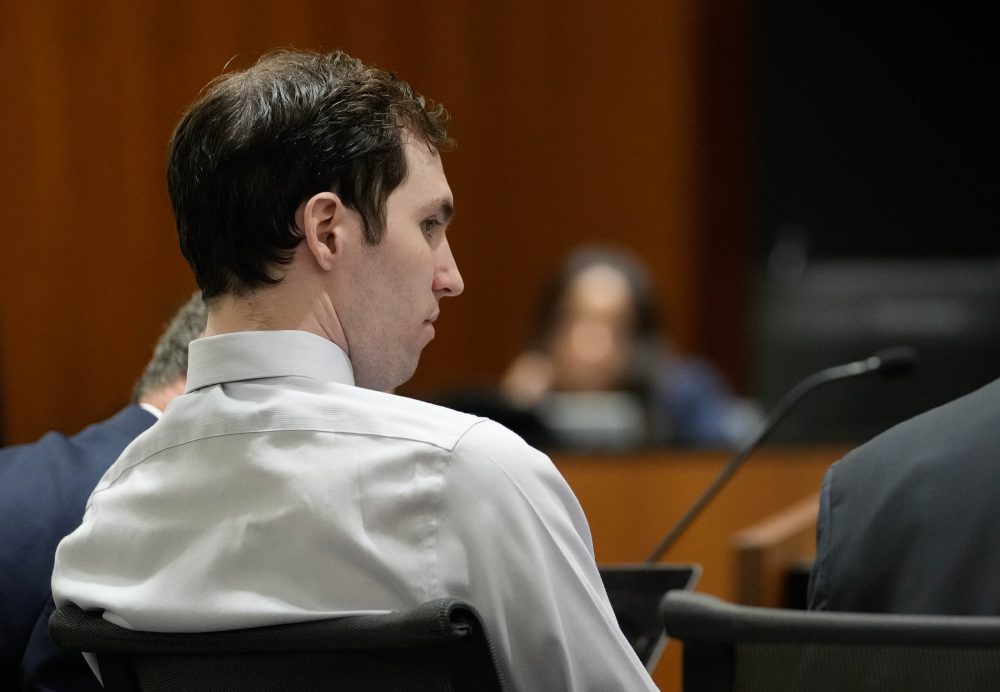

A pivotal weeklong preliminary hearing got underway Monday for the man accused of gunning down conservative activist Charlie Kirk, as prosecutors work to convince a judge they have sufficient evidence to take the case to trial.
Tyler Robinson, 23, faces an aggravated murder charge in connection with the September 10 shooting death of Kirk on the campus of Utah Valley University, where Kirk had been speaking to a crowd of thousands. Robinson has not yet entered a plea, and his attorneys have made no public statements about his guilt or innocence.
The hearing marks the most significant public presentation of evidence in the case to date. Once it wraps up, state District Judge Tony Graf will decide whether the case moves forward to trial.
Kirk’s widow, Erika Kirk, along with his parents Robert and Kathryn, and his sister Mary released a statement ahead of Monday’s proceedings, expressing gratitude to supporters who have reached out with kindness and prayers.
“Every court proceeding serves as a painful reminder of his death,” Erika Kirk wrote in a statement posted on X, “and the loss that has irrevocably impacted our lives and the lives of his children.”
She also noted that the public support “has sustained us during the darkest days of our lives.” The statement concluded: “Out of respect for the judicial process, we will not be commenting further at this time.”
This week marks the first time Kirk’s family will be in the same courtroom as the man accused of taking his life, according to a source familiar with the situation who spoke anonymously because they were not authorized to comment publicly.
During her husband’s memorial service last September, Erika Kirk made a striking declaration when she announced she had forgiven Robinson.
“My husband, Charlie, he wanted to save young men, just like the one who took his life,” she said, visibly fighting back tears.
“I forgive him because it was what Christ did. It is what Charlie would do,” she added.
Her words stood in sharp contrast to the reaction from many prominent conservatives, including President Donald Trump, who stated on Fox News in September that he hopes Robinson receives the death penalty.
Following her husband’s death, Erika Kirk assumed leadership of Turning Point USA, the conservative youth organization that her husband co-founded.
The case has not been without controversy. Judge Graf recently found that prosecutors had violated his restrictions on public statements when Deputy Utah County Attorney Christopher Ballard told a media outlet that his office had more than enough evidence to convict Robinson. Defense attorneys argued the comments were designed to sway potential jurors and pushed for the death penalty option to be removed as punishment. Graf rejected that request, calling it too extreme and noting that Ballard’s remarks were not made with malicious intent. The judge said any concerns about juror bias could be handled by broadening the jury pool or more thoroughly screening prospective jurors.
Paul Cassell, a University of Utah law professor and former federal judge, said the hearing shifts the focus to whether the evidence supports going to trial and whether the death penalty is appropriate. He noted that evidence already made public in court filings points to what he called “an overwhelming case.”
“This seems like the proverbial slam dunk at this stage of the case, where the only issue is whether there is a sound basis for moving forward with a trial on the merits,” Cassell said.
In Utah, the death penalty is only available when aggravating circumstances are present. Prosecutors contend that Kirk’s shooting put others in the crowd at risk, which they argue qualifies as an aggravating factor.
Investigators say DNA consistent with Robinson’s profile was discovered on the rifle’s trigger, a fired cartridge casing, two unfired rounds, and a towel used to wrap the weapon.
Authorities also say that after officials released a surveillance photo of the suspect along with details about the rifle, Robinson’s parents confronted him. They reportedly persuaded him to meet with a family friend — a retired sheriff’s deputy — who helped arrange for Robinson to turn himself in.
Prosecutors allege Robinson left a handwritten note for his roommate, who was also his romantic partner, reading: “I had the opportunity to take out Charlie Kirk and I’m going to take it.” He also reportedly sent a text message about Kirk saying, “I had enough of his hatred. Some hate can’t be negotiated out.”
Defense attorneys tried and failed to prevent prosecutors from using recorded statements from Robinson’s roommate during the hearing. They had argued the roommate should testify in person so Robinson could exercise his right to challenge witness credibility. Judge Graf ruled that opportunity would come at a later stage.
The hearing is expected to resemble a condensed version of a trial, with prosecutors planning to present DNA evidence, investigator testimony, autopsy findings, witness accounts, and video footage of the shooting. Prosecutors are not required to lay out their entire case and may rely on secondhand accounts or hearsay at this stage. The legal standard here is lower than at trial — they need only show reasonable grounds to believe Robinson committed the crime, rather than proving guilt beyond a reasonable doubt.