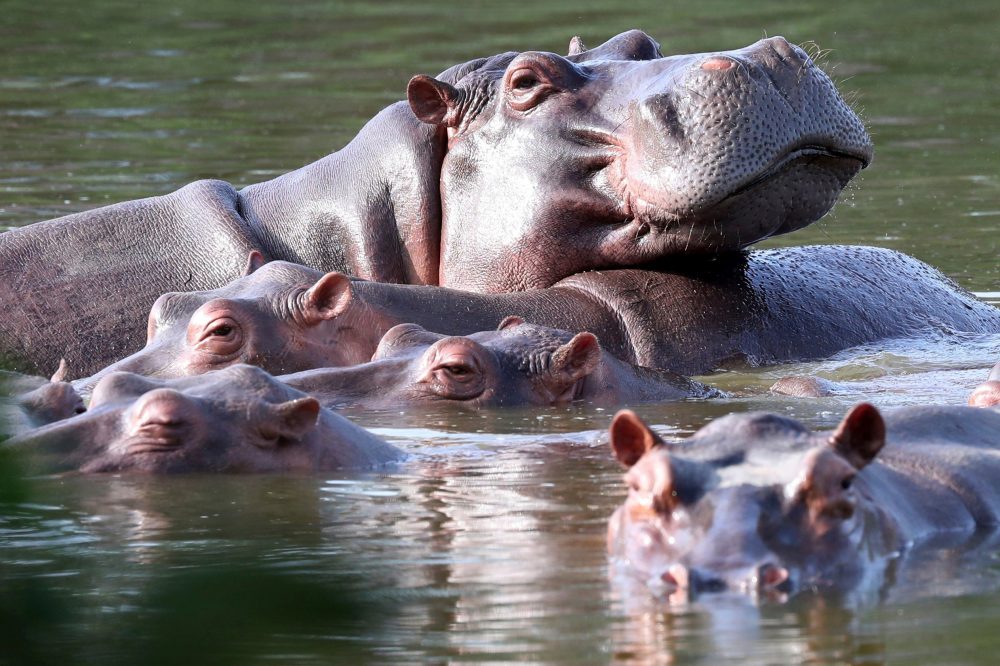

BOGOTA, Colombia — Colombian authorities gave the green light Monday to a controversial plan that will result in the killing of dozens of wild hippos wandering through the nation’s central region, where the massive animals have been endangering local residents and pushing out indigenous wildlife.
Environment Minister Irene Vélez announced the decision came after alternative population control measures proved both costly and ineffective, such as sterilization procedures and relocating the animals to zoological facilities. Vélez indicated that as many as 80 hippos could be targeted under this new approach, though she provided no timeline for when the culling would commence.
“If we don’t do this we will not be able to control the population,” Vélez said. “We have to take this action to preserve our ecosystems.”
Colombia stands as the sole nation beyond Africa’s borders harboring a free-roaming hippo population. These Colombian hippos trace their lineage to four specimens imported during the 1980s by infamous narcotics trafficker Pablo Escobar, who assembled a personal menagerie at Hacienda Nápoles, his sprawling estate in the Magdalena River valley complete with an airstrip that functioned as his countryside retreat.
Research conducted by Colombia’s National University calculated that approximately 170 hippos were living wild throughout the nation as of 2022.
In recent times, these massive mammals have been documented in locations extending more than 100 kilometers (60 miles) beyond the original ranch where Escobar first released the aquatic giants.
Colombian environmental officials warn that these large creatures present dangers to rural inhabitants who have come across them on agricultural properties and waterways. The hippos also create competition for resources with indigenous animals like river manatees.
While presenting ecological concerns, the hippos have simultaneously developed into a tourism draw, with local communities around Hacienda Nápoles now providing hippo observation excursions and marketing hippo-related merchandise.
The animals have become a primary feature at the Nápoles estate, which the Colombian government seized along with other Escobar assets. The property currently operates as an entertainment complex, complete with pools, water attractions and a zoo housing various other African animals.
Animal rights advocates throughout Colombia have consistently fought against proposals to eliminate the hippos, contending the animals have a right to exist and arguing that using lethal force creates a negative precedent for a nation that has endured decades of violent internal strife.
During the previous 12 years, spanning three separate presidential terms, Colombia has attempted sterilization of some hippos to reduce their numbers. However, these efforts have achieved limited results due to the substantial expenses involved in capturing these dangerous creatures and conducting medical procedures on them.
Since Colombia’s hippos originate from a restricted genetic background and may harbor diseases, returning them to their African homeland is also not a viable option.