
A key figure behind new federal legislation designed to address major problems in college athletics says he immediately heard pushback from critics, including discussions about breakaway conferences and collective bargaining as alternatives to combat the industry’s rapidly increasing costs.
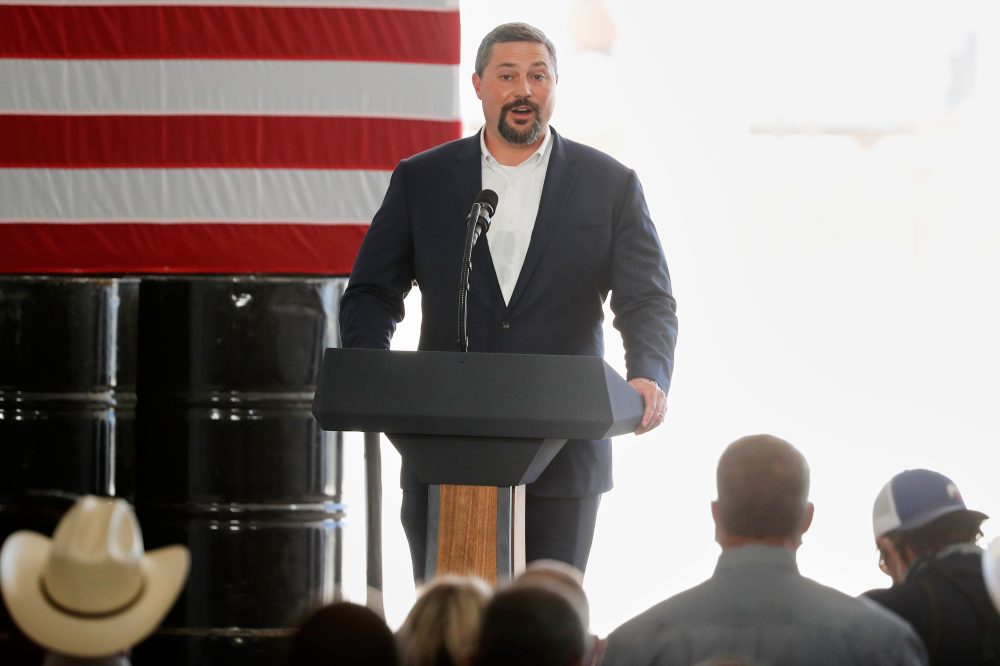
Cody Campbell’s message to those critics: You created this mess, we’re working to repair it.
“My take is, it’s pretty rich for these people who created the problem in the first place to say that all of the sudden, they have the solution to the problem,” he said.
The wealthy leader of the Texas Tech board of regents talked with The Associated Press on Thursday, one day after Sens. Ted Cruz, R-Texas, and Maria Cantwell, D-Wash., unveiled bipartisan legislation they hope can strengthen enforcement of existing rules governing college sports during its multibillion-dollar transformation.
Conference leaders and the NCAA indicated they would examine the legislation before deciding on their support, but opposition surfaced almost immediately. Critics included Sen. Chris Murphy, D-Conn., who seeks additional restrictions on coaching pay; and Reps. Tim Walberg, R-Mich., and Brett Guthrie, R-Ky., who want provisions preventing athletes from becoming school employees.
A players organization also voiced doubts, and the AP consulted with specialists who forecasted the legislation would struggle to secure 60 Senate votes and a House majority.
“It’s turning back the clock two to three years, and I don’t think that’s realistic,” said Michael LeRoy, a labor and sports law professor at Illinois, addressing how much more costly player compensation has become since name, image and likeness payments were permitted. “Players are getting paid in the millions of dollars. The underlying premise is to get a more uniform ceiling. That certainly is needed, but collective bargaining would do that.”
Universities have utilized external NIL arrangements to exceed the $20.5 million in revenue sharing that some anticipated as a spending limit when the lawsuit settlement establishing current college sports rules was finalized.
The escalating expenses have prompted prominent figures, including Tennessee athletic director Danny White, to propose collective bargaining between players and schools, conferences, or the NCAA as a solution that would bring financial predictability while providing needed antitrust protections.
Such an approach might also lead to athletes becoming school employees, which many consider a financially devastating burden that could eliminate Olympic and women’s collegiate sports, and potentially football and basketball as well.
Campbell, who participated in a committee established by President Donald Trump to address college sports issues and has been an influential voice in shaping its future, argues the Cruz-Cantwell legislation offers many benefits similar to collective bargaining, including partial antitrust protection.
“We created something that could actually be passable on a bipartisan basis,” Campbell said. “And while it’s not perfect, and it never will be, there are many, many good elements in it. I think that college sports should be universally pleased with the outcome.”
Campbell described one of the bill’s most controversial aspects — allowing conferences to combine their media rights — not as a danger but as a legitimate choice for leagues. The Southeastern and Big Ten Conferences oppose media pooling, claiming the financial calculations don’t work.
Campbell noted the proposal tackles longstanding worries about excessive coaching compensation but suggested the language in the 111-page document could be modified to strengthen the legislation further.
He explained it would grant the year-old College Sports Commission legal power to approve and deny external NIL agreements while protecting it from potential litigation under current rules.
Campbell also dismissed growing discussions from the SEC — led by Georgia president Jere Morehead and its football coach, Kirby Smart — suggesting those conferences might benefit from separating entirely from the existing system to create their own regulations and compete independently.
“If this was the solution, why didn’t they come up with it over the last several decades as this thing started to crumble?” Campbell said. “If you created this mess, I don’t see how you can stand up and say you’re the one who’s going to fix it.”
The AP interviewed several legal specialists familiar with college athletics, none of whom expected smooth passage for the Cruz-Cantwell bill.
“It might be trying to bite off too much at this point to get passed this year,” sports attorney Mit Winter said.
Cantwell confirmed to the AP that despite its bipartisan support, she recognizes the legislation faces significant challenges.
Those who joined Campbell in developing the proposal included Condoleezza Rice, Yankees President Randy Levine and Gerry Cardinale of the private equity firm Redbird Capital. According to a Yahoo Sports report, this was the group SEC commissioner Greg Sankey referenced when he noted “it’s interesting in Washington where the voices of influence come from.”
Campbell, however, sees it as a knowledgeable team without the competing interests that plague conferences and the NCAA.
“And if we can’t get it done,” he said, “then they can have their way and let chaos continue to persist.”