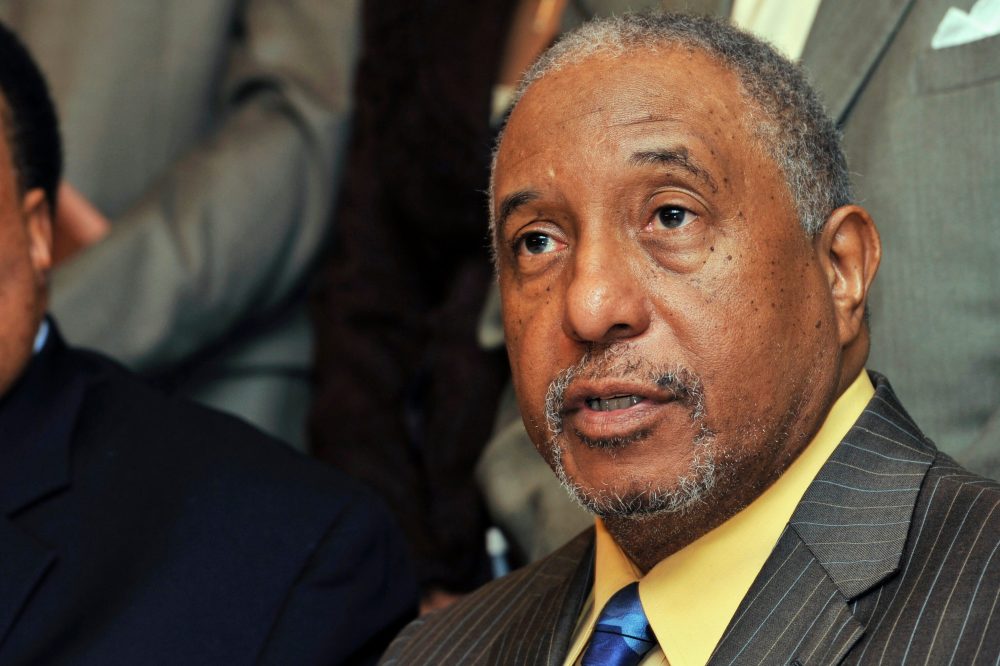

NASHVILLE, Tenn. — Civil rights pioneer Bernard LaFayette, who conducted the dangerous preliminary work for Alabama’s Selma voter registration drive that ultimately led to the historic Voting Rights Act of 1965, has passed away.
LaFayette’s son, Bernard LaFayette III, confirmed his father suffered a fatal heart attack Thursday morning at age 85.
While the March 7, 1965 attack on future Representative John Lewis and other demonstrators at Selma’s Edmund Pettus Bridge captured national headlines and galvanized Congress into action, it was LaFayette who had discreetly laid the foundation for those pivotal events two years earlier.
As a Nashville college student in 1960, LaFayette helped establish the Student Nonviolent Coordinating Committee, which spearheaded integration and voting rights efforts throughout the South. SNCC had initially abandoned plans for Selma after early reconnaissance suggested “the white folks were too mean and the Black folks were too scared,” according to LaFayette.
Despite these warnings, LaFayette persisted. Appointed to lead Alabama’s Voter Registration Campaign in 1963, he relocated to Selma with his then-wife Colia Liddell, gradually developing local leadership and persuading residents that transformation was achievable. He documented this experience in his 2013 autobiography, “In Peace and Freedom: My Journey in Selma.”
LaFayette encountered numerous threats, including a murder attempt on the same evening Medgar Evers was killed in Mississippi, which the FBI identified as part of a broader plot against civil rights activists. After being assaulted near his residence, LaFayette faced an armed attacker until a neighbor emerged with a rifle, leaving LaFayette positioned between both armed men while pleading with his neighbor not to fire.
During that terrifying moment, LaFayette experienced “an extraordinary sense of internal strength instead of fear.” Instead of retaliating, he maintained eye contact with his assailant. He described nonviolence as a battle “to win that person over, a struggle of the human spirit.”
LaFayette also recognized that his neighbor’s weapon likely prevented his death.
By 1965, when his Selma efforts reached their climax, LaFayette had moved on to a Chicago initiative. He had intended to participate in the Selma-to-Montgomery demonstration on its second day, causing him to miss the violent confrontation when state police used tear gas and clubs to halt marchers before they could leave the city.
“I felt helpless at a distance,” he reflected. “I was stricken with grief, concerned that so many people in my beloved community were hurt, possibly killed.”
However, he quickly mobilized, gathering Chicago supporters and organizing transportation to Alabama for another attempt. Two weeks later, they embarked on what had transformed into a celebration: President Lyndon Johnson had presented the Voting Rights Act to Congress.
LaFayette’s childhood in Tampa, Florida, included a formative experience at age 7 when he attempted to board a streetcar with his grandmother. African American passengers were required to pay at the front before walking to the rear entrance. When the operator started moving before they could board, his grandmother fell, and he was too small to assist her.
“I felt like a sword cut me in half, and I vowed I would do something about this problem one day,” he wrote in his memoir.
His grandmother, believing he was meant for ministry, arranged his enrollment at Nashville’s American Baptist Theological Seminary (now American Baptist College), where he shared a room with Lewis. Together, they led the nonviolent resistance movement that made Nashville the first major Southern city to integrate its downtown establishments.
President Barack Obama honored both roommates in his 2020 eulogy for Lewis, recounting how they integrated a Greyhound bus during their Christmas journey home (Lewis to Troy, Alabama, and LaFayette to Tampa, Florida) shortly after the Supreme Court prohibited segregation in interstate transportation in 1960.
The pair occupied front seats and refused relocation, infuriating the driver who abandoned his post at every stop throughout the night.
“Imagine the courage of these two people … to challenge an entire infrastructure of oppression,” Obama stated. “Nobody was there to protect them. There were no camera crews to record events.”
LaFayette acknowledged they didn’t fully comprehend their work’s historical significance at the time.
“We lived through this, but this was our daily lives,” he explained to The Associated Press in 2021. “When you think about it, we weren’t trying to make history or trying to rewrite history. We were responding to the problems of the particular time.”
In 1961, LaFayette abandoned his college finals to participate in an official Freedom Ride, joining many others attempting to force Southern compliance with court decisions. He suffered beatings in Montgomery, Alabama, and arrest in Jackson, Mississippi, becoming among more than 300 Freedom Riders imprisoned at Parchman.
LaFayette subsequently trained African American youth for leadership roles in Chicago’s Freedom Movement and helped establish tenant organizations.
“The tenant protections we have today are really a direct outcome of that work in Chicago,” explained Mary Lou Finley, professor emeritus at Antioch University Seattle, who collaborated with LaFayette during the 1960s Chicago campaigns.
When LaFayette discovered that a secretary’s two children suffered from lead exposure—a poorly understood health crisis at the time—he organized high school students to test toddlers for lead poisoning through urine collection and pushed Chicago officials to develop the nation’s first comprehensive lead screening program, Finley noted.
“Bernard has always worked quietly behind the scenes,” Finley observed, having later partnered with LaFayette on nonviolence education. “He has avoided the spotlight. In some ways, I think he felt like he could do more if he were doing it quietly.”
LaFayette also collaborated with Andrew Young and the Southern Christian Leadership Conference to organize Rev. Martin Luther King Jr.’s challenging Northern campaign. While several of King’s demonstrations faced violent opposition from white crowds, LaFayette and Young disputed claims that the Chicago movement failed.
Young emphasized in a 2021 interview that Chicago presented challenges 20 times greater than Birmingham’s, addressing complex issues from neighborhood integration to educational and employment quality. “In each one of those we made progress,” Young affirmed.
By 1968, LaFayette coordinated King’s Poor People’s Campaign nationally and was present at the Lorraine Motel on the morning of King’s assassination. King’s final words to him concerned the necessity of institutionalizing and globalizing the nonviolence movement—a mission LaFayette embraced for life.
Following King’s death, LaFayette completed his bachelor’s degree at American Baptist, then pursued graduate studies at Harvard University. His subsequent roles included directing Peace and Justice initiatives in Latin America, chairing the Consortium on Peace Research, Education and Development, leading the University of Rhode Island’s Center for Nonviolence and Peace Studies, serving as distinguished senior scholar at Emory University’s Candler School of Theology, and ministering at Westminster Presbyterian Church in Tuskegee, Alabama.
“Bernard did work in Latin America. He did nonviolence workshops in South Africa with the African National Congress. He went to Nigeria when the civil war was happening there,” Young recalled. “Bernard literally went everywhere he was invited as sort of a global prophet of nonviolence.”
In his memoir, LaFayette reflected that the constant threat of death during his early organizing years taught him that life’s worth “lies not in longevity, but in what people do to give it significance.”