
Global markets experienced mixed trading Tuesday as diplomatic tensions in the Middle East overshadowed recent gains in technology stocks, while traders anticipated key U.S. inflation data.
President Donald Trump described the ceasefire negotiations with Iran as being “on life support” following Tehran’s response to an American proposal aimed at ending the conflict, highlighting the significant divide between both nations.
The geopolitical uncertainty pushed Brent crude oil futures up 0.7% to reach $105 per barrel. Meanwhile, S&P 500 futures declined 0.2%, and South Korea’s KOSPI index dropped 3%, dragging down other markets across the region.
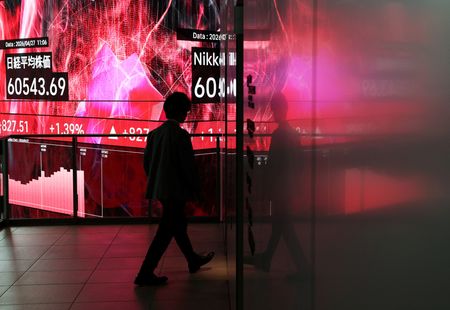
Asian markets broadly declined, with MSCI’s index of Asian shares outside Japan falling 1%. Tokyo’s Nikkei remained unchanged, while European market futures dropped 1%.
Investors are closely monitoring Trump’s scheduled Wednesday trip to China, though expectations remain modest for meaningful breakthroughs on either Iranian relations or trade matters.
“Investors should not expect sweeping agreements. A ‘win’ would mean no new tariffs or export controls, and perhaps small symbolic deals, such as agricultural purchases, aircraft orders, or signals on rare earths,” explained Daniel Casali, chief investment strategist at Evelyn Partners.
“These may seem minor, but stability at the margin matters,” Casali added.
Despite rising energy costs, Wall Street showed resilience Monday evening, with both the S&P 500 and Nasdaq achieving fresh record closing levels.
The consumer price index data scheduled for release later Tuesday is expected to show headline inflation accelerating to 3.7% annually, which could influence Federal Reserve policy decisions.
Market concerns center on whether the central bank might raise interest rates this year instead of cutting them as investors had anticipated before the current conflict began.
Bond markets saw yields climb overnight, particularly British government bonds following a speech by Prime Minister Keir Starmer that failed to reassure investors about his political stability after Labour’s poor performance in recent local elections.
Japanese 10-year government bond yields reached a 29-year peak of 2.54% ahead of Tuesday’s bond auction. Recent Bank of Japan meeting minutes suggested a more aggressive monetary stance, keeping open the possibility of a June rate increase.
U.S. Treasury 10-year yields held steady at 4.42%.
Currency markets saw the dollar strengthen, rising to 157.53 against the Japanese yen. Treasury Secretary Scott Bessent met with Japanese officials in Tokyo, though his Japanese counterpart avoided directly addressing potential currency intervention measures.
“We agreed that we are coordinating extremely well on recent market moves, including exchange rates,” stated Japanese Finance Minister Satsuki Katayama.
The euro weakened 0.2% to $1.1762, while the Australian dollar fell 0.25% to $0.7232 ahead of Australia’s budget announcement expected to show a smaller deficit than previously projected.