
KUNSHAN, China (AP) — The future of urban air transportation took flight recently in a Chinese city located about 37 miles from Shanghai.
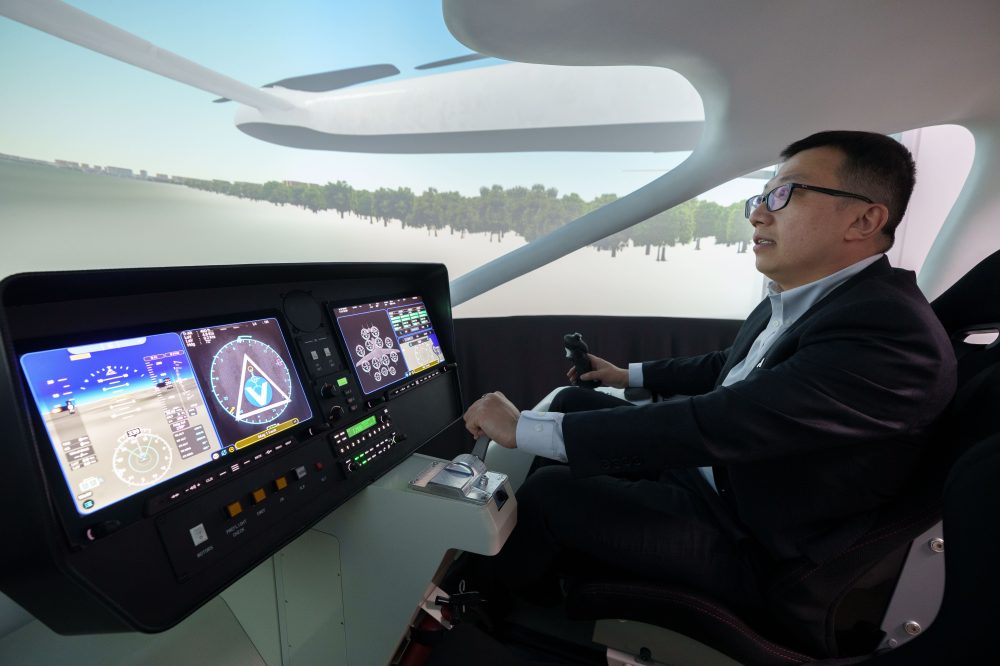
Inside an aircraft facility in Kunshan, AutoFlight showcased what could represent tomorrow’s passenger aviation technology. The company’s prototype, dubbed the Matrix, weighs 5 tons and represents China’s most substantial electric vertical takeoff and landing aircraft to date.
AutoFlight, established in 2017, engineered the Matrix to accommodate 10 passengers. The aircraft measures 66 feet in wingspan, stretches 56 feet in length, and stands 11 feet tall. Its battery system provides one hour of flight time between charges.
While the concept envisions eventual use as aerial taxi service, industry professionals acknowledge significant development time remains ahead.
During a recent cold afternoon, AutoFlight arranged a flight demonstration for The Associated Press at their testing grounds designed for low-altitude operations.
Technicians transported the Matrix from storage to the landing pad.
Once positioned for departure, the aircraft’s rotors activated, followed by several minutes of pre-flight system verification before liftoff commenced. The noise level remained below that of traditional helicopters. Following approximately 10 minutes of flight time, including two circuits around the facility, the Matrix completed a successful landing without complications.
Regarding timeline expectations for commercial flying taxi operations, Steven Yang, AutoFlight’s senior vice president, acknowledged uncertainty.
“This is a good question, but this is very tough question for me to answer,” Yang stated.
The manufacturer currently operates a smaller 2-ton passenger model while pursuing required regulatory approvals.
Yang indicated AutoFlight anticipates receiving type certification from aviation authorities by 2027, which would verify the aircraft design meets established safety requirements. However, additional regulatory clearances would still be necessary to obtain operator certification permitting passenger transport.
The Matrix remains in prototype development phase.
Additional Chinese companies are pursuing similar electric aircraft projects. EHANG, based in Guangdong province, has secured certification from regulators for commercial passenger operations, though services have not yet commenced. Beyond licensing requirements, flying taxis await supporting infrastructure development.
Within China’s emerging “low-altitude economy,” drone food delivery services already operate in cities like Shenzhen.
Gary Ng, senior economist at Natixis Corporate and Investment Banking, has monitored industry progress. He emphasized China must address multiple challenges including safety assurance, infrastructure construction, and operational logistics including flight path management.
“All of this ecosystem surrounding the technology itself is also still underdeveloped at this point,” Ng explained. “I would say it would take at least another three years to see something more viable.”
Observing the Matrix demonstration suggests such aircraft could eventually populate urban skies. However, the timeline for widespread electric aviation adoption remains uncertain.
“We really believe it will happen,” Yang said. “But this is not (only) AutoFlight’s job, it’s the whole ecosystem.”