NBC announced Friday that Today show co-host Savannah Guthrie will resume her on-air duties April 6, marking her first studio appearance in over two months since her elderly mother’s kidnapping.
Guthrie has been away from the morning show since January 30, just two days before her 84-year-old mother Nancy Guthrie disappeared from her Arizona residence and was reported missing to authorities.
Speaking during a Friday broadcast interview, the veteran anchor acknowledged the emotional challenge of returning to work. “It’s hard to imagine doing it because it’s such a place of joy and lightness, and I can’t come back and try to be something that I’m not,” Guthrie explained. “But I can’t not come back, because it’s my family. I think it’s part of my purpose right now.”
According to reports, Nancy Guthrie was last spotted by relatives on January 31 following an evening visit to the Tucson residence of her eldest daughter Annie Guthrie and Annie’s husband.
The family has been contacted with ransom demands since the disappearance and has posted a $1 million reward for any information leading to Nancy Guthrie’s safe return. The case remains under investigation.
Dover Police have taken two suspects into custody in connection with a shooting that wounded an 18-year-old man in the Village of Westover on Thursday afternoon.
The incident occurred around 3:41 p.m. on March 26th, 2026, in the 100 block of Thames Drive. Police responded to multiple reports of gunfire in the area and discovered that a young man had been shot in the leg. The victim was taken to Bayhealth Hospital with injuries that were not considered life-threatening.
During their investigation, officers found multiple bullet casings behind a home and discovered that two occupied residences had been damaged by gunfire. Witnesses at the scene provided police with suspect descriptions and reported seeing the shooters flee eastbound through a wooded area toward Mifflin Road.
Law enforcement established a search perimeter and called in a Delaware State Police K-9 unit to help track the suspects. The police dog led officers to the 100 block of Mifflin Road, where two 9mm handguns were discovered in a trash container behind a residence.
The K-9 continued tracking to the back of the same property, where officers spoke with the homeowner who agreed to let police search the area. Authorities found both male suspects hiding in a detached shed on the property. The men matched witness descriptions and were arrested without resistance.
Police identified the suspects as Nasir Gibson, 18, of Wilmington, and Dimitri Marcelin, 18, of Dover.
Each suspect faces identical charges including first-degree assault, two counts of possessing a firearm during a felony, two counts of first-degree reckless endangering, second-degree conspiracy, wearing a disguise during a felony, two counts of criminal mischief under $1,000, and second-degree trespassing.
Both Gibson and Marcelin were sent to Sussex Correctional Institution on $63,800 cash bonds.
Motorists traveling along Park Avenue (Route 431) should expect delays and plan alternate routes as construction crews continue work that requires intermittent lane restrictions.
The affected stretch runs between Springfield Road (Route 47) and the Lewes Georgetown Highway (Route 9), where drivers may encounter temporary lane closures throughout the day.
According to DelDOT officials, the construction-related lane restrictions will remain in place until 5 PM today. Drivers are advised to use caution when traveling through the work zone and allow extra time for their commute.
The Delaware Department of Transportation continues to monitor traffic conditions in the area and will provide updates as the situation changes.
Motorists should expect delays on Baynard Boulevard today as construction crews conduct paving operations along a busy stretch of roadway.
The Delaware Department of Transportation reports that paving work is currently taking place on Baynard Boulevard in the section running from Shipley Road to Marsh Road (Route 3).
According to DelDOT, the road work is expected to wrap up by 5 PM this afternoon. Drivers are advised to plan alternate routes or allow extra travel time when passing through the area.
Motorists traveling on Crossan Road should expect delays and plan alternate routes as construction crews continue work that requires periodic lane restrictions.
According to the Delaware Department of Transportation, the road work is taking place along the section of Crossan Road that runs from N Star Road to Doe Run Road. The construction activity is causing intermittent lane closures that are scheduled to remain in effect until 5:00 PM today.
Drivers are advised to use caution when traveling through the work zone and to allow extra time for their commute. DelDOT recommends considering alternative routes to avoid potential traffic backups in the area.
A federal law designed to boost American manufacturing is creating unexpected roadblocks for affordable housing construction across the nation.
The Build America, Buy America Act requires federally-funded housing projects to use American-made components for nearly every element, from heating systems and light fixtures to small items like sink hooks and ceiling fans. However, housing developers report that many of these products have been manufactured overseas for years due to lower labor costs.
While builders can request exemptions, the approval process through the Department of Housing and Urban Development has become severely backlogged. HUD, which saw significant staff reductions under the previous Trump administration, has only approved a small number of projects.
This bureaucratic slowdown has resulted in construction delays and added hundreds of thousands of dollars in costs during what experts call a nationwide affordable housing emergency.
“They need to be treating this like the fire that it is,” stated Tyler Norod, president of Westbrook Development Corporation, which constructs affordable housing in Maine.
“We’ve sort of resigned ourselves that we’re just gonna build less units across the entire country during a housing crisis,” Norod added.
The impact reaches real people waiting for affordable homes. Diana Lene, a 76-year-old from Fargo, North Dakota, has spent five years on housing waitlists. Living on Social Security, her current apartment consumes most of her budget.
“It’s just maxing my budget down to pennies,” she explained. To manage expenses, she limits her driving and shops only for discounted food.
“I’m just trying to keep a roof over my head, but it’s getting more and more difficult,” Lene said. “I don’t like to live in fear, and yet sometimes it jumps in there.”
Lene hopes to move into an apartment being developed by Beyond Shelter, a nonprofit organization. However, CEO Dan Madler had to delay lumber purchases for his 36-unit project to ensure compliance with federal requirements. He also cannot locate American-manufactured ceiling fans and remains uncertain when HUD will grant necessary waivers.
President Joe Biden enacted the Build America, Buy America Act in 2021 as part of the Infrastructure Investment and Jobs Act. The legislation expanded existing efforts to strengthen domestic manufacturing as the country recovered from pandemic-related economic challenges. The law, known as BABA, covers all infrastructure projects receiving federal agency funding, extending beyond just housing developments.
Denver-based developer Julie Hoebel reports spending more than $60,000 solely on consulting services to research suppliers and verify American-made materials, not including additional labor expenses.
However, her waiver requests submitted to HUD in November for approximately 125 materials needed for an 85-unit project remain unapproved.
“If they take much longer then we’ll come to a standstill,” she warned.
HUD currently requires at least six months to process many waiver applications.
Even supporters of the legislation acknowledge that HUD must accelerate waiver approvals and provide clearer guidance to the industry, similar to what other federal agencies have implemented.
HUD declined to respond to Associated Press inquiries about waiver delays that developers claim increase costs and concerns about process transparency. The agency issued a statement saying it remains committed to “ensuring that federal spending supports America’s industrial base” while “closely monitoring how compliance with these policies impact costs for builders.”
When asked in January whether delays and increased costs warrant exempting affordable housing from BABA requirements, HUD Secretary Scott Turner indicated the agency was examining the matter without providing specifics. “We are looking at this … with BABA as it pertains to HUD to provide flexibility to certain projects in certain places around our country,” Turner stated, adding that HUD is committed to ensuring developers receive “the flexibility they need as it pertains to building.”
Advocates maintain the legislation itself isn’t problematic.
Labor unions representing steel and manufacturing workers argue that taxpayer money should support American-made products and suppliers will adapt to meet demand for currently unavailable items.
“You’ve got a system in place that leans heavily on using imported materials to make a better profit,” said Scott Paul, president of the Alliance for American Manufacturing. “I don’t know if that serves the public good.”
Jennifer Schwartz, director of tax and housing advocacy at the National Council of State Housing Agencies, noted that no national data exists on BABA’s cost impact. She described the waiver process as “failing” because requirements were implemented before evaluating domestic manufacturing capabilities.
According to Kaitlyn Snyder, managing director of the National Housing and Rehabilitation Association, an affordable housing industry organization, suppliers will find it less difficult to increase raw material production domestically. However, manufactured products like appliances and elevators will require more time to become available.
“I don’t know that it economically, financially makes sense for people to be producing door hinges,” Snyder observed. “We are an advanced country and we’ve outsourced a lot of that stuff.”
The housing legislation passed by the Senate in March did not mandate that HUD address BABA implementation issues.
“The process isn’t working for affordable housing,” said Jessie Handforth Kome, who worked at HUD for nearly four decades until 2024. “People want to comply, but it’s unclear how to.”
Vermont developer Jessica Neubelt estimates spending an extra $150,000 just to confirm that iron and steel used in one project met American-made requirements. She expressed equal frustration over the hundreds of hours required, time that could be devoted to additional projects.
“I would like every member of Congress to sit in on a construction meeting,” Neubelt said. “The amount of detail that goes into figuring out if a specific thing is compliant or not is enormous.”
Representative Mike Flood, a Nebraska Republican, has pushed to exempt certain HUD funding from BABA requirements.
“Owning a home is the American dream, but it’s out of reach in a very big way and anything that adds cost to that isn’t allowing hardworking Americans to achieve the dream,” Flood told the Associated Press.
Roy Houseman, legislative director at United Steelworkers, dismissed concerns about cost increases as exaggerated.
“A lot of developers seem to have tried to throw things in and make statutory changes to policies that have been in place for basically five years now instead of making a good-faith effort to really push HUD,” Houseman said.
Union representatives point out that the law provides some flexibility.
Developers can receive exemptions for American-made products if they raise a project’s total cost by more than 25%. Additionally, a small percentage of a project’s material costs is exempt. However, most developers argue this percentage is insufficient to cover all items not manufactured domestically.
Some developers are exploring alternatives to avoid federal funding entirely. This approach presents challenges since federal dollars, while often representing a small portion of affordable housing project funding, can determine whether sufficient money exists to complete construction.
Kentucky developer Scott McReynolds plans to construct two four-unit projects small enough to avoid BABA requirements instead of applying for federal grants to build 20 to 30 affordable homes.
Finding American-made materials proves particularly difficult in the rural areas McReynolds serves.
NEW YORK (AP) — A Manhattan museum’s confirmation of a historic Underground Railroad tunnel has sparked a preservation battle against a planned high-rise development that threatens the rare discovery.
The Merchant’s House Museum in Manhattan’s NoHo neighborhood announced last month that researchers have confirmed the historical significance of a hidden passageway within the 1832 wealthy family residence. The breakthrough came after historians learned the property’s first owner, Joseph Brewster, was an abolitionist who aided freedom seekers.
Experts are calling this the first complete Underground Railroad location uncovered in New York in more than 160 years, and the revelation has dramatically increased visitor interest while intensifying opposition to a planned nine-story mixed-use structure on the adjacent lot.
“What our engineers are saying is that there really is no way that a building of that size is built immediately next door to the museum without causing significant structural damage to our historic building,” said Emily Hill-Wright, the museum’s director of operations.
The New York City Landmarks Preservation Commission continues deliberating the development proposal, while project consultants and architects maintain the museum would face minimal impact from construction.
This discovery emerges during a period when President Donald Trump’s executive order aims to eliminate slavery-related content and images from federal museums, parks and historical sites.
Civil rights leader Al Sharpton, based in New York, has framed the museum’s situation as a crucial battle for preserving African American and national heritage.
“When engineers tell me that an African American heritage site is in danger of structural compromise or any other sort of irreversible damage, I listen,” Sharpton said in a statement last week.
The concealed Underground Railroad route sits behind a 2-foot-by-2-foot wooden panel tucked beneath a dresser drawer on the building’s second floor. The pathway descends 15 feet through a shaft equipped with built-in ladder rungs. While workers discovered the passage during the 1930s museum conversion, only in 2024 did researchers establish that original owner Joseph Brewster supported the abolitionist cause.
“It’s not a dumbwaiter. It’s not a laundry chute,” Hill-Wright said. “We’re able to sort of cross off all of these other theories about what this might have possibly been used for.”
The confirmation has attracted preservationists, history enthusiasts and curious visitors from across the region.
“February was our highest month for visitors in over a year,” Hill-Wright said. “You almost get choked up because it is a very visceral experience to see it with your own eyes.”
Harriet Tubman established the Underground Railroad network after her own escape from bondage in 1849, eventually settling in Philadelphia. The secret operation helped countless enslaved African Americans reach freedom, and Tubman later served as a scout, spy and nurse for Union forces during the Civil War, personally leading 150 Black soldiers during a South Carolina gunboat mission.
When the Brewster residence was constructed, helping Underground Railroad participants violated New York City law and carried harsh consequences, according to Jacob Morris, director of the Harlem Historical Society. Historical records document attacks on abolitionists who sheltered escaped slaves.
“Bounty hunters were all over the place in New York City. They made their living on catching freedom-seeking Blacks,” Morris said. “If you got caught helping Blacks escape from slavery, a mob could come and burn down your house and beat you up. And maybe even tar and feather you or worse.”
Newly released federal documents reveal how Swiss banking giant UBS facilitated financial transfers that enabled Ghislaine Maxwell to purchase her secluded New Hampshire compound before her 2020 arrest on sex trafficking charges.
The Department of Justice files show UBS processed an $8 million transfer in November 2019 that ultimately funded Maxwell’s acquisition of “Tucked Away,” a $1.1 million estate spanning 156 acres in rural Bradford, New Hampshire.
The banking transaction took place three months after federal criminal investigators had served UBS with a grand jury subpoena demanding details about Maxwell’s financial activities as part of a child sex trafficking investigation. Despite being notified on August 1, 2019, that the bank would terminate her account within 30 days, UBS still processed the substantial money transfer that November.
Financial crime expert Tom Kirchmaier from the London School of Economics explained the significance of these revelations.
“Banks that are told of a secret criminal inquiry, as UBS was, typically do everything they can to find publicly available information to justify holding up the suspect’s money,” he said.
The federal subpoena, issued by the Southern District of New York on August 16, 2019, specifically mentioned a criminal “felony” investigation and requested confidentiality to avoid impeding the probe. Jeffrey Epstein had died in custody just days before the subpoena was issued.
UBS declined to provide comment regarding Maxwell or explain why the payment was processed, citing client confidentiality policies.
Maxwell received a 20-year prison sentence in 2021 after being convicted of recruiting and grooming underage girls for sexual abuse, as well as participating in some instances of abuse herself. Her legal team had argued she was being blamed for Epstein’s criminal conduct. Maxwell’s current legal representative declined to comment on the banking revelations.
Senator Ron Wyden, who has investigated financial flows related to Epstein’s criminal enterprise, criticized the banking industry’s handling of wealthy clients.
“The pattern we’ve seen from our investigations of Epstein and a lot of other high-net-worth criminals is that the banks look the other way because they know ultra-wealthy clients can pack up and take their money across the street any time they want,” Wyden stated.
“Ghislaine Maxwell wasn’t just some minor accessory to Epstein’s crimes, she was an essential part of his trafficking operation that reached all around the globe, and she’s accused of participating in abuse herself,” he added.
Maxwell’s arrest occurred at the remote property after FBI agents navigated a half-mile dirt road marked with “No Trespassing” signs. During the purchase process, she had assumed the identity “Janet Marshall” and told the real estate agent she was a journalist seeking privacy.
When federal agents apprehended her, they discovered a cell phone wrapped in aluminum foil to prevent tracking and a security detail composed of former British military personnel hired to protect her during her time in hiding.
Federal investigative documents from April 2022 trace the money flow from UBS to Maxwell’s New Hampshire refuge. The records show UBS transferred nearly $8 million on November 12, 2019, from a Montpelier Trust account established by Maxwell to a TD Ameritrade account managed by her then-husband Scott Borgerson.
The money subsequently moved through additional trusts before being used to purchase the Bradford property. Just days before the transfer, on November 6, 2019, UBS was still coordinating with the FBI regarding documents requested in the August grand jury subpoena.
Court documents filed by Maxwell’s accounting team in October 2020 estimated her and Borgerson’s combined assets at approximately $22.5 million. Much of this wealth originated from the 2015 sale of an Upper East Side Manhattan townhouse for $15 million, though the source of her ownership of that property remains unclear.
The Swiss bank managed various accounts containing cash, stocks, and other investments for Maxwell, assigning two relationship managers to handle her business. At its peak, UBS was overseeing $19 million in Maxwell assets, with $4.1 million remaining in accounts held by Maxwell and Borgerson as of October 2020.
Suspicious Activity Reports filed by financial institutions provide additional insight into Maxwell’s banking activities. Federal correspondence from April 2022 references a report suggesting the New Hampshire property “was purchased with proceeds from Human Trafficking,” though the reporting bank is not identified.
Following Maxwell’s arrest, UBS filed a Suspicious Activity Report covering more than $18 million in transfers from her accounts to Borgerson between December 2014 and July 2020.
British bank Barclays also maintained accounts for Maxwell, holding $2.4 million of her funds at the end of 2018. In the three weeks following Epstein’s July 2019 arrest, UBS received over $600,000 in deposits transferred from her Barclays account to cover credit card expenses.
Barclays declined to comment on its business relationship with Maxwell, while the Justice and Treasury Departments also declined to discuss the case.
The “Tucked Away” property has since been sold and is currently back on the market, with Four Seasons Sotheby’s International Realty marketing it as ideal for privacy-seeking buyers.
A weekly trivia challenge is putting readers’ knowledge to the test across a wide range of subjects, from beloved fantasy novels to cutting-edge technology and travel updates.
The quiz features questions spanning multiple categories, including references to J.R.R. Tolkien’s classic “Lord of the Rings” series, developments in artificial intelligence, notable monuments in the nation’s capital, and current airport security processing times.
Quiz participants can gauge their awareness of both pop culture phenomena and contemporary news events through this diverse set of questions designed to challenge even well-informed readers.
A former architect facing charges in the notorious Gilgo Beach serial murder case plans to enter a guilty plea next month, according to two sources with knowledge of his intentions.
Rex Heuermann, 62, who stands accused of killing seven women across a 17-year period, will reportedly reverse his previous not guilty plea during his scheduled April 8 court appearance, the sources told The Associated Press.
Both individuals, who have direct involvement in the case, requested anonymity since the plea change hasn’t been formally submitted to the court. One source revealed that both the victims’ relatives and Heuermann’s family members have received advance notice of this decision.
Heuermann’s legal team has not yet responded to requests for comment.
However, circumstances could still shift before the scheduled hearing. Heuermann retains the option to reconsider his decision, and any guilty plea must receive judicial approval.
The defendant has remained in jail since his July 2023 arrest and had maintained his innocence in previous court proceedings. His trial was originally set to begin in September. Newsday first broke the story about his planned plea change.
According to prosecutors, genetic evidence, mobile phone records, and materials discovered during a search of Heuermann’s Massapequa, New York residence link him to the victims, all young women who worked in the sex trade.
Investigators discovered multiple victims’ remains along a secluded section of shoreline parkway, while other remains were located in additional remote locations.
The seven victims have been identified as Melissa Barthelemy, Maureen Brainard-Barnes, Amber Lynn Costello, Sandra Costilla, Valerie Mack, Jessica Taylor and Megan Waterman.
Suffolk County District Attorney Ray Tierney refused to provide comment when contacted Thursday evening, as did Gloria Allred, the California-based attorney representing several victims’ families.
The case first gained public attention in 2010 when officers searching for a missing person uncovered multiple sets of human remains in brush along Ocean Parkway near Gilgo Beach.
Throughout subsequent years, investigators employed genetic testing and additional evidence to identify victims. In several instances, they successfully connected these remains to others found previously across Long Island.
Identifying Heuermann as a suspect required years of investigative work.
A revived examination of the cold case first flagged him as a possible perpetrator in 2022. Investigators connected Heuermann to a pickup truck that a witness reported observing when one victim vanished in 2010.
Subsequently, surveillance teams obtained a discarded pizza crust from Heuermann’s garbage, which enabled them to match his DNA to hair evidence found on one victim’s remains.
Mobile phone records further demonstrated that Heuermann had communicated with several victims shortly before they disappeared, while examination of his internet activity revealed a pattern of viewing violent pornographic content and researching details about the murder investigation.
In the previous year, investigators obtained computer files from Heuermann that they characterized as a planning document for the murders, featuring multiple checklists with instructions to minimize sound, clean victims’ bodies and eliminate evidence.
During recent proceedings, the presiding judge denied defense requests to exclude specific DNA evidence from trial proceedings and to separate the case into individual trials.
A sightseeing helicopter went down Thursday on a secluded stretch of beach along Hawaii’s Kauai island, leaving multiple people hurt, according to local fire officials.
The aircraft was transporting five people total — one pilot and four passengers — when it went down at Kalalau Beach, according to the Kauai Fire Department. The crash site sits along the island’s northern coastline on the Na Pali Coast.
Fire officials have confirmed that people were hurt in the incident, though the exact number of injured individuals and the extent of their injuries remains unknown at this time.
Aerial tours by helicopter have become a favored method for visitors to view the dramatic coastline of the Na Pali Coast, with its towering cliffs, pristine beaches and cascading waterfalls. The rugged terrain can only be reached on foot through challenging hikes or by watercraft.
THORNTON, Colo. — A mother from Colorado is praising recent court decisions against major tech companies after losing her teenage son to a deadly drug purchased through social media platforms.
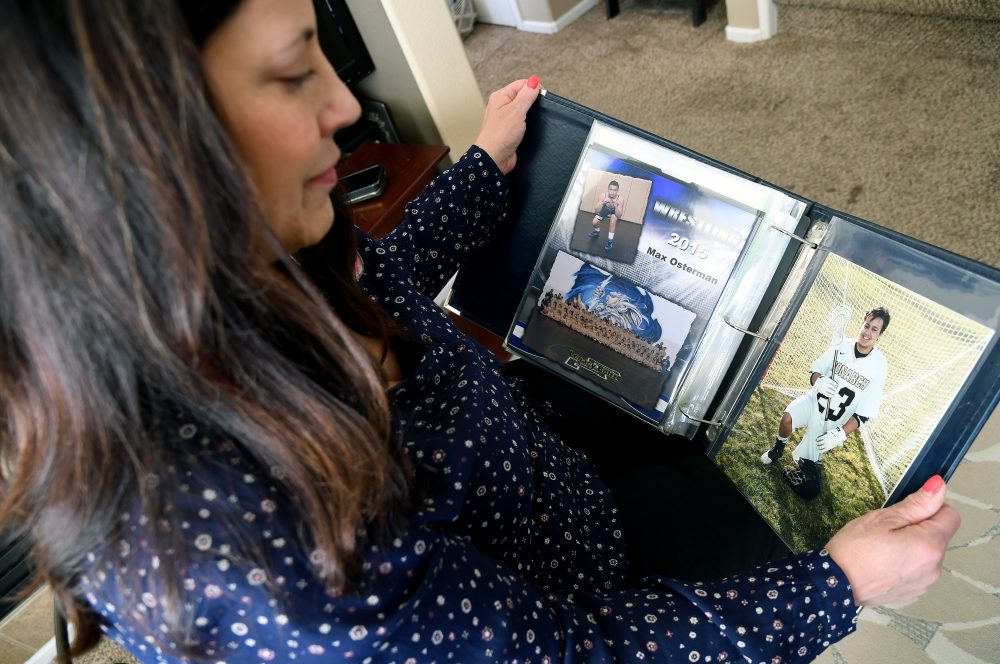
Kimberly Osterman’s 18-year-old son Max passed away in 2021 after taking what he believed was Percocet, which he had arranged to buy from a dealer he met on Snapchat. The pill contained a lethal amount of fentanyl, and Max died the following morning.
“The truth is out, and it’s time that they are held accountable for the design of the platforms,” Osterman stated. “They put profits over safety.”
This week brought two significant legal victories that Osterman believes will pave the way for holding social media companies responsible for child safety. On Wednesday, a Los Angeles jury ruled that both YouTube and Meta — the parent company of Instagram and Facebook — are liable for creating platforms specifically designed to captivate young users in harmful ways. Both companies have expressed disagreement with the rulings and are considering appeals.
Meanwhile, a separate jury in New Mexico concluded that Meta deliberately damaged children’s mental health while hiding information about child sexual exploitation occurring on its platforms. Meta has announced plans to appeal this decision as well.
Before the Los Angeles trial commenced in January, Snapchat’s parent company Snap Inc. reached a settlement for an undisclosed amount. TikTok also agreed to settle, with terms kept confidential.
Looking through family photo albums at her Colorado residence Thursday, Osterman reminisced about “the days before social media. The days before the infinite scrolling lured him in.” Pictures of Max surrounded by heart decorations and angel wings filled the shelves around her home.
Osterman described her son as academically gifted with a passion for lacrosse and wrestling. While she knew he used Snapchat to stay in touch with friends, she was unaware of the potential dangers he faced.
The drug dealer who sold the fatal pill to Max, Sergio Guerra-Carrillo, received a six-year prison sentence in 2023 on two distribution charges.
Currently, Osterman is pursuing her own wrongful death lawsuit, which is separate from the cases decided this week. She has joined Parents for Safe Online Spaces (ParentsSOS), an organization of parents who have experienced online-related child harm and push for stronger regulations.
The group supports the Kids Online Safety Act, proposed federal legislation that would mandate social media platforms take reasonable measures to prevent harm on sites likely to be used by minors.
Osterman advocates for stringent protective measures, including age verification technology to block anyone under 18 from accessing these platforms.
“You think your kids are safe in their home, in their bedroom, but that’s not the way it is with the current status of social media,” she explained.
When contacted Thursday, Snapchat did not provide immediate comment regarding Osterman’s situation. The company has previously stated it employs advanced technology to actively locate and eliminate drug dealers’ accounts while blocking search results for drug-related keywords.
While it remains uncertain whether these recent legal victories will result in significant changes, the verdicts signal an increasing readiness to hold major social media corporations accountable and demand substantial reforms. Technology oversight experts anticipate these decisions will encourage additional lawsuits and regulatory measures.
JACKSON, Miss. — Federal investigators have determined that two fatal natural gas explosions that leveled homes in Jackson, Mississippi during January 2024 occurred when underground utility lines became disconnected from their joints due to shifting clay soil conditions, according to a report released Thursday by federal safety officials.
The initial blast claimed the life of 82-year-old Clara Barbour.
The National Transportation Safety Board determined that Atmos Energy Corp., the Dallas-based gas utility serving the area, had identified the gas leaks prior to the explosions but failed to classify them as requiring immediate attention. Federal investigators also concluded that the company inadequately assessed pipeline risks, delayed necessary repairs, and provided insufficient training to community members and emergency responders regarding gas leak protocols. The board called for enhanced regulatory scrutiny of the utility.
“Atmos has had significant safety shortfalls in recent years,” investigators stated. “Thus, Atmos’s multistate operations require broader oversight.”
Company representative Bobby Morgan responded that safety continues to be “our highest priority.”
“We will work diligently in the coming days and weeks to evaluate the findings as part of our ongoing safety efforts to further our vision to be the safest provider of natural gas services,” Morgan stated.
Atmos Energy provides natural gas service across Colorado, Kansas, Kentucky, Louisiana, Mississippi, Tennessee, Texas and Virginia.
The January 24 explosion and resulting fire in southern Jackson killed Clara Barbour and caused minor injuries to her spouse, Johnny Barbour. A second blast occurred three days afterward, approximately three-quarters of a mile from the first incident, completely destroying one residence and damaging an adjacent home. That explosion resulted in no casualties.
Federal investigators determined that both incidents involved gas supply lines that had become detached from their connections as surrounding soil shifted, creating hazardous gas accumulations that triggered the explosions.
The Jackson region sits above Yazoo clay, a soil type that swells during wet periods and shrinks during dry conditions. This soil movement not only damages building foundations and roadways but can also cause pipeline disconnections. The pipe connections installed by Atmos’s predecessor company lack resistance to separation forces, investigators found. The safety board recommended that Atmos locate and replace all such vulnerable connections.
The gas leak at the Barbour residence was first identified on November 17, 2023, when residents detected the chemical additive mixed into natural gas for safety purposes. An Atmos worker classified the leak as non-threatening, placing it on a repair schedule that could extend beyond one year. The leak at the second explosion site was discovered December 1 but received an even lower priority rating, with repairs scheduled within three years.
Following the explosion, the company reassessed Jackson-area leaks and identified several that posed greater risks than originally determined, the report noted.
Safety investigators criticized Atmos for inadequate threat assessment regarding expansive soil conditions, pointing out that regulators had issued warnings about this hazard since 2008. The NTSB had previously identified expanding soil as a contributing factor in a 2018 Atmos explosion in Dallas that resulted in one death and four injuries.
Investigators noted that Atmos maintained varying safety protocols across different states, and that implementing the more rigorous standards used in Kansas could have prevented the Mississippi explosions.
“Atmos’s siloed state operations, including leak monitoring procedures that differed by state, demonstrate that Atmos has not applied lessons learned in one state to the other states it operates in,” the board concluded.
A Gold Alert that was issued for Jill McLaughlin has been lifted after she was successfully found by authorities.
Officials confirmed that McLaughlin has been located and is safe, prompting the immediate cancellation of the alert that had been issued to help find her.
Gold Alerts are typically issued for missing adults who may be vulnerable due to various circumstances, helping to mobilize public assistance in locating individuals who have disappeared.
A California judge has decided that the individual found guilty of killing an elderly Thai man in a 2021 San Francisco attack that sparked nationwide anti-Asian hate crime awareness will not serve additional prison time.
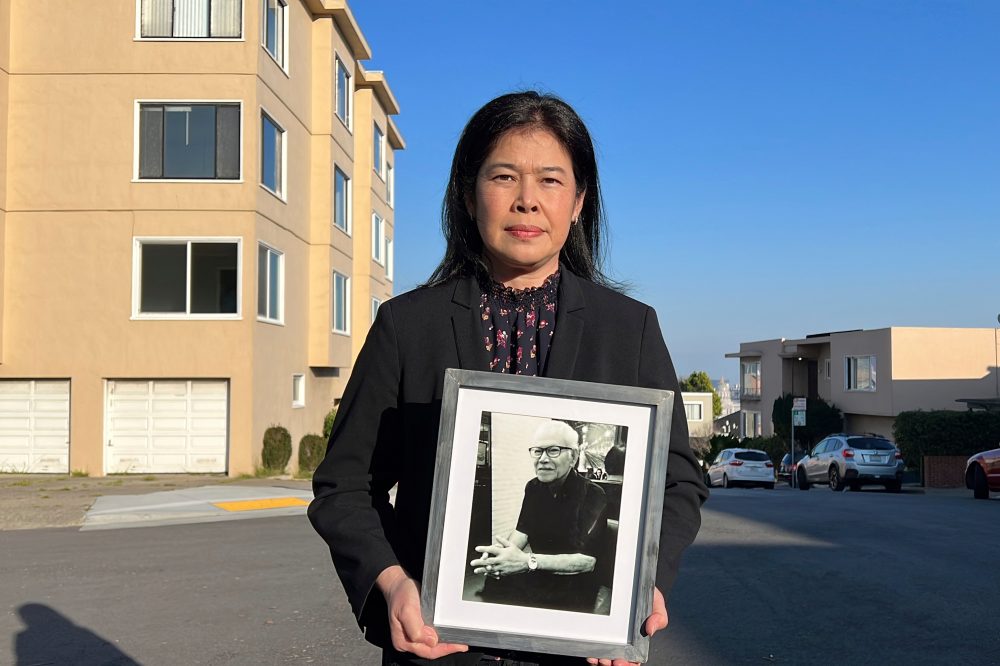
Antoine Watson, now 25, received an eight-year manslaughter sentence Thursday for causing the death of 84-year-old Vicha Ratanapakdee. However, San Francisco Superior Court Judge Linda Colfax granted Watson credit for the five years he has already served while awaiting trial, and ruled the remaining three years could be suspended provided he complies with probation terms.
The victim’s daughter, Monthanus, shared her family’s frustration through a statement released by Justice For Vicha, the organization established in her father’s memory.
“We respect the court process. However, this is not about revenge — it is about accountability,” she said. “When consequences do not reflect the seriousness of the harm, it raises concerns about how we protect our seniors and public safety.”
Vicha Ratanapakdee was taking his regular morning walk through the peaceful neighborhood where he resided with his wife, daughter and her family when Watson rushed toward him and shoved him to the pavement. The elderly man lost consciousness and passed away two days afterward.
During his testimony, Watson told the court he was experiencing mental confusion and rage during the unprovoked incident, according to KRON-TV. He claimed he acted impulsively and was unaware that Ratanapakdee was Asian or elderly.
San Francisco Public Defender Mano Raju, whose team represented Watson, stated during proceedings that his client is “fully remorseful for his mistake.”
The San Francisco Public Defender’s Office has not yet responded to requests for comment regarding Watson’s sentencing.
Security camera footage from a nearby residence recorded the assault and quickly circulated on social media platforms, sparking widespread advocacy efforts addressing the increase in anti-Asian violence linked to the COVID-19 pandemic. In 2022, hundreds gathered in multiple American cities to honor the anniversary of Ratanapakdee’s death, demanding justice for Asian Americans facing harassment, attacks and killings at disturbing rates.
Although Asian Americans have historically faced prejudice and discrimination, such incidents intensified dramatically following COVID-19’s initial emergence in Wuhan, China in late 2019. The Stop AAPI Hate coalition documented over 10,000 hate incidents targeting Asian Americans and Pacific Islanders between March 2020 and September 2021.
Despite the Ratanapakdee family’s belief that racial motivation drove the attack, prosecutors did not pursue hate crime charges and avoided presenting that argument during trial. Legal officials noted that hate crime cases require substantial evidence beyond circumstantial factors, often needing explicit statements from defendants.
Authorities in New Castle County are actively searching for a 67-year-old Newark woman who vanished Thursday afternoon after visiting family members.
Police have activated a Gold Alert for Jill McLaughlin, who disappeared from the Nonantum Drive area in Newark. According to the New Castle County Division of Police, McLaughlin departed from a relative’s home in the 200 block of Nonantum Drive around 4:12 p.m. on Thursday, March 26, 2026.
The missing woman failed to return to her residence, prompting family members to contact authorities. A Gold Alert is typically issued for missing persons who may be vulnerable due to age or other circumstances.
Police are asking anyone with information about McLaughlin’s whereabouts to contact the New Castle County Division of Police immediately.
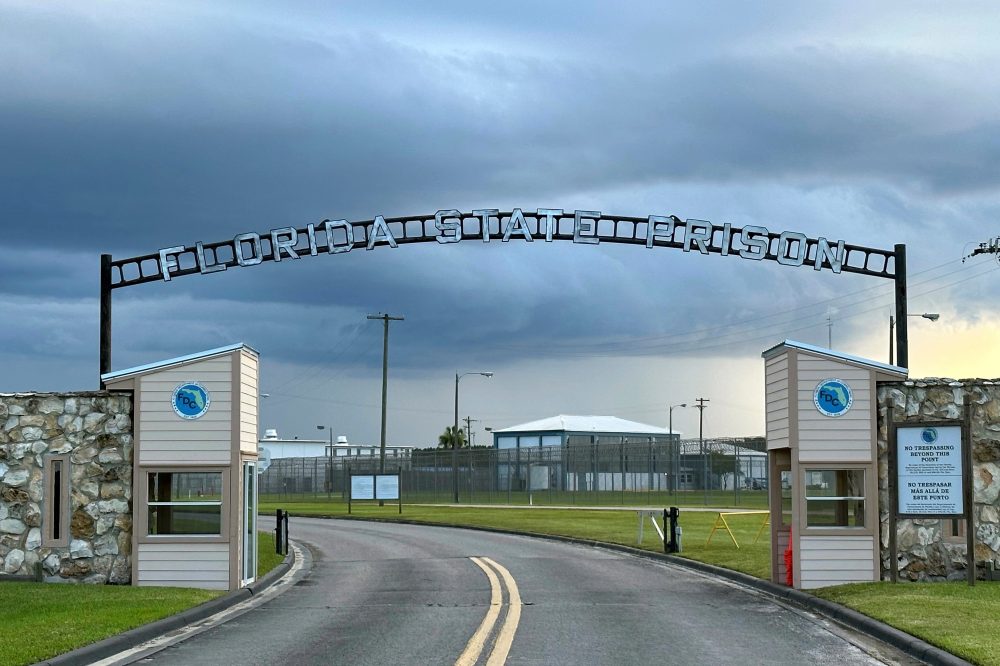
STARKE, Fla. — A former Florida police officer who was set to be executed Tuesday for the rape and murder of an 11-year-old girl has received a temporary reprieve from the state’s highest court.
The Florida Supreme Court issued an execution stay Thursday for James Aren Duckett, 68, who was scheduled to die by lethal injection at Florida State Prison near Starke. Duckett received a death sentence in 1988 following his conviction on charges of first-degree murder and sexual battery.
During his appeals, Duckett requested DNA testing that his legal team believes might prove his innocence. A lower court approved the testing request, but results are still outstanding. The state Supreme Court has given prosecutors until 5 p.m. Friday to provide an update on the DNA testing progress.
Should the execution stay remain in place beyond Tuesday, it remains uncertain when or if Duckett’s execution would proceed.
Under Governor Ron DeSantis’ administration, Florida executed a record-breaking 19 individuals in 2025 — more than any Florida governor has overseen in a single year since capital punishment resumed in 1976. The previous high was eight executions in 2014.
Court documents show Duckett served as a police officer in Mascotte, a small community located west of Orlando. On the evening of May 11, 1987, while Duckett was on duty, 11-year-old Teresa McAbee vanished after witnesses saw her enter his patrol vehicle at a local convenience store.
Authorities discovered McAbee’s body the following morning in a nearby lake, less than a mile from the convenience store. An autopsy revealed she had been sexually assaulted before drowning. Physical evidence including blood and hair connected her to Duckett. Investigators also found tire impressions at the lake scene that matched those used on Mascotte police vehicles. Both Duckett’s and McAbee’s fingerprints were discovered on his patrol car’s hood.
During the trial, three teenage girls provided testimony that Duckett had previously offered them rides and made inappropriate sexual overtures toward each of them.
Nationwide, 47 individuals were executed in 2025, with Florida leading all states due to numerous death warrants signed by DeSantis. Alabama, South Carolina, and Texas each carried out five executions, tying for second place.
Florida conducts all executions through lethal injection, using a three-drug protocol that includes a sedative, a paralytic agent, and a substance that stops the heart, according to state corrections officials.
Aviation disruptions across the United States may escalate far beyond lengthy security queues and canceled flights unless Congress resolves how to compensate Transportation Security Administration workers. Federal transportation leaders have cautioned that personnel shortages could force temporary shutdowns of smaller airports nationwide.
Although no particular facilities have been publicly identified as closure candidates, Transportation Secretary Sean Duffy and TSA leadership anticipate additional airport security personnel will resign or skip work shifts following Friday’s deadline, when TSA staff were scheduled to miss their second consecutive full paycheck since mid-February.
TSA employees have been mandated to report for duty without compensation since Department of Homeland Security funding expired on February 14.
“This level of disruption is unprecedented,” said Ha Nguyen McNeill, the agency’s acting administrator, referring to the financial pressure on TSA employees that has resulted in elevated absence rates. “We are being forced to consolidate lanes, and may have to close smaller airports if we do not have enough officers.”
During Wednesday’s House committee testimony, McNeill declined to specify when potential closures might begin. She characterized the TSA workforce shortage as “a fluid, challenging and unpredictable situation.”
The head of the TSA workers’ union revealed Thursday that the agency compiled a roster of approximately 75 airports that could face closure to redistribute personnel to major transportation hubs experiencing extended security delays. This strategy could impact smaller facilities located near large airports, not exclusively tiny locations with minimal staffing operating single checkpoints.
“The agency has to look at it as, ‘Wow man, at the end of the day, we still have to do essential work and protect the American people.’ It becomes very difficult to do when you have this going on,” explained Johnny Jones, secretary and treasurer for Council 100 of the American Federation of Government Employees.
Approximately 11% of security officers across the country failed to report for scheduled duties this week, though certain airports experienced absence rates exceeding 40% on particular days, according to DHS data. Travelers waiting in enormous security queues have packed terminal areas and extended beyond building entrances at various times in Houston, New Orleans and Atlanta.
Thursday brought White House consideration of declaring a national emergency as an exceptional measure to compensate TSA employees, though specific implementation details remained uncertain.
Aviation security specialist Sheldon Jacobson, whose research helped develop TSA PreCheck, suggested that Trump administration officials appear to be raising airport closure possibilities as leverage to push Congress toward a DHS funding agreement.
“This is a situation that, once again, the politicians are trying to move the needle to get people to compromise by making threats. Are these threats realistic? Yes. Are they a good idea? No,” Jacobson stated.
Jacobson and fellow aviation analysts indicated this messaging also implies that deploying federal immigration agents to assist airports with security staffing challenges has proven unsuccessful.
White House representatives claimed ICE personnel helped decrease wait times through crowd monitoring and identification verification. TSA union representatives and other critics dismissed this approach as ineffective, contending that immigration agents lack necessary training and background.
Major airports employing hundreds of officers can shut down certain checkpoints and TSA PreCheck lanes while maintaining operations. The smallest among 440 U.S. airports with security screening lack this flexibility.
Smaller facilities operating only one checkpoint might require temporary closure if insufficient officers are available to staff them. This scenario could occur when multiple personnel fail to appear for any particular shift.
Small airports have “a smaller pool of people that you can draw from to keep the airport open,” noted Eric Chaffee, a Case Western Reserve law professor specializing in risk management, including aviation industry analysis. Larger facilities, conversely, are typically “much better able to absorb a handful of people calling out.”
These airport shutdowns would likely occur “unevenly,” Chaffee predicted — potentially affecting facilities from those with few gates to small regional centers. However, he cautioned that any temporary closure of small airports could create cascading effects throughout the broader air traffic network because it represents a “highly interconnected web.”
Aviation specialists emphasized consequences for the entire transportation system.
“Every airport, no matter its size, has some impact to the National Airspace System,” stated airport security expert Jeff Price.
University of Illinois professor Jacobson noted that airlines depend on passengers from small airports to complete their flight capacity at major hubs.
Others highlighted broader community impacts from smaller airport disruptions.
“Despite the fact that we’re talking about small regional airports, this is a big deal,” Chaffee emphasized, citing disruptions for businesses and travelers alike. “Ultimately, if this does occur, having to drive a half hour to an airport is a lot different than having to drive three hours to an airport.”
Should flight operations cease at smaller airports, nearby communities and their economies could suffer significantly, particularly hospitality and tourism businesses. Airport employees including custodial staff and restaurant and retail workers serving travelers could also face job losses.
Meanwhile, financial hardships would continue mounting for unpaid TSA officers.
Given numerous potential economic consequences from air travel disruptions, Jacobson warned “We are playing with fire right now when we are threatening such a large contributor to our GDP.”
MINNEAPOLIS (AP) — A Minneapolis resident who witnessed federal immigration agents fatally shoot Alex Pretti during a January confrontation joined other potential plaintiffs Thursday in speaking out about alleged excessive force during immigration enforcement activities in Minnesota.
Georgia Savageford, who goes by Wynnie, told reporters at a press conference that she watched from inside an officer’s vehicle as federal agents opened fire on Pretti.
“That day has changed me forever,” she said. “The trauma will haunt me for the rest of my life, and I will never be the same.”
Savageford explained she had been lawfully monitoring federal officers’ activities in Minneapolis following the January 7 shooting death of Renee Good by a U.S. Immigration and Customs Enforcement agent. On January 24, she was conducting similar observation when an agent shoved her twice, causing her to fall.
“As I was going down, three agents proceeded to tackle me and drag me face-down into the middle of the street. They knelt on my back, twisted my arms and my legs to the ground, and handcuffed me. The cuffs were so tight I lost feeling in my hands, which resulted in temporary nerve damage,” she recounted.
The Department of Homeland Security and ICE officials did not respond to requests for comment Thursday. Minnesota state officials filed a lawsuit against the Trump administration Tuesday seeking access to evidence needed for independent investigations into the fatal incidents.
According to Savageford, Pretti filmed her arrest and shouted at agents to stop their actions against her.
Officers placed her in a vehicle’s back seat, where she witnessed agents fatally shoot Pretti across the street.
“At that moment, I thought I was going to die too. I pleaded with the agents to understand why another life was taken, and to not take mine,” she said.
She described how agents told her to be quiet and stop acting hysterically. They transported her to an ICE detention facility, where she spent 12 hours in a cold cell with limited access to food, water, or restroom facilities before being released without charges.
“I did not know him, but I knew he had my back,” she said of Pretti. “I know the kind of heart he had. One that loves and protects without limits.”
Savageford’s testimony came during a press conference where civil rights lawyer John Burris of Oakland, California, and other attorneys outlined their preparation for potential class-action litigation over alleged excessive force against protesters and observers.
Burris, who focuses on police misconduct cases, previously secured an $11 million settlement from the Oakland Police Department in 2003 and helped obtain a $3.8 million civil jury award for Rodney King, who was beaten by Los Angeles police in 1991.
He announced that his team has submitted complaints to federal agencies involved in Minnesota’s enforcement operations on behalf of 10 individuals, including Savageford, marking the initial phase of what will likely become a broader class-action case.
“We have many others that are under investigation that have not completed the process. But I thought it was important for us to start this process now. Put the government on notice that we’re here,” Burris said.
Commemorative events honoring deceased farmworker advocate César Chávez face widespread cancellations, name changes, and delays following recent sexual misconduct accusations against the United Farm Workers Union’s former leader.
Labor advocate Dolores Huerta disclosed last week that she numbered among those alleging abuse by Chávez, who passed away over thirty years ago.
These accusations have triggered immediate consequences, with the United Farm Workers announcing they will avoid participating in any commemorations bearing their former leader’s name.
Multiple states had previously established observances around Chávez’s March 31 birth date as official holidays, and in 2014 President Barack Obama issued a proclamation designating March 31 as César Chávez Day.
California Governor Gavin Newsom signed legislation Thursday transforming César Chávez Day into Farmworkers Day. The state Senate had passed this measure earlier that day with support from both parties.
Minnesota legislators pursued comparable measures Thursday, forwarding a bill to Governor Tim Walz that would eliminate Cesar Chavez Day from the state’s official calendar.
Texas Governor Greg Abbott declared last week his state would skip the holiday observance this year, instructing all state department leaders to follow this directive. Abbott additionally stated he would collaborate with legislators to eliminate the holiday from state statutes.
Colorado legislators are reviewing a bill to rebrand their voluntary state holiday as Farm Workers Day. Denver changed its yearly celebration to “Si Se Puede Day” while removing a Chavez sculpture from a municipal park. Grand Junction, Colorado, officials rechristened their event the “Si, Se Puede Celebration.”
“Sí, Se Puede” represents the farmworkers movement’s battle cry — Yes We Can.
Denver’s César Chavez Peace and Justice Committee scrapped a celebration scheduled for April 11.
Washington Governor Bob Ferguson’s administration announced the state will not acknowledge Cesar Chavez Day, instead emphasizing Dolores Huerta Day on April 10, marking her birthday.
Utah maintains Cesar Chavez Day recognition, but the state’s legislative session concluded in early March, prior to the sexual abuse revelations. Removing or renaming the holiday would necessitate statutory changes.
Arizona Governor Katie Hobbs has chosen not to acknowledge March 31 as César Chavez Day as she had done the previous two years, according to spokesperson Liliana Soto last week. Though not a state holiday, some Arizona communities observe it by closing schools or government facilities. Phoenix officials voted unanimously Wednesday to rename the city holiday Farmworkers Day.
Lansing, Michigan canceled its Legacy of César Chavez Dinner scheduled for March 25. The planned keynote speaker was Chavez granddaughter Julie Chavez Rodriguez, who served as campaign manager for Democratic presidential candidate Kamala Harris in 2024.
“We remain committed to honoring the Latino community, and the service, dignity, and rights of farmworkers. We will be working on further events and celebrations in the future,” the city stated.
Milwaukee also scrapped its yearly celebration.
Arizona’s Coconino County Hispanic Advisory Council delayed an annual César E. Chavez Community Breakfast, planning to reschedule it to highlight contributions and accomplishments of Hispanic county residents.
Tucson, Arizona rechristened its yearly celebration the “Comunidad y Labor Unity Fair.”
San Jose, Northern California’s largest city, is scrapping its César Chavez celebration, the mayor announced March 18. Matt Mahan stated the city would find ways to honor the farmworker movement’s legacy without celebrating “individuals who caused such profound harm to the community.”
The Hispanic Advocates and Business Leaders of Austin, Texas, announced that an annual march honoring Chavez scheduled for March 28 would not proceed. Several Austin city leaders also declared their support for renaming César Chavez Street.
AFL-CIO officials called the allegations shocking and stated the union federation would not participate in or endorse any César Chavez Day activities.
“Our thoughts are first and foremost with any victims of assault and abuse who have described experiencing what no one — especially children — should ever have to survive,” AFL-CIO president Liz Shuler and secretary-treasurer Fred Redmond stated. “No legacy can excuse it.”
The organization maintains its farmworker support and said the rights they have secured “cannot be erased by the horrific actions of one person.”
Numerous schools, streets and other locations throughout the United States bear Chavez’s name, including the César E. Chávez National Monument in Keene, California.
Dennis Arguelles, director of the National Parks Conservation Association in Southern California, explained that renaming the national monument would require congressional action. He stated the site should continue honoring the farmworker movement and leaders who advocated for dignity, improved working conditions and fair compensation.
The Los Angeles Unified school board approved plans Tuesday to rename schools and recognize Farmworkers Day on March 31 instead of César Chavez Day. The Los Angeles County Board of Commissioners approved similar measures.
The Lubbock Democratic Party in Texas called Wednesday for city leaders to rename César Chavez Drive to honor Dolores Huerta.
In Wisconsin, Milwaukee City Alderperson JoCasta Zamarripa said discussions will soon begin regarding a street named after Chavez.
Portland, Oregon city councilor Candace Avalos announced she would initiate a petition to rename a city boulevard after Huerta. City regulations require 2,500 signatures to begin a renaming process, Avalos wrote on social media, urging constituents to watch for ways to assist the effort.
U.S. Senator Ben Ray Luján, a New Mexico Democrat, issued a statement Wednesday declaring abuse of any nature, particularly against children, is inexcusable and betrays the values Latino leaders have promoted for generations.
“His name should be removed from landmarks, institutions and honors,” Luján said regarding Chavez. “We cannot celebrate someone who carried out such disturbing harm.”
A group of Delaware State University students has embarked on an international educational adventure, traveling to China for a comprehensive study abroad program.
The immersive learning opportunity provides DSU students with direct exposure to Chinese culture, language, and academic practices through hands-on experiences in the country.
This international exchange program represents Delaware State University’s commitment to providing students with global educational opportunities that expand their academic horizons beyond traditional classroom settings.
The study abroad initiative allows participating students to develop cross-cultural understanding while pursuing their educational goals in an international environment.
Motorists traveling across the Reedy Point Bridge should expect delays today as construction crews conduct work requiring traffic control measures.
The Delaware Department of Transportation reports that a flagging operation is currently in place at the bridge crossing over the Chesapeake and Delaware Canal. The traffic control is scheduled to remain active until 3:30 PM this afternoon.
Drivers are advised to plan for additional travel time and exercise caution when approaching the work zone area.
A vehicle collision has resulted in the closure of the left lane on southbound Interstate 95 at the Christina River Bridge, according to Delaware Department of Transportation officials.
The crash is causing traffic delays for drivers heading south on the major interstate corridor. DelDOT is advising motorists to exercise caution while passing through the affected area and to expect slower travel times.
No additional details about the severity of the accident or potential injuries have been released at this time. Drivers are encouraged to seek alternate routes if possible or allow extra travel time when using this stretch of I-95.
ORLANDO, Fla. — Federal prosecutors have filed a lawsuit against United Parks & Resorts, the company that operates SeaWorld and Busch Gardens theme parks, alleging discrimination against disabled visitors through a policy that prohibits wheeled walkers with seats.
The Justice Department’s civil rights attorneys filed the complaint Thursday in Orlando federal court, requesting a jury trial to determine whether the theme park operator violated the Americans with Disabilities Act. The legal action demands policy changes regarding rollators — the technical term for wheeled walkers — and seeks monetary compensation for guests who have been denied entry with the devices since the restriction took effect last November at facilities in Orlando and Tampa.
United Parks & Resorts rejected the federal allegations Thursday and indicated it would defend itself in court.
“The policy at issue was implemented to address repeated safety incidents involving misuse of rollators with seats and was designed to enhance guest safety while continuing to provide accessible options for all guests,” the company said in an emailed statement.
The theme park operator emphasized that its facilities provide alternative mobility assistance to guests at no charge.
According to the federal complaint, multiple guests using wheeled walkers — including two military veterans with mobility impairments — were turned away at security checkpoints and barred from entering the parks with their devices.
Motorists traveling on Withams Road should plan for potential delays as ongoing construction work is causing periodic lane restrictions through this evening.
The lane closures are affecting traffic along the section of Withams Road that runs from Ingleside Road to Stafford Avenue. Delaware Department of Transportation officials report these restrictions will remain in place until 6PM today.
Drivers are advised to allow extra travel time and consider alternate routes if possible while construction crews complete their work in the area.
HARRISBURG, Pa. — Pennsylvania’s Supreme Court delivered a landmark ruling Thursday, striking down the state’s mandatory life-without-parole sentences for second-degree murder convictions. The justices determined these automatic sentences violate Pennsylvania’s constitutional protections against cruel punishment because they fail to consider each defendant’s individual circumstances and level of involvement.
The decision centers on Derek Lee’s case, who was convicted in a 2014 Pittsburgh homicide, but will impact approximately 1,000 other prisoners currently serving similar sentences for second-degree murder.
The court has delayed implementing its ruling for four months, allowing Pennsylvania’s legislature time to “consider appropriate remedial measures.” The justices noted in their decision that they were focusing on Lee’s specific case and not addressing whether the ruling should apply to past convictions.
“We will await any legislative action and we will prepare to act according to the Court’s opinion and any forthcoming legislation,” stated Rebecca Spangler, first assistant and chief of staff to the Allegheny County district attorney, in an email response.
Under current Pennsylvania law, individuals face second-degree murder charges when they participate in certain felonies that result in death, with life imprisonment without parole being the sole sentencing option.
Chief Justice Debra Todd explained in the majority opinion: “The mandatory penalty scheme of life without parole for all offenders convicted of second degree murder fails to assess individual culpability regarding the intent to kill, and mandates the same punishment regardless of that culpability.” She emphasized the law doesn’t differentiate “between the lookout, and the killer who pulls the trigger.”
This ruling follows years of nationwide efforts to eliminate mandatory life-without-parole sentences. Todd noted that advocacy organizations provided varying data on how many states impose mandatory life sentences without exceptions for felony murder cases, with estimates ranging from two to eleven states.
In a concurrent opinion, Justice Kevin Dougherty highlighted that second-degree murder defendants, unlike first-degree murder convicts, have “never been found by a judge or jury to have harbored the specific intent to kill” and might have had “any involvement whatsoever with the actual killing. He or she does not even have to expect or foresee that a life may be taken.”
Quinn Cozzens, a staff attorney with the Abolitionist Law Center representing Lee, said they had hoped the court would declare all life-without-parole sentences unconstitutional for second-degree murder cases. Instead, trial judges must now evaluate each defendant’s specific circumstances to determine appropriate sentences, which could still include life without parole.
The state’s public defenders’ association anticipates the ruling will spark new legal challenges and require additional investigation work as they develop “strategic litigation” to seek retroactive application of the decision.
In Lee’s case, jurors found him guilty of second-degree murder while acquitting him of first-degree murder in the shooting death of 44-year-old Leonard Butler. Butler died during a gun struggle with Lee’s co-defendant, Paul Durham.
Prosecutors maintained that addressing second-degree murder sentencing policies should remain with state lawmakers and executive officials. Todd noted that while the district attorney’s office “acknowledges that there may be persuasive arguments why a non-slayer should not be held to the same degree of culpability as the slayer, it stresses that these are policy decisions for the General Assembly.”
Cozzens called on legislators to “address this constitutional violation, given that the court granted them the opportunity to do so.”
State Representative Tim Briggs, a suburban Philadelphia Democrat who leads the House Judiciary Committee, announced plans to work with Senate Republicans on responsive legislation.
Briggs expressed support for retroactive application, wanting to give people serving life sentences “for being the getaway driver” the chance to “have their facts looked at again.”
“I think inaction leaves a lot of this up to the courts to decide. I don’t feel comfortable doing that,” Briggs explained. “We have a policymaking role here.”
Justice Sallie Mundy noted that Lee “willingly participated in an armed home invasion and robbery, and purposefully engaged in assaultive behavior in the form of tasing and pistol-whipping the victim.” She stated that Lee and Durham “arguably kidnapped the victims by forcing them into the basement” and that the county judge will determine whether Lee’s life-without-parole sentence remains appropriate.
Todd’s opinion referenced advocacy group data claiming that 73% of those convicted of felony murder in Pennsylvania were 25 or younger when the killing occurred, and just under 70% are Black individuals.
Delaware State University has published their monthly spotlight feature for March 2026, continuing the institution’s regular series that showcases campus happenings and noteworthy developments.
The spotlight series serves as a regular communication tool for the university to share updates with the campus community and broader public about ongoing activities and achievements at the Dover-based institution.
Delaware drivers using a busy stretch of Route 16 in the Milton area are encountering traffic delays today due to ongoing road work operations.
The Delaware Department of Transportation reports that Broadkill Road between Jefferson Road and Coastal Highway (Route 1) is experiencing intermittent flagging operations that will continue until 3 PM.
Motorists should plan for potential delays and consider alternate routes if possible while crews complete their work in the area.
LOS ANGELES (AP) — Hollywood’s biggest night is departing from Hollywood itself.
Starting in 2029, when the Academy Awards broadcast switches from ABC to YouTube, the awards show will also relocate from the Dolby Theatre in Hollywood to the Peacock Theater in downtown Los Angeles, approximately 9 miles away.
Academy officials announced Thursday they have signed a decade-long contract with AEG, the company that manages the L.A. Live entertainment complex housing the Peacock Theater.
The venue change marks a significant shift, considering the Academy of Motion Picture Arts and Sciences specifically created the Dolby Theatre to serve as the Oscar ceremony’s permanent location. The awards show has taken place at that Hollywood venue since 2002.
The Peacock Theater sits adjacent to Crypto.com Arena, where the Los Angeles Lakers and Kings play their home games. The venue has previously welcomed major entertainment events including the Emmy Awards and Rock & Roll Hall of Fame Induction ceremonies.
Federal Bureau of Investigation Director Kash Patel announced Thursday that two siblings have been formally charged following the discovery of a homemade bomb at MacDill Air Force Base in Tampa, Florida.
The Florida military installation serves as headquarters for both U.S. Special Operations Command and U.S. Central Command, the latter of which has led military operations against Iran.
According to Patel’s statement posted on social media platform X, the investigation has resulted in charges against both a brother and sister. “A brother and sister have now been indicted. One is in custody for accessory and evidence tampering and the primary suspect is charged with explosives offenses and is currently in China,” Patel wrote.
The announcement reveals that while one sibling remains in federal custody facing charges related to tampering with evidence and serving as an accessory, the main defendant has apparently fled the country to China and faces more serious explosives-related criminal charges.
Sussex County residents should plan ahead as all government facilities will be shuttered this Friday, April 3, 2026, as the county observes the Good Friday holiday.
Normal business operations at all county offices will resume Monday, April 6, 2026.
FORT LAUDERDALE, Fla. — Federal prosecutors have filed charges against two siblings following the discovery of an explosive device outside MacDill Air Force Base in Tampa earlier this month, with one suspect having escaped to China.
Alen Zheng, 20, and his sister Ann Mary Zheng, 27, received separate federal indictments on Wednesday. While Ann Mary Zheng remains in federal custody, her brother has fled the country, FBI Director Kash Patel announced on social media.
The younger Zheng faces three federal charges: attempting to damage government property, unlawfully making a destructive device, and possessing an unregistered destructive device. The indictment directly references the suspicious package discovered at MacDill.
His sister faces charges of witness tampering and serving as an accessory after the fact in her brother’s case.
Neither defendant has legal representation listed in court documents.
The investigation began when authorities discovered a suspicious package outside the base on March 16, triggering an FBI probe. MacDill serves as headquarters for U.S. Central Command, which oversees American military operations across the Middle East, Central Asia, and portions of South Asia. The installation has maintained elevated security measures since hostilities began in Iran.
Separately, authorities arrested another individual this week for making threatening phone calls to the base following the device discovery, though investigators have not linked that suspect to any explosive devices. No connection has been established between the phone caller and the Zheng siblings.
CHARLOTTESVILLE, Va. — A 27-year-old professional cornhole competitor who is a quadruple amputee has agreed to return to Maryland to face murder charges after allegedly shooting a passenger in his vehicle following a dispute.
During a brief video court appearance Thursday in Charlottesville, Virginia, Dayton James Webber chose not to fight his transfer back to Maryland. Dressed in a bright green jail uniform, Webber appeared calm throughout the proceedings.
“I am trying to go back to Maryland,” Webber stated during the hearing.
His defense lawyer, Alexander Goodman, refused to provide any statements to the media. Officials have not announced a timeline for Webber’s return to Maryland.
Authorities in Albemarle County took Webber into custody as a fugitive following the deadly incident that occurred Sunday evening in Charles County, Maryland.
ESPN highlighted Webber’s story in 2023 as an inspirational tale, detailing how he participated in dirt bike riding, wrestling, and football before pursuing competitive cornhole. That same year, he contributed an article to the Today show discussing his journey to becoming a professional athlete.
According to police documents, Webber allegedly killed Bradrick Michael Wells, 27, from Waldorf, during an intense disagreement between the two men.
Investigators say after the shooting occurred, Webber stopped his vehicle in La Plata, Maryland, and requested that two backseat passengers assist in removing Wells from the car, as reported by the Charles County Sheriff’s Office. The witnesses declined to help, exited the vehicle, and immediately contacted law enforcement.
Officials report that Webber then drove away with Wells still inside the car. Approximately two hours afterward, a Charlotte Hall resident discovered a body in their yard, roughly 10 miles from the shooting location. Emergency responders arrived and declared Wells deceased at the scene.
NBC’s “Today” show host Savannah Guthrie revealed chilling details Thursday about her elderly mother’s suspected kidnapping from an Arizona residence, marking her first television interview since the February disappearance.
When 84-year-old Nancy Guthrie vanished, investigators discovered her home’s rear entrances had been deliberately held open, while her cellular phone and handbag remained inside the residence, according to her daughter’s account during the broadcast.
The television personality explained that she and her siblings immediately recognized this wasn’t a case of their mother wandering away, given her severe mobility issues. Additional alarming evidence included blood traces near the front entrance and security equipment that had been forcibly removed.
“So we were saying, ‘This is not OK’” Guthrie said. “Something is very wrong here.”
Her brother quickly concluded their mother had become a kidnapping victim targeted for ransom money.
“I said, ‘What?’ And then, I mean, it sounds so, like, how dumb could I be? But I just, I didn’t want to believe. I just said, ‘Do you think because of me?’” Guthrie recounted, choking up and wiping away tears. “He said, ‘I’m sorry, sweetie, but, yeah, maybe.’”
Nancy Guthrie’s disappearance was officially reported to authorities on February 1st. Law enforcement agencies suspect the elderly woman was forcibly taken from her Tucson residence against her wishes. Federal investigators have distributed security footage showing a disguised individual at the victim’s front entrance on the evening she disappeared. The family is offering $1 million for information that leads to Nancy Guthrie’s safe return.
The veteran morning show anchor acknowledged during the interview that while they cannot confirm her celebrity status motivated the crime, such a connection would be logical.
“Which is too much to bear, to think that I brought this to her bedside, that it’s because of me. And I just say, ‘I’m so sorry, Mommy. I’m so sorry,’” Guthrie said. “If it is me, I’m so sorry.”
Multiple fraudulent ransom demands were received, Savannah Guthrie revealed, though she and her siblings believed two specific communications were legitimate. The situation felt completely unreal to the family.
“How is it possible that we are having to make a video speaking to a kidnapper who took an 84-year-old woman in the dead of night, in her pajamas, with no shoes, without her medicine?” Savannah Guthrie asked.
While the security camera footage of the masked intruder was frightening, Guthrie expressed relief that the evidence existed after “cruel speculation” emerged suggesting family involvement in the disappearance. She cannot comprehend such theories.
“No one took better care of my mom than my sister and brother-in-law. And no one protected my mom more than my brother,” Guthrie said.
Despite tireless efforts by law enforcement, the family desperately needs resolution, Guthrie emphasized.
“We cannot be at peace without knowing and someone can do the right thing,” she said. “It is never too late to do the right thing and our hearts are focused on that.”
A new publication sheds light on the Defense Department’s classified efforts to develop artificial intelligence for military operations. Bloomberg reporter Katrina Manson has authored a book examining the Pentagon’s covert initiative to advance America’s AI warfare technology.
Manson’s work, titled “Project Maven,” explores the military’s push to integrate artificial intelligence into combat operations and highlights the dedicated Marine colonel who spearheaded these developments. The book provides insight into how the United States has been building its AI-powered military capabilities behind closed doors.
NEW YORK — Operations have resumed on the LaGuardia Airport runway where a deadly collision between an Air Canada aircraft and an emergency vehicle occurred, with the tarmac reopening Thursday morning.
Officials with the Port Authority of New York and New Jersey announced the runway returned to service around 10 a.m. following comprehensive repairs and safety inspections. The facility and related infrastructure were thoroughly examined and verified to comply with Federal Aviation Administration safety standards before operations resumed.
Airport authorities noted that bringing the second runway back online at LaGuardia, among America’s busiest aviation hubs, will help return the facility to complete operational status. However, passengers are still being advised to verify their flight information directly with airlines.
Despite the runway reopening, LaGuardia continues experiencing the highest rate of flight disruptions nationwide, with over 300 cancellations recorded in the past day, data from flight monitoring service Flight Aware shows.
Both the damaged Air Canada aircraft and the emergency truck involved in the collision were removed from the accident scene Wednesday evening while federal investigators continue their probe into the incident.
The National Transportation Safety Board confirmed Thursday that the fire truck has been secured at a confidential location for investigation purposes. When asked about the aircraft’s status, the agency directed inquiries to Air Canada, which has not yet provided a response to requests for information.
The carrier previously indicated the plane would be housed in a hangar facility and announced plans to begin returning passengers’ luggage and personal items to them shortly.
Air Canada’s chief executive Michael Rousseau issued an apology Thursday regarding his failure to communicate in French following criticism and resignation demands over his English-only condolence statement.
The tragic accident occurred Sunday evening when the Air Canada regional aircraft, arriving from Montreal with 76 individuals aboard, struck an airport fire truck that had received authorization to cross the runway while responding to an unrelated emergency on a different aircraft.
Medical facilities treated approximately 40 individuals for crash-related injuries, including two firefighters and a flight attendant who survived being ejected onto the runway while secured in her seat. The majority of those injured have been discharged from hospital care.
Spring has officially arrived in the nation’s capital as Washington D.C.’s iconic cherry trees have reached their peak flowering stage, bringing delicate pink blooms to a city typically dominated by stone buildings and political gravitas.
Thousands of cherry trees throughout D.C. have now opened their temporary blossoms, signaling the start of the city’s busy tourism period. However, visitors should act quickly, as these fragile flowers are vulnerable to changing weather conditions.
The National Park Service, responsible for maintaining 3,500 cherry trees citywide, determines peak bloom when 70% of Yoshino Cherry flowers have opened. This year’s timing aligns perfectly with the typical schedule, which usually occurs during late March through early April, though dates have ranged from March 15 to April 18 in previous years.
Beyond the natural display, the month-long National Cherry Blossom Festival started March 20 and continues until April 12, featuring live music, Japanese cultural activities, and fireworks shows.
Festival officials report that last year’s events attracted over 1.6 million international visitors, while their online bloom camera received more than 2.3 million views.
Weather conditions remain crucial for viewing opportunities. The Park Service notes that Yoshino trees generally flower for only a few days, with optimal conditions being cool and calm weather.
A single day of rain or strong winds can quickly end the brief pink display around the Tidal Basin and other locations, stripping away all the petals.
Fortunately, no late frost occurred this season, which could have prevented the trees from blooming entirely.
These celebrated cherry trees originated from a 1912 donation of 3,000 trees from Tokyo’s mayor, and Japan continues participating in their maintenance and festival activities.
In 2024, Fumito Miyake, minister for public affairs at the Japanese Embassy, announced his government’s contribution of 250 additional trees as a “birthday present” ahead of this summer’s 250th anniversary celebration of American independence.
Visitors this year face some viewing limitations at the Tidal Basin, where the most concentrated tree groupings exist. The National Park Service is conducting a three-year seawall restoration project in preparation for the summer anniversary, leaving portions of the basin blocked off.
The renovation required removing over 100 trees, which will be replanted after construction completion.
Fans of “Stumpy” — the twisted tree that gained internet fame — cannot visit their beloved landmark this year. Stumpy was among the trees removed for renovations, though cloned versions await planting once work concludes.
Organizers added a special memorial pedal-boat race last year to celebrate the city’s most recognizable tree.
New Castle County police detectives made a significant weapons discovery during what began as a routine traffic enforcement action in Wilmington on Wednesday evening.
Members of the Active Crime Trends Team were patrolling the Governor Printz Boulevard area around 5:42 p.m. on March 25, 2026, when they spotted a white Toyota Camry violating traffic laws. The detectives turned on their emergency equipment and pulled the vehicle over to make contact with the driver.
During the traffic stop, investigators uncovered two illegal firearms – one that had been reported stolen and another ghost gun, which lacks serial numbers that would make it traceable to law enforcement.
The incident highlights ongoing efforts by New Castle County police to remove illegal weapons from local streets through proactive patrol operations in areas experiencing criminal activity.
Drivers using Broadkill Road (Route 16) should plan for potential delays as flagging crews are directing traffic in the area today.
The intermittent flagging operation is taking place along the stretch of roadway between Jefferson Road and Coastal Highway (Route 1), according to Delaware Department of Transportation officials.
The traffic control measures are expected to remain in effect until 3 PM today. Motorists are advised to allow extra travel time and exercise caution when approaching the work zone.
Dover law enforcement officials have activated a Gold Alert as they search for a missing teenager who vanished Wednesday morning while heading to school.
Fourteen-year-old Taliyah Crain disappeared after leaving her home on the 100 block of Lakeview Drive around 7:50 a.m. on March 25th. Police report the Dover resident never made it to school and has not returned home, raising serious concerns about her safety.
According to Dover Police Department case number 50-26-9797, all efforts to reach or find Crain have proven unsuccessful. The alert was officially issued at 8:09 p.m. Wednesday evening.
Authorities describe Crain as an African American female standing 5 feet 3 inches tall and weighing approximately 100 pounds. When she was last observed, she was dressed in a black North Face jacket paired with a brown shirt and brown pants.
Anyone with information regarding Taliyah Crain’s location is urged to contact Dover Police immediately at 302-736-7111. Lieutenant Mark Hoffman, the department’s Public Information Officer, is handling media inquiries and can be reached at [email protected].
The Worcester County Fire Training Center will be temporarily shuttered for routine maintenance work over a four-day period in April.
County officials announced that the training facility will be closed starting Friday, April 10th at 8:00 a.m. and will remain unavailable through Monday, April 13th at 8:00 a.m. in 2026.
The closure is scheduled to allow maintenance crews to complete floor waxing throughout the building. The work is part of regular upkeep to maintain the training center’s facilities.
Fire department training activities and other programs normally held at the center will need to be rescheduled during this maintenance period.
Worcester County emergency personnel will participate in a comprehensive training exercise scheduled for Thursday, April 23, 2026, at the county’s Fire Training Center.
The training session is set to begin at 8:00 AM and will continue until 4:30 PM, providing emergency responders with an eight-and-a-half-hour intensive learning opportunity.
The event, organized by county officials, will take place at Worcester County’s dedicated Fire Training Center facility. The training was announced on March 26, 2026, giving emergency services personnel nearly a month to prepare for the educational session.
Further details about the specific training modules or participating departments have not been released at this time.
SMYRNA, Del. — Residents in the Smyrna area should expect to hear emergency warning sirens on Tuesday evening as part of a scheduled safety drill.
State emergency officials, Delaware State Police, and Public Service Enterprise Group Inc. (PSEG) will activate the alert system for the Salem/Hope Creek Nuclear Generating Stations on Tuesday, April 7 at exactly 7:20 p.m.
The routine quarterly examination involves 37 warning sirens positioned throughout Delaware within a 10-mile perimeter of the nuclear facilities.
The Delaware Emergency Management Agency (DEMA) coordinates these regular tests to ensure the alert system functions properly in case of an actual emergency at the nuclear power plants.
Motorists should expect delays on Park Avenue today as construction crews continue work that requires intermittent lane closures.
The affected stretch runs along Park Avenue (Route 431) from Springfield Road (Route 47) to Lewes Georgetown Highway (Route 9), according to DelDOT traffic information.
The lane restrictions are expected to remain active until 5 p.m. this evening. Drivers are advised to allow extra travel time or consider alternate routes when possible.
Delaware Department of Transportation crews are conducting construction work that has resulted in a shoulder closure on northbound Concord Pike (Route 202) today.
The affected area spans from Silverside Road to Righter Parkway, where the shoulder lane has been shut down to accommodate the ongoing work.
According to DelDOT, the shoulder closure is expected to be lifted by 4 PM this afternoon. Motorists traveling through this section of Route 202 should exercise caution and expect potential delays during the construction period.
Drivers traveling on Foulk Road should plan for potential delays as construction crews have temporarily shut down the right lane at the intersection with Annwood Drive.
According to DelDOT traffic reports, the lane restriction will remain active until 3:30 PM today. Motorists are advised to use caution when approaching the work zone and allow extra travel time.
The construction activity is causing traffic to merge into the remaining open lanes in the area.
Airport security operations across the nation are experiencing unprecedented challenges as the Transportation Security Administration grapples with severe staffing shortages, according to testimony delivered to lawmakers on Wednesday.
The agency’s acting director appeared before Congress to describe what officials are calling an emergency situation, warning that smaller airports may need to suspend operations entirely. The crisis stems from widespread departures and absences among security personnel who continue working despite not receiving paychecks.
Wait times at security checkpoints have reached record-breaking lengths as fewer officers report for duty each day. The combination of staff resignations and increased sick calls has created bottlenecks that are disrupting travel schedules nationwide.
Congressional leaders received stark warnings about the sustainability of current operations, with agency leadership indicating that without immediate resolution, some facilities may have no choice but to temporarily shut down security screening operations.
What started as one Maryland sailor’s personal ritual decades ago has evolved into a beloved springtime ceremony that brings the boating community together each year.
At the Annapolis Maritime Museum & Park, sailing enthusiasts congregate annually to participate in the quirky sock-burning tradition that signals the unofficial launch of the Chesapeake Bay sailing season. The event involves participants literally setting their winter socks ablaze to symbolically welcome warmer weather and the return to the water.
The celebration includes poetry readings, with Annapolis poet laureate Jefferson Holland delivering his “Ode to the Equinox” before dramatically raising his flaming sock to cheers from the assembled crowd. This unusual maritime custom has become a cherished way for the sailing community to transition from the cold winter months to the promise of spring adventures on the Chesapeake Bay.
The tradition demonstrates how a simple personal gesture by one sailor years ago has grown into a community celebration that connects people through their shared love of sailing and anticipation for the upcoming boating season.
Metropolitan areas across the United States experienced significantly slower population growth in 2025, with border communities facing the most dramatic declines due to reduced immigration flows, new U.S. Census Bureau data revealed Thursday.
The latest population estimates indicate that most metro areas and counties saw diminished growth rates compared to the previous year, primarily driven by decreased international migration. This marks a sharp contrast to 2024, when immigrant arrivals helped urban communities bounce back from pandemic-related population losses.
Metro area growth rates nationwide fell from 1.1% in 2024 to just 0.6% in 2025.
The data, spanning the 12-month period ending in July 2025, captures the early phase of President Donald Trump’s second administration and the launch of stricter immigration enforcement policies. As America’s population ages and birth rates continue their two-decade decline, immigration has emerged as a crucial driver of community growth.
“With so little natural increase, migration determines whether an area grows or declines, particularly in the big metro cores that have continuous domestic out-migration and are dependent on immigration,” said Kenneth Johnson, senior demographer at the University of New Hampshire.
Border metropolitan areas from Arizona through Texas experienced the most severe population growth declines in 2025, Census data shows.
Laredo, Texas saw its growth rate plummet from 3.2% to just 0.2%. Yuma, Arizona dropped from 3.3% to 1.4%, while El Centro, California fell from 1.2% growth into negative territory at -0.7%. All three communities had flourished in 2024 due to substantial immigrant populations arriving.
“That pattern suggests a sharper rise-and-fall effect in border regions, where international migration plays a more central role in year-to-year population change,” said Helen You, interim director of the Texas Demographic Center.
Houston, Miami and Los Angeles counties remained the primary destinations for immigrants by raw numbers in 2025, mirroring 2024 patterns. However, these areas saw dramatic reductions in immigrant arrivals. Census data reveals nine out of every 10 U.S. counties recorded lower immigration levels in 2025 versus 2024.
Hurricanes Helene and Milton, which devastated Florida’s Gulf Coast communities in fall 2024, also triggered significant population shifts according to the estimates. The storms left behind tens of billions in property damage.
Pinellas County, home to St. Petersburg, lost nearly 12,000 residents, ranking second nationally in population loss behind only Los Angeles County, which has shed residents throughout the decade. Pinellas County depends heavily on migration since deaths exceed births at the highest rate of any U.S. county.
Taylor County, a small community in Florida’s Big Bend region that suffered extensive hurricane damage, recorded the nation’s steepest county-level growth decline at -2.2%.
Hurricane-related displacement extended beyond Florida’s borders. In North Carolina’s Blue Ridge Mountains, the county containing Asheville lost over 2,000 residents in the months following Hurricane Helene’s remnants, which destroyed homes and severed power and communications throughout mountain communities.
New York’s metropolitan area tumbled from leading national population growth in 2024 to 13th place in 2025 due to reduced immigration.
The Houston and Dallas-Fort Worth metro areas, consistent growth leaders this decade, claimed the top positions, followed by Atlanta, Phoenix and Charlotte, North Carolina metropolitan regions.
Mid-sized Florida and South Carolina metros posted the highest growth percentages. Ocala, Florida, situated 80 miles northwest of Orlando and renowned for horse farms, led nationally at 3.4%. Following were Myrtle Beach, South Carolina, which has attracted retirees; Spartanburg, South Carolina; Lakeland, Florida, positioned between Tampa and Orlando; and Punta Gorda, Florida, located 35 miles north of Fort Myers.
Distant suburban counties attracted the most domestic migrants relocating within the United States.
Leading destinations included Collin County, Texas, near Dallas; Montgomery County, Texas, outside Houston; Pinal County, Arizona, beyond Phoenix; and Pasco and Polk counties surrounding Tampa.
The Census Bureau attributes rapid exurban growth to pandemic aftereffects. Escalating housing prices pushed residents farther from city centers, while remote work arrangements enabled many to perform jobs from home several days weekly.
Despite losing more residents to out-migration than gaining from in-migration, New York’s metro area added over 32,000 people through births. The New York region topped national rankings for natural increase, where births exceed deaths, followed by Dallas-Fort Worth and Houston metros.
Pittsburgh, Pennsylvania, and several Florida communities with substantial senior populations—including Sarasota, Daytona Beach and Tampa metro areas—recorded the highest numbers of deaths exceeding births.
The two Texas metropolitan areas dominated natural increase rankings due to their demographic composition and status as the nation’s fastest-growing regions, You explained.
“Decades of domestic and international in-migration have produced relatively young populations, with a large share of residents in childbearing ages, alongside comparatively smaller proportions of senior populations,” she said.
Officials have successfully located James Dwyer and have lifted the Gold Alert that was previously issued to help find him.
The alert, which mobilizes law enforcement and community resources to locate missing vulnerable adults, has been deactivated now that Dwyer has been found safe.
No additional details about the circumstances of his disappearance or recovery have been released at this time.
Delaware Department of Transportation crews are conducting construction work that will result in periodic lane restrictions on southbound Route 1 this evening and into the early morning hours.
The affected area spans from Route 36 to Wilkins Road, where drivers can expect intermittent lane closures through 5 AM as work continues.
Motorists traveling this corridor should anticipate possible delays and may want to consider alternative routes during the construction period. DelDOT advises drivers to remain alert and follow posted signs in the work zone.
Motorists traveling on Route 896 should expect delays due to ongoing construction work that is causing intermittent lane restrictions between Route 4 and Old Baltimore Pike.
According to DelDOT traffic reports, the lane closures are part of construction activities in the area and are scheduled to remain in effect until 5 AM.
Drivers are advised to plan alternate routes or allow extra travel time when using this stretch of Route 896 during the construction period.
HOUSTON (AP) — Bush Intercontinental Airport in Houston has emerged as the prime example of how the partial government shutdown is creating chaos throughout America’s aviation system.
Extended security checkpoint delays have plagued airports nationwide, but Bush Intercontinental’s situation has been particularly severe. Passengers at Houston’s primary airport have faced warnings of four-hour waits to clear security checkpoints, as numerous Transportation Security Administration employees are skipping work shifts due to unpaid wages during the shutdown.
“And we’ve been in this airport since 8 o’clock in the morning. Very tired, queuing and queuing and very slow,” said Edgaer Fernando, a traveler headed to Guatemala, speaking on Tuesday.
Airport and union representatives have cited multiple factors explaining why Bush Intercontinental appears to be experiencing worse conditions than other facilities.
The explanations include Houston’s airport recording among the nation’s highest TSA employee absence rates due to financial hardships, increased passenger volume from the airport serving as United Airlines’ major hub, and a particularly busy tourism period for Houston.
Bush Intercontinental and Hobby Airport, Houston’s two primary facilities, have both recorded some of America’s highest employee absence rates.
Though TSA workers nationwide had an 11% no-show rate on Tuesday, Bush Intercontinental saw nearly 40% of staff absent. Hobby Airport’s rate was even worse at 43%. Houston’s absence rates have consistently ranged from 35% to 40%, according to Johnny Jones, secretary and treasurer for Council 100 of the American Federation of Government Employees, representing TSA personnel across the country.
However, Bush Intercontinental handles significantly more traffic than Hobby, processing over 48.4 million travelers in 2024 versus Hobby’s 14.6 million passengers.
According to Jim Szczesniak, aviation director for the Houston Airport System, Bush Intercontinental typically operates 37 TSA checkpoint lanes. Currently, only one-third to half of those lanes are functioning, he explained.
“We worry conditions will only get worse at airports across the U.S. until Congress ends this shutdown,” Szczesniak stated in a Tuesday social media video.
TSA employees were already struggling with financial hardships and debt from the previous year’s shutdown, and with rising grocery and fuel costs, workers “are just tired of it,” Jones explained.
“There could be a million factors, but I can just tell you as simple as this: If everybody’s being paid, you wouldn’t have no lines,” Jones stated.
Houston’s airport ranks among America’s busiest and serves as United Airlines’ primary hub. Of the 48.4 million travelers using the airport in 2024, United Airlines accounted for 34.8 million.
“There’s high call outs, but it’s also the excessive origination point for a lot of flights,” Jones noted.
Given the substantial passenger volume, Houston’s airport may have faced staffing challenges even without the shutdown, since TSA hiring has been frozen nationwide for approximately one year, Jones said.
Beyond spring break visitors, Houston has welcomed numerous major events this month.
These activities include World Baseball Classic games and CERAWeek, a significant energy industry conference attracting over 10,000 global participants. The Houston Livestock Show and Rodeo attracted 2.6 million visitors, many from outside the metropolitan region, during its three-week run. Additionally, two NCAA Tournament Sweet 16 games are scheduled in Houston this week.
“While the delays are frustrating for travelers, they do not appear to be impacting tourism. In fact, Houston is experiencing the strongest month of March in terms of hotel rooms and reservations in the city’s history,” Mayor John Whitmire said in a statement.
Security wait times at Bush Intercontinental appeared to decrease on Wednesday, with TSA processing taking under two hours.
“Everyone’s trying their best. And thanks to all the TSA members who are here,” said Raj Chauhan, a traveler bound for Miami, on Wednesday.
Multiple safety technologies designed to prevent aircraft ground collisions malfunctioned during Sunday’s fatal crash at New York’s LaGuardia Airport, where an Air Canada aircraft struck a fire truck during landing.
Federal investigators with the National Transportation Safety Board are working to understand how the accident occurred, which claimed the lives of both pilots and left dozens injured. An air traffic controller authorized the emergency vehicle to enter the runway merely 12 seconds before the aircraft with 76 passengers made contact with the ground. Despite urgent radio calls ordering the truck to halt, the impact could not be avoided.
Aviation experts expect investigators will uncover several contributing elements, as commercial aviation employs numerous protective measures specifically designed to minimize such incidents. Officials are conducting interviews with all personnel involved, analyzing debris, and testing equipment that may have played a role. The damaged aircraft was transported to a secured facility Wednesday for detailed inspection.
LaGuardia operates one of 35 sophisticated Airport Surface Detection Systems called ASDE-X across major U.S. airports. This technology combines radar information with transponder signals from aircraft and ground vehicles to provide air traffic controllers with real-time positioning data. The system triggers audible warnings when potential collisions are detected.
The warning technology has successfully prevented accidents in recent years. Last autumn, the NTSB recognized the system for averting a collision between a private aircraft and a Southwest Airlines plane in San Diego during August 2023. Controllers received the alert with enough time to prevent contact, even though the planes came within 100 feet of each other.
Similar success stories include a prevented collision involving a JetBlue aircraft in Boston during 2023, with the system earning recognition in multiple NTSB investigations since its late 1990s introduction. Earlier versions of this technology existed in the 1980s.
History’s most devastating aviation disaster occurred in 1977 when two Boeing 747s collided on a runway in Tenerife, Spain, resulting in 583 fatalities. Another significant runway accident happened in 1991 at Los Angeles International Airport, where nearly three dozen people perished when a landing aircraft struck another plane preparing for departure.
Currently, only the nation’s busiest airports have received the expensive ASDE technology, though the Federal Aviation Administration is implementing a more affordable version at 200 additional facilities. This newer system already operates at 54 airports as part of the FAA’s comprehensive strategy to eliminate runway incidents.
However, NTSB Chairwoman Jennifer Homendy explained that the ASDE system at LaGuardia did not activate an alarm before Sunday’s crash because it struggled to forecast the collision.
Homendy highlighted concerns about LaGuardia’s emergency vehicles lacking transponders that would supply more accurate location data to the controller monitoring system. She noted that other airports have equipped their vehicles with these devices.
While the FAA has promoted transponder installation and provided financial assistance, the agency lacks comprehensive data on their prevalence. The ASDE system continues tracking all airport vehicles through radar even without transponders.
According to Homendy, numerous emergency vehicles positioned on the taxiway Sunday complicated the system’s collision prediction capabilities. These vehicles were responding to assist a United Airlines flight that had reported unusual odors causing flight attendant illness.
Rick Castaldo, who participated in ASDE system design and installation during his FAA career, explained that the technology performs better predicting collisions involving moving vehicles or aircraft. The computer cannot anticipate stationary vehicle movements, and the fire truck only began crossing after receiving controller approval 20 seconds before impact.
Even if the system had sounded an alert, it may not have provided much additional warning beyond the controller’s urgent radio call nine seconds before collision: “Stop, stop, stop, Truck 1. Stop, stop, stop. Stop, Truck 1.”
Castaldo revealed that during system development, officials worried about excessive false alarms potentially causing controllers to disregard legitimate warnings, so “they dumbed down the alerts so that you get them just in time to look up and see the accident.”
Despite controller authorization for the fire truck to proceed, embedded pavement lights should have illuminated red to warn the driver about the approaching Air Canada aircraft. Aviation safety specialist Jeff Guzzetti stated that the driver “should have known not to cross, even if the controller told them to cross, because the runway status lights were red — flashing red.”
Both the fire truck operator and controller were likely distracted by the emergency involving the other aircraft. Mike O’Donnell, who supervised airport safety programs and accident investigations during his 17-year FAA tenure, noted that truck radios were probably active with New York Fire Department communications as responders rushed to reach the United plane.
Homendy indicated that runway lighting systems appeared functional, though investigators must examine and test them for verification. These lights utilize ASDE system data to signal aircraft landing or departure activities and operate at 20 airports nationwide.
O’Donnell emphasized that none of these technologies are intended as foolproof solutions. Each system, combined with additional safety measures, aims to reduce crash probability rather than guarantee prevention of every disaster.
“It’s just one of several layers that are designed to reduce the risk of incursions,” explained O’Donnell, now president of his consulting firm. “It’s a broader framework. There’s other things. There’s procedures. There’s communication. There’s decision-making. All those other layers are there as well.”
NEW YORK — Cleanup operations concluded Wednesday at LaGuardia Airport as workers removed the damaged Air Canada aircraft involved in Sunday’s fatal runway collision, while the airline reported that most injured passengers have been discharged from medical facilities.
Air Canada announced that only four passengers remain hospitalized following the devastating crash that claimed the lives of two pilots. Approximately 40 individuals received medical treatment at local hospitals for various injuries, with some sustaining serious trauma. The airline has not released additional information about the four patients still receiving care.
The Montreal-bound aircraft was transporting 76 individuals, including crew members, when it struck a fire vehicle that had entered the runway. Moments prior to impact, air traffic control had authorized the emergency vehicle to traverse the runway.
Since Monday, debris from the accident had occupied the tarmac, shutting down one of two runways at the heavily trafficked airport.
Removal operations began around 5 p.m. Wednesday as airport personnel used specialized equipment to clear the wreckage. Two heavy-duty tow trucks worked together to upright the severely damaged fire vehicle, which had remained overturned since the collision.
Workers placed the aircraft’s rear section on a massive dolly and used two coordinated vehicles with extended cables to transport it. Earlier Wednesday, crews had cut away much of the completely destroyed nose section. The aircraft’s middle portion rested on its undamaged landing gear during the removal process.
Air Canada stated the aircraft will be relocated to a hangar facility. The carrier plans to begin returning personal items and luggage to passengers soon.
Following the impact, numerous passengers successfully evacuated the compromised aircraft, including a flight attendant who was ejected onto the runway while still secured in her seat but survived.
Officials have identified the deceased pilots as Mackenzie Gunther and Antoine Forest. Passenger Clément Lelièvre praised their “incredible reflexes” for preserving lives, highlighting how they applied maximum braking power upon landing.
Both Port Authority Police Department firefighters aboard the emergency vehicle survived the collision.
Authorities in New Castle County are actively searching for an elderly Wilmington man who vanished from his home earlier this week.
Police have activated a Gold Alert for James Dwyer, 82, who disappeared from his home on Maple Avenue Wednesday morning. According to the New Castle County Division of Police, Dwyer departed from his residence in the 100 block of Maple Avenue around 9:30 a.m. on March 25, 2026, and has failed to return.
The Gold Alert system is specifically designed to help locate missing adults who may be suffering from cognitive impairments or other conditions that could put them at risk.
Investigators report that following his departure from home, Dwyer made contact with someone, though additional details about this communication have not been released by authorities.
Anyone with information regarding James Dwyer’s whereabouts is urged to contact the New Castle County Division of Police immediately.
At just 16 years old, Walker Montgomery received a message on Instagram from what appeared to be a teenage girl who lured him into online sexual activity.
Hours later, the Mississippi teenager had taken his own life after falling victim to a sextortion scam.
EDITOR’S NOTE — This story includes discussion of suicide. If you or someone you know needs help, the national suicide and crisis lifeline in the U.S. is available by calling or texting 988.
Brian Montgomery will never recover from his son’s loss, but he joined other grieving parents in celebrating this week after Meta suffered defeats in two separate court cases where juries determined the company’s platforms ensnare young people without regard for their safety.
Montgomery views these rulings as long-overdue accountability.
“We’re talking about the most financially sound business that the planet has ever known. This will set an expectation,” Montgomery stated Wednesday following jury decisions in New Mexico and Los Angeles that found social media companies had failed in their duty to protect minors.
His sentiment is shared by numerous other parents who believe inadequate protections have left children vulnerable to harm.
Tuesday brought the initial victory when New Mexico jurors supported state attorneys who contended Meta — the parent company of Instagram, Facebook and WhatsApp — placed profit margins ahead of user safety, resulting in a $375 million financial penalty.
A day later, a separate Los Angeles jury determined that both Meta and Google’s YouTube created their services to deliberately engage young people without considering potential harm to their wellbeing. Both companies released statements indicating they would review their legal alternatives, including possible appeals.
These decisions reflect a changing tide in how the public views social media corporations and their obligation to safeguard minors using their services.
Social media giants have long challenged claims that their platforms damage children’s psychological health through intentional features that create addiction while failing to shield users from predators and harmful material. Multiple state and federal lawsuits are proceeding to trial this year, and despite varying specifics, all aim to establish corporate accountability for platform activities.
Montgomery, who was not involved as a plaintiff in either lawsuit, believes legislative action must follow. “They’ve proven,” he said regarding the social media sector, “that they can’t regulate themselves.”
He described his son as an athletic outdoors enthusiast who went to sleep content before encountering a fraudster operating from Nigeria.
“We didn’t get to see him the next morning,” said the farmer and crop insurance agent, with a photograph from his son’s duck hunting expedition just months before his December 1, 2022 death visible on his office desk.
He now experiences conflicting feelings of hope and grief, recognizing that the progress he witnesses arrives too late for his family. “Walker’s not coming back,” he acknowledged.
In Dedham, Massachusetts, near Boston, Deb Schmill deeply comprehends the complicated emotions these legal victories generate. Her daughter Becca Schmill was 18 in September 2020 when she died from fentanyl poisoning after purchasing drugs through a social media site.
“That’s the painful part of all of this,” explained Schmill, who also was not a plaintiff in these cases. “If this could have been done five years ago, 10 years ago. Things would be so different.”
Her daughter’s fatal overdose occurred after the teenager was sexually assaulted by an online contact and subsequently became targeted by revenge pornography.
“She was a wonderful child, but she was just tortured,” her mother recalled.
Similar to Montgomery, Schmill has supported legislation designed to shield children from social media, gaming websites, and other digital platform dangers. The proposed Kids Online Safety Act received Senate approval two years ago but has not advanced through the House of Representatives.
Given likely appeals and potential settlement negotiations, these cases against social media corporations may require years to reach final resolution. Unlike regulatory approaches in Europe and Australia, technology oversight in America progresses extremely slowly.
“We know, the parents know better than anyone that when we are unable to hold the social media companies accountable, children die,” she emphasized. “And it’s just absurd that this is happening in our country.”
Even parents who haven’t experienced such devastating losses are becoming increasingly cautious. Charles Halley, dropping his son at an Alameda, California school, explained why his fifth-grade student doesn’t own a phone due to concerns about social media’s impact on children.
“The divisiveness, the beauty standard, consumerism, just everything that’s wrong with society kind of packaged up and marketed to kids,” he observed.
He noted that parents are becoming frustrated and organizing efforts to reduce these dangers, though he questions whether complete elimination is possible.
“People my age, younger, older, have seen what social media has done to our behavior, the way we deal with each other,” he said, referencing accidents caused by individuals unable to disconnect from their devices. “And I would just assume that the effect is magnified for kids whose brains are still developing, and it’s just a shame to see them exposed that way.
Federal authorities have arrested a Palm Harbor, Florida resident on charges of making threatening phone calls to MacDill Air Force Base in Tampa, following the discovery of a suspicious package at the military installation.
The 35-year-old suspect faces federal charges after allegedly placing threatening calls to the base on March 18, according to court documents filed in Tampa’s federal courthouse. His arrest occurred on Monday.
Court records indicate the individual contacted MacDill Air Force Base twice during the morning hours of March 18, delivering threatening messages to personnel who answered the calls. The threats appeared connected to a suspicious package discovered on March 16 outside one of the base’s gates. Base officials responded by implementing a complete lockdown and issuing shelter-in-place orders that remained in effect for several hours.
Federal investigators tracked down the suspect by tracing his phone number, collecting cellular tower data, and verifying his whereabouts in the days before the threatening calls were made, according to the criminal complaint.
The court filing reveals the man has previously made similar threatening communications. Following questioning by authorities, he was transported to a mental health facility under Florida’s Baker Act provisions, which permit involuntary psychiatric holds for up to 72 hours.
The FBI announced Friday that laboratory analysis revealed the suspicious package contained materials that could potentially be used as explosives. Additional testing of the package continues.
MacDill Air Force Base serves as headquarters for U.S. Central Command, which oversees American military operations across the Middle East, Central Asia, and portions of South Asia. The installation has maintained elevated security measures since the outbreak of conflict in Iran.
WASHINGTON — American military forces launched a deadly attack Wednesday against a suspected narcotics smuggling vessel in Caribbean waters, resulting in four deaths, according to Pentagon officials. The operation represents part of the Trump administration’s ongoing military offensive targeting suspected drug traffickers across Latin America, even as U.S. forces remain engaged in Middle East operations against Iran.
Wednesday’s fatal strike increases the total death toll from American military boat attacks to a minimum of 163 individuals since the administration began its campaign against what it terms “narcoterrorists” in early September.
U.S. Southern Command reported the operation targeted suspected drug smugglers operating along established trafficking corridors, following the pattern of previous military statements regarding numerous attacks conducted in Pacific and Caribbean waters. Military officials provided no proof that narcotics were actually aboard the targeted vessel. Social media footage displayed a moving boat before a massive explosion consumed it.
President Donald Trump has declared the United States engaged in “armed conflict” with Latin American cartels, defending these military operations as essential measures to reduce drug imports and prevent American overdose deaths. However, the administration has provided minimal evidence supporting its assertions about eliminating “narcoterrorists.”
Legal experts and policy critics have challenged both the constitutional authority for these naval strikes and their practical impact, noting that fentanyl responsible for numerous fatal overdoses typically enters America through overland routes from Mexico, where it’s manufactured using chemical precursors from China and India.
These Latin American maritime operations have persisted despite increased U.S. military focus on Middle Eastern conflicts, where American naval vessels and aircraft continue intensive strikes against Iranian targets while additional Marine units and 82nd Airborne Division soldiers prepare for regional deployment.
Defense Department officials revealed Tuesday that approximately 2,000 soldiers from the Army’s 82nd Airborne Division are being dispatched to the Middle East, expanding American military presence in the region while President Trump evaluates potential military strikes and diplomatic solutions concerning Iran, according to reports from the New York Times.
The deployment involves what’s known as the “Immediate Response Force,” a brigade of approximately 3,000 personnel capable of worldwide deployment within an 18-hour timeframe. Defense officials confirmed that the first wave includes Maj. Gen. Brandon R. Tegtmeier, who commands the division, alongside essential staff and two battalions containing roughly 800 soldiers each. Sources indicated that more elements from the brigade could be sent in upcoming days.
Marine forces are simultaneously being positioned in the area. Approximately 4,500 Marines are currently traveling to the region, and when added to the Army units, the total number of additional ground personnel deployed since hostilities started approaches 7,000. These forces are part of Operation Epic Fury, a comprehensive military effort involving around 50,000 troops stationed throughout the Middle East, Europe, and within American borders.
Military leaders have not yet announced the specific location where the paratroopers will be stationed, though they will be positioned strategically to address any developments concerning Iran. One potential assignment could involve operations at Kharg Island, Iran’s main oil shipping hub located in the northern Persian Gulf, where American warplanes recently conducted bombing missions against more than 90 military installations.
Additional reinforcements are scheduled to arrive shortly. Roughly 2,300 Marines from the 31st Expeditionary Unit are anticipated to reach the region later this week, while a comparable force from the 11th Expeditionary Unit departed southern California last week and should arrive by mid-April.
Military commanders explained that Marine units might be assigned to protect critical locations like Kharg Island or assist in reopening the Strait of Hormuz, which Iran has mostly closed to merchant vessels. They noted that Marines would probably need to restore the island’s damaged airstrip initially before additional forces, including the 82nd Airborne soldiers, could be deployed if necessary.
Celebrated narrative nonfiction writer Tracy Kidder, who possessed the remarkable ability to transform ordinary subjects into compelling bestsellers, has passed away at the age of 80.
Random House, Kidder’s publisher for many years, announced his death on Wednesday, stating: “Tracy’s gifts for storytelling and tireless reporting are an enduring reflection of the empathy, integrity, and endless curiosity he brought to everything he did.”
Kidder earned both the Pulitzer Prize and National Book Award in 1981 for “The Soul of a New Machine,” a groundbreaking work that explored the inner workings of an emerging computer company during an era when few people understood or cared about Silicon Valley’s operations.
Reflecting on that experience, Kidder shared with The Associated Press: “It was like going into another country. At first, I didn’t understand what anybody was saying.”
Throughout his career spanning several decades, Kidder made it his practice to dive deep into unfamiliar territories, creating meticulously researched books on subjects that might not initially appear captivating to general readers.
His 1989 book “Among Schoolchildren” required him to spend an entire academic year observing a fifth-grade classroom, where he captured the unwavering commitment of an inner-city educator in Holyoke, Massachusetts. Four years later, “Old Friends” emerged from his observations at a nursing facility, where he documented both the harsh realities of aging in America and the inspiring way two companions preserved their dignity despite physical limitations.
Converting his observations from the Northampton, Massachusetts nursing facility into a compelling story presented unique challenges, Kidder explained to the AP.
“Not a lot happens, and yet I think when you read it, you feel that a lot does. Small things have to count for a great deal,” he explained.
Kidder’s 2003 work “Mountains Beyond Mountains” chronicled a physician’s mission to deliver healthcare services to Haiti. This book introduced Kidder’s writing to younger audiences as colleges across the country incorporated it into their curricula.
“Mountains Beyond Mountains changed my life—and the lives of so many others around the world,” author John Green, who wrote “The Fault in Our Stars,” posted on social media Wednesday.
The book’s influence extended beyond literature, inspiring the indie rock group Arcade Fire’s 2010 song “Sprawl II (Mountains Beyond Mountains).”
Throughout his writing career, Kidder deliberately avoided focusing on personal interests such as fishing or baseball, worried that spending extensive time writing about his passions might make him “feel sick of it.”
Born in New York City in 1945, Kidder pursued his education at Harvard University, where he joined ROTC hoping to avoid being drafted for the Vietnam War.
Following graduation, contrary to his expectations of receiving a Washington-based communications intelligence assignment, the 22-year-old Kidder found himself deployed to Vietnam. There, he led an eight-person rear-support radio research unit tasked with intercepting enemy communications to determine their positions.
This perplexing chapter of his life became the subject of his 2005 memoir “My Detachment,” a frequently amusing account that provided perspective on the support personnel who comprised the majority of the 500,000-plus American military members stationed in Vietnam during the peak deployment period when Kidder served from 1968-1969. For Kidder, who never experienced combat and knew enemies only as “dots on a map,” the conflict remained somewhat abstract.
Following his military service, Kidder and his bride, Frances Gray Toland, relocated to the Midwest so he could attend the University of Iowa’s renowned creative writing program. There, he embraced the New Journalism movement championed by authors such as Tom Wolfe and Truman Capote.
Kidder disliked being called a “literary journalist,” telling the Dallas Morning News in 2010 that he considered the label “pretentious.”
He also objected to the term creative nonfiction, saying: “It suggests we make things up.”
Rather, he viewed himself as someone who told stories.
“I don’t think of fiction and nonfiction as all that different, except that nonfiction is not invented,” he explained to the AP. “But I take exception to those people who think nonfiction should not appropriate the techniques of fiction … They belong to storytelling.”
Four individuals were killed Wednesday when American forces targeted a ship traveling through Caribbean waters, according to an announcement from U.S. Southern Command.
The military operation took place as the vessel was moving through the region, though additional details about the circumstances surrounding the strike have not been released.
U.S. Southern Command confirmed the incident and the resulting casualties in an official statement issued Wednesday.
A newly established shelter village in central Illinois is providing homeless individuals with temporary private accommodations and secure storage for their personal possessions. The facility, known as The Bridge, recently began operations as part of an innovative approach to addressing homelessness.
These shelter villages represent a different model from traditional homeless shelters, focusing on providing residents with individual private spaces where they can sleep safely and keep their belongings secure. The concept aims to offer more dignity and stability for people experiencing homelessness while they work toward finding permanent housing solutions.
The Bridge joins a growing number of similar facilities across the country that are experimenting with alternative approaches to emergency housing for the homeless population.
SMYRNA, Del. – Delaware residents living near nuclear power facilities will hear emergency warning sirens sound Tuesday evening during a scheduled safety drill.
The Delaware Emergency Management Agency, Delaware State Police, and Public Service Enterprise Group Inc. will perform their routine quarterly evaluation of the Salem/Hope Creek Nuclear Generating Stations’ emergency alert system on Tuesday, April 7 at 7:20 p.m.
The testing will activate 37 warning sirens positioned throughout Delaware within a 10-mile zone surrounding the nuclear power plants.
Delaware Department of Transportation officials report that the right travel lane on northbound Interstate 95 is currently blocked just beyond the Route 896 interchange.
The lane restriction will remain in place until 3 PM today, according to DelDOT’s traffic incident reporting system.
Drivers traveling north on I-95 through this area should anticipate potential delays and consider using alternate routes if possible. Motorists are advised to merge safely into the left lane when approaching the closure zone.
Air travelers across the nation are encountering unprecedented delays at airport security checkpoints, with some passengers waiting more than four hours to clear TSA screening.
The Transportation Security Administration is dealing with a staffing crisis that has created the longest security checkpoint delays on record, according to TSA Deputy Administrator Ha Nguyen McNeill.
The agency is experiencing officer absence rates between 40 and 50 percent, McNeill reported, creating severe bottlenecks at major airports nationwide.
These extended wait times are affecting airports across the country, with passengers advised to arrive significantly earlier than usual for their flights to account for the delays.
Delaware State Police have released the identity of the pedestrian who was killed in Monday’s deadly hit-and-run incident in Milford. Authorities say the victim was 74-year-old Richard Bielawski, a resident of Harrington.
Investigators with the Delaware State Police Collision Reconstruction Unit are still working to piece together what happened in the fatal crash. Officials are reaching out to the public for help, asking anyone who saw the incident or has relevant information to get in touch with Master Corporal W. Booth at (302) 698-8451. Witnesses can also share details by sending a private message to the Delaware State Police Facebook page or by calling Delaware Crime Stoppers at (800) 847-3333.
For those affected by this tragedy or other crimes, support services are available around the clock. The Delaware State Police Victim Services Unit and Delaware Victim Center provide assistance 24 hours a day through their hotline at 1-800-VICTIM-1 (1-800-842-8461). Those needing help can also reach out via email at [email protected].
LANCASTER, Pa. — A Pennsylvania judge sentenced two teenage boys to probation Wednesday after they confessed to generating artificial nude images of female students at their school using AI technology.
The defendants, both 14 years old when the incidents occurred, acknowledged creating 59 explicit images by digitally manipulating photographs of girls, primarily sourced from Instagram, and combining them with computer-generated adult content showing nudity and sexual acts.
Many of their targets attended Lancaster Country Day School alongside them, located west of Philadelphia. Court records indicate the investigation began when a parent contacted authorities after her daughter reported that a classmate was “taking photographs of students and using Artificial Intelligence (AI) technology to portray the female juvenile students as being nude.”
Lancaster County Common Pleas Court Judge Leonard Brown III conducted Wednesday’s juvenile disposition hearing, equivalent to adult sentencing proceedings. Beyond probation, each defendant must complete 60 hours of community service and avoid contact with their victims while paying undetermined restitution amounts.
Brown indicated the charges could be removed from their records after two years if they avoid further legal troubles. However, the judge noted neither teenager had expressed remorse or accepted accountability for their actions, stating that adult defendants would likely face state imprisonment for similar offenses.
Both boys remained silent when offered chances to address the court and declined media interviews afterward.
“This has been a regrettable, long torturous process for everyone involved,” said Heidi Freese, representing one defendant. “There were very interesting, underlying legal issues surrounding the charges in this case and those will be decided on a different day in a different case.”
Pennsylvania Attorney General Dave Sunday previously characterized the case as demonstrating “the dark side of modern technology and social media.”
“The conduct involved a weaponization of technology to victimize unsuspecting children who had photos online. It goes without saying that the impact on the victims is nothing short of devastation,” Sunday stated in an earlier announcement.
This resolution follows recent developments in Tennessee, where three teenagers filed suit against Elon Musk’s xAI company, alleging its Grok platform transformed their authentic photographs into sexually explicit imagery. The high school plaintiffs seek class-action representation for potentially thousands of similarly affected minors.
The 2024 Pennsylvania incident triggered student demonstrations, administrative departures, and the criminal prosecution of both teenagers.
Philadelphia attorney Nadeem Bezar, representing at least 10 victims, announced Tuesday his intention to pursue legal action “against the school and anybody else we think has culpability in these deepfakes being created and disseminated.”
Though he has not examined the images, Bezar expects legal proceedings to reveal “exactly when and where and how the school knew, how the boys created these images, what platforms they used to create these images and how they were disseminated.”
The impact on female victims has varied significantly, with some experiencing severe trauma, according to Bezar.
“You’re talking about teenage young women who are goal-driven, doing well in school, trying to do everything they can to just sort of fit in and find their way through life at that young age, where everything matters,” Bezar explained.
As artificial intelligence becomes increasingly accessible, legislators nationwide have enacted anti-deepfake measures. President Donald Trump signed the Take it Down Act last year, criminalizing non-consensual publication of intimate imagery including deepfakes while mandating website removal within 48 hours of victim notification.
According to consumer advocacy organization Public Citizen, 46 states have implemented deepfake legislation, with bills pending in Alaska, Missouri, New Mexico and Ohio.
LOS ANGELES — In a groundbreaking legal victory, a California jury has held Meta and YouTube accountable for causing harm to a young user, awarding $3 million in damages in what marks the first successful lawsuit of its kind against major social media platforms.
Following more than 40 hours of jury deliberations spanning nine days, the panel concluded that both companies showed negligence in how they designed and operated their platforms. The jurors determined this negligence significantly contributed to harming the plaintiff, a 20-year-old woman who claims childhood social media use created an addiction and worsened her mental health conditions. This represents the second adverse ruling against Meta this week, following a New Mexico jury’s decision that the company damages children’s mental health and safety in violation of state regulations.
The financial award is expected to increase substantially since jurors found the companies operated with malice, oppression or fraud. This finding triggers a separate phase where the jury will consider additional punitive damages after reviewing new evidence.
The jury concluded that Meta and YouTube understood their platform designs posed dangers to minors or likely would cause harm when used by children. Additionally, the platforms inadequately warned users about these risks, which contributed further to the plaintiff’s injuries, according to the verdict.
Nine of the twelve jurors needed to agree on each claim against the defendants. Two jurors consistently opposed the majority of ten regarding whether the technology companies should face liability.
The panel assigned greater blame to Meta for harming the plaintiff, identified by her initials KGM. Meta received 70% of the responsibility while YouTube was assigned the remaining 30%.
Meta and Google’s YouTube remained as the final defendants after TikTok and Snap reached settlements prior to trial proceedings.
During approximately one month of testimony and evidence presentation, jurors heard from KGM, referred to as Kaley by her legal team, along with Meta executives Mark Zuckerberg and Adam Mosseri. YouTube CEO Neal Mohan did not provide testimony.
Kaley testified that she started using YouTube when she was 6 years old and Instagram at age 9, telling jurors she spent time on social media “all day long” during her childhood.
Kaley’s legal team, headed by attorney Mark Lanier, needed to demonstrate that each defendant’s negligence substantially contributed to causing her harm. They highlighted specific design elements they claimed were created to “hook” young users, including endless content feeds, automatic video playback, and push notifications.
Jurors received instructions to disregard the actual content of posts and videos Kaley viewed on the platforms. This limitation exists because technology companies receive legal protection from user-generated content under Section 230 of the 1996 Communications Decency Act.
Meta’s defense consistently maintained that Kaley experienced mental health difficulties independent of her social media usage, frequently referencing her unstable family situation. Following closing arguments, Meta stated that “not one of her therapists identified social media as the cause” of her psychological issues. However, the plaintiffs only needed to prove social media served as a “substantial factor” in her harm, not the primary cause.
YouTube’s strategy focused less on Kaley’s medical history and mental health background, instead emphasizing her YouTube usage patterns and the platform’s characteristics. They contended that YouTube functions as a video platform similar to television rather than social media, highlighting her decreased YouTube usage over time. According to company data, she averaged approximately one minute daily watching YouTube Shorts since its launch. YouTube Shorts, introduced in 2020, features short-form vertical videos with the “infinite scroll” functionality that plaintiffs argued creates addiction.
Defense attorneys for both platforms repeatedly emphasized the safety tools and controls each company provides for users to monitor and adjust their usage.
This case serves as a bellwether trial, randomly chosen alongside several others, meaning its results could influence the resolution of thousands of similar lawsuits filed against social media companies.
Laura Marquez-Garrett, an attorney with the Social Media Victims Law Center representing Kaley, described this trial as “a vehicle, not an outcome” during deliberations.
“This case is historic no matter what happens because it was the first,” Marquez-Garrett stated, highlighting the significance of making Meta and Google’s internal documents publicly available.
Marquez-Garrett criticized social media companies, saying they are “not taking the cancerous talcum powder off the shelves,” apparently referencing a previous case handled by Lanier’s firm that resulted in a multi-billion-dollar judgment. “And they’re not going to because they’re making too much money killing kids.”
The Social Media Victims Law Center and parents who connect their children’s deaths or injuries to social media platforms will continue their legal battles, Marquez-Garrett said, wearing multiple rubber wristbands honoring victims that she has kept on since the trial started.
This trial represents one of several legal challenges social media companies face this year and beyond. These cases culminate years of examination regarding platform child safety and whether companies deliberately make their services addictive while promoting content that contributes to depression, eating disorders, or suicide.
Some legal experts compare this situation to previous cases against tobacco and opioid industries, with plaintiffs hoping social media platforms will face similar consequences as cigarette manufacturers and pharmaceutical companies, pharmacies, and distributors.
LEWES – A major road closure is coming to Sussex County next week as state transportation officials prepare for infrastructure work.
The Delaware Department of Transportation will shut down Old Orchard Road between New Road and Savannah Road from Monday, March 30th until Friday, April 3rd. The five-day closure is needed for crews to install new water lines and complete drainage improvements, weather conditions permitting.
Motorists traveling northbound on Old Orchard Road will need to follow an alternate route: head west on New Road, then south on Nassau Road, continue south on Route 1, turn east on Savannah Road, and finally north on Old Orchard Road to reach their destination.
Drivers coming from the south on Old Orchard Road should take Savannah Road west, then go north on Route 1, continue north on Nassau Road, head east on New Road, and finally south on Old Orchard Road.
The work is part of ongoing infrastructure improvements in the Lewes area.
A California jury has delivered a historic verdict, ordering Meta and YouTube to pay $3 million to a young woman who claims their platforms caused her addiction and mental health problems during childhood.
Following more than 40 hours of jury deliberations spanning nine days, the panel determined that both Meta and YouTube showed negligence in how they designed and operated their platforms. The jurors concluded that this negligence significantly contributed to harming the 20-year-old plaintiff, who began using these services as a child. This marks the second adverse ruling against Meta this week, following a New Mexico jury’s decision that the company damages children’s mental health and safety in violation of state law.
The financial award is expected to increase substantially, as jurors determined both companies acted with malice, oppression, or fraud. This finding means additional evidence will be presented before the jury reconvenes to determine punitive damages.
According to the jury’s findings, both Meta and YouTube understood their platforms posed dangers to minors during design and operation phases. The companies also failed to provide sufficient warnings about these risks, which contributed further to the plaintiff’s harm.
The verdict required agreement from nine of the 12 jurors on each claim against both defendants. Two jurors consistently opposed the other 10 regarding whether the technology companies should face liability.
Jurors assigned greater blame to Meta, determining the company bears 70% responsibility for the plaintiff’s harm, while YouTube carries the remaining 30%. The plaintiff has been identified by her initials KGM throughout the proceedings.
Meta and Google-owned YouTube remained as the final defendants after TikTok and Snap reached settlements before trial proceedings commenced.
During approximately one month of testimony, jurors heard from the plaintiff, known as Kaley during trial proceedings, along with Meta executives Mark Zuckerberg and Adam Mosseri. YouTube CEO Neal Mohan did not provide testimony.
Kaley testified that she started using YouTube at age 6 and Instagram at age 9, telling jurors she spent time on social media “all day long” throughout her childhood.
The plaintiff’s legal team, headed by attorney Mark Lanier, worked to demonstrate that both defendants’ negligence substantially contributed to Kaley’s harm. They highlighted specific design elements they claimed were created to “hook” young users, including endless content feeds, automatic video playback, and notification systems.
Jurors received instructions to disregard the actual content Kaley viewed on these platforms. This limitation exists because technology companies receive legal protection from content posted on their sites under Section 230 of the 1996 Communications Decency Act.
Meta’s defense consistently maintained that Kaley experienced mental health challenges unrelated to social media usage, frequently referencing her difficult family situation. Following closing arguments, Meta stated that “not one of her therapists identified social media as the cause” of her mental health difficulties. However, the plaintiff’s attorneys only needed to prove social media served as a “substantial factor” in causing harm, not the primary cause.
YouTube’s defense strategy focused less on Kaley’s medical history and more on her platform usage patterns and YouTube’s characteristics. They contended that YouTube functions as a video platform similar to television rather than social media, pointing to her decreased YouTube usage over time. Their data showed she averaged approximately one minute daily watching YouTube Shorts since its launch. YouTube Shorts, introduced in 2020, features short-form vertical videos with the “infinite scroll” functionality that plaintiffs argued creates addiction.
Both platforms’ legal representatives repeatedly emphasized the safety tools and monitoring features available to users for customizing their experience.
This case, selected randomly as a bellwether trial alongside several others, could influence how thousands of similar lawsuits against social media companies proceed.
Laura Marquez-Garrett, an attorney with the Social Media Victims Law Center representing Kaley, described this trial as “a vehicle, not an outcome” during deliberations.
“This case is historic no matter what happens because it was the first,” Marquez-Garrett stated, emphasizing the significance of bringing Meta and Google’s internal documents into public view.
Marquez-Garrett criticized social media companies, saying they are “not taking the cancerous talcum powder off the shelves,” referencing a previous case handled by Lanier’s firm that resulted in a multi-billion-dollar verdict. “And they’re not going to because they’re making too much money killing kids.”
The Social Media Victims Law Center and families who connect their children’s deaths or injuries to social media platforms will continue their legal battle, Marquez-Garrett said, wearing multiple rubber wristbands honoring victims that she has kept on since trial began.
This trial represents one of several that social media companies will face this year and beyond. These cases culminate years of examination regarding platform child safety and whether companies design addictive features that promote content leading to depression, eating disorders, or suicide.
Some legal experts compare this situation to previous cases against tobacco and opioid industries, with plaintiffs hoping social media platforms will face similar consequences as cigarette manufacturers and pharmaceutical companies, pharmacies, and distributors.
A group of 17 police officers representing 11 law enforcement agencies throughout Delaware have successfully earned their instructor certifications through a specialized training program.
The Delaware Police Officer Standards and Training Commission announced that these officers completed the POST Approved Instructor Course, which took place from March 16 through March 20, 2026. The training was hosted at the Rehoboth Beach Police Department facilities.
This instructor certification program enables these newly qualified officers to teach and train other law enforcement personnel within their respective departments and across the state’s police agencies.
Drivers in the Hockessin area should prepare for traffic delays as the Delaware Department of Transportation schedules pavement repair work on a busy roadway.
DelDOT officials have announced that Loveville Road will experience lane restrictions between Route 41 Newport Gap Pike and Route 48 Lancaster Pike while crews perform warm mix patching operations.
The roadwork is scheduled for Thursday, April 1st and Friday, April 2nd, with traffic control measures in effect from 8:00 am until 4:00 pm each day. Flaggers will be stationed along the work zone to direct vehicles through the construction area.
Motorists traveling through this section of New Castle County are advised to allow extra time for their commute and consider alternate routes if possible during the scheduled work hours.
A Florida resident has denied charges of attempting to kill Grammy-winning artist Rihanna following allegations that she opened fire on the pop star’s Los Angeles residence earlier this month.
Ivana Lisette Ortiz, age 35, from Orlando, entered her not guilty plea during a Wednesday hearing at Los Angeles Superior Court.
The defendant faces serious charges including one count of attempted murder, ten felony charges for assault using a semiautomatic firearm, and three felony charges for discharging a weapon at an occupied residence.
A judge established bail at $1.875 million for Ortiz, who could receive a life sentence if found guilty on all charges.
According to prosecution allegations, Ortiz approached Rihanna’s Beverly Crest residence on a Sunday afternoon and discharged roughly 20 rounds from her weapon. The multi-platinum recording artist was present on the property along with her boyfriend A$AP Rocky and their three children, who were staying in a trailer at the time. Fortunately, no injuries occurred from the gunfire.
Deputy District Attorney Alexander Bott addressed the court, stating: “This is the kind of conduct that easily could have resulted in numerous homicides.”
Following the incident, Ortiz left the scene but law enforcement apprehended her shortly afterward in the Los Angeles area. Bott revealed that officers discovered her with a rifle and a wig intended as a disguise.
The targeted victim, known for hit songs including “We Found Love” and “Umbrella,” has earned nine Grammy Awards throughout her career.
Maryland’s Natural Resources Police force has grown by 16 officers following a graduation ceremony that marked the agency’s first new class since November 2023.
The ceremony at Immanuel Baptist Church in Baltimore on Tuesday, March 24, honored eight officers who completed the 67th Basic Recruit Class and eight additional officers who joined through the 66th lateral recruiting class as transfers from other law enforcement departments.
Superintendent Colonel Orlando D. Lilly spoke to the new officers during the ceremony, emphasizing their commitment to public service.
“These officers have dedicated themselves to preparing to serve Maryland’s communities and natural resources,” Col. Lilly said. “As noble representatives of our agency, NRP officers exemplify what it means to serve people with pride while conserving the public lands, waters, fish, and wildlife that we treasure. We are grateful for their commitment and sacrifice as they embark on their service to the state.”
Following speeches from invited guests and keynote speaker Dr. RaShall Brackney, the officers received their oath of office and badges from Col. Lilly.
The new recruits underwent extensive preparation at the Maryland Police and Correctional Training Commissions’ Sykesville facility, completing 39 weeks of comprehensive training and educational programs.
Their curriculum covered Maryland conservation law, criminal procedure, vehicle and traffic regulations, physical fitness, firearms training, wildlife identification, emergency vehicle operations, search and rescue techniques, land navigation, and boating navigation skills.
The newly sworn officers will now begin field assignments in patrol districts throughout Maryland, working alongside veteran officers to complete their hands-on training. Natural Resources Police officers possess full statewide law enforcement powers, including authority over criminal matters, motor vehicle violations, and natural resources regulations across all of Maryland.
Basic Recruit Class 67
Officer Ty A. Bean – Fort Washington, Prince George’s County
Officer Maranda E. Graybill – Union Bridge, Carroll County
Officer Samantha M. Harris – Pasadena, Anne Arundel County
Officer Parker W. Martin – Centreville, Queen Anne’s County
Officer Elizabeth M. Rogers – Essex, Baltimore County
Officer Justin M. Sherman – Reisterstown, Baltimore County
Officer Alexis M. Twigg – Clearville, Bedford County (Pa.)
Officer Sidney D. Vann – Joppa, Harford County
Lateral Class 66
Officer Andrew H. Anderson – Swanton, Garrett County
Officer Benjamin L. Click – Cumberland, Allegany County
Officer Mariah B. Dolan – Oldtown, Allegany County
Officer Alison P. Ferris – Glen Burnie, Anne Arundel County
Officer James A. Koscielski III – Dundalk, Baltimore County
Officer Chad S. Schroyer – Chester, Queen Anne’s County
Officer Bryant D. Simmons – Fishing Creek, Dorchester County
Officer Ryan R. Walker – Ocean City, Worcester County
The Maryland Natural Resources Police has historical significance as the state’s oldest statewide police agency, with origins dating back to 1868, making it among the nation’s earliest state conservation law enforcement organizations.
Delaware Department of Transportation officials are reporting a lane closure on northbound Interstate 95 that is impacting traffic flow in the area.
The right lane is currently blocked on I-95 North immediately beyond the Route 896 interchange, according to DelDOT’s traffic incident reporting system.
Motorists traveling northbound on I-95 through this section should expect potential delays and are advised to move to the left lane when approaching the area.
DelDOT has not provided information about the cause of the closure or an estimated time for reopening the affected lane.
Today Show co-host Savannah Guthrie has broken her silence about her mother’s disappearance, speaking publicly for the first time since 84-year-old Nancy Guthrie went missing nearly two months ago.
In a deeply personal and emotional two-part interview with her Today Show colleague Hoda Kotb, Guthrie opened up about the devastating impact her mother’s disappearance has had on her family. “I imagine her terror,” Guthrie said during the heartfelt conversation.
Nancy Guthrie vanished from her Tucson, Arizona home, leaving the family searching for answers. Outside the 84-year-old’s residence, yellow flowers and handwritten messages pleading for Nancy’s safe return have been placed by community members showing their support.
The interview marks Guthrie’s first public comments since her mother went missing, as she discusses the emotional toll the situation has taken on her and her loved ones during this difficult time.
Motorists traveling on Main Street, also known as Route 299, are experiencing traffic delays due to ongoing construction work that has forced the closure of one southbound lane.
The affected stretch runs between Front Street and Old Corbitt Road, where crews are working on construction activities that require the lane restriction.
According to DelDOT traffic information, the southbound lane closure is scheduled to remain in effect until 4 PM today.
Drivers are advised to plan for potential delays and consider alternate routes if possible while traveling through this area during the construction period.
Motorists traveling on northbound Route 9 are facing a complete road closure at the Reedy Point Bridge as inspection crews conduct necessary bridge maintenance work.
Delaware Department of Transportation officials have shut down the northbound lanes to allow for thorough structural inspections of the bridge. The closure began earlier today and is scheduled to continue until 4 PM this afternoon.
Drivers are advised to seek alternate routes and expect delays in the area. The southbound lanes of Route 9 remain unaffected by the inspection work.
DelDOT has not indicated whether the closure may extend beyond the 4 PM timeframe, but motorists should check traffic conditions before traveling through the area.
The New Castle County Police Academy has announced the completion of training for its 54th recruit class, with six new officers ready to begin their law enforcement careers.
The graduating officers who will be joining the New Castle County Police Department include Abdulla Abdulla, Madison Arnold, Christopher Berry Jr., Nicholas Classie, Rachel Craine, and Jackson Dean.
The graduation ceremony marks the successful completion of police academy training for these new recruits, who will now begin serving the New Castle County community as sworn law enforcement officers.
In an emotionally charged television interview, NBC Today Show co-host Savannah Guthrie made a heartfelt plea for anyone with information about her missing mother to step forward and “do the right thing.”
Speaking through tears to her NBC colleague Hoda Kotb during a segment that aired Wednesday, Guthrie described the family’s ordeal. “We are in agony,” the longtime television host said, explaining how she awakens nightly consumed by thoughts of her mother’s experience.
Nancy Guthrie, 84, vanished from her Arizona residence and was reported missing February 1st. Law enforcement officials have determined from surveillance video that the elderly woman was likely kidnapped or forcibly removed from her home.
The emotional exchange between the two television personalities left both women in tears during the brief clip shown Wednesday. Kotb has stepped back into her previous role on the morning program while her former co-anchor remains with family.
Despite the overwhelming pain of imagining her mother’s fear, Guthrie expressed determination to continue the search. “Those thoughts demand to be thought. And I will not hide my face. But she needs to come home now,” she stated.
The veteran broadcaster has anchored NBC’s flagship morning program since 2012 and plans to return eventually, though the network has not announced a specific timeline as she focuses on family matters.
The case remains largely stagnant despite the family’s offer of a substantial $1 million reward for useful information. Over the weekend, Guthrie’s relatives reached out directly to Arizona residents, urging them to recall any potentially relevant observations from the time period. The family emphasized that “no detail is too small” for investigators.
Describing her colleague’s current state, Kotb noted Wednesday that Guthrie displays “a desperation and a steeliness” as she maintains hope that someone will provide crucial information to authorities.
NBC announced that complete portions of the interview will be broadcast on Today Show episodes Thursday and Friday, marking Guthrie’s first public comments since her mother’s disappearance.
Motorists traveling on North Main Street should expect periodic delays today as construction crews continue their work in the area.
According to DelDOT, flagging operations are being conducted intermittently on the southbound lanes of North Main Street between West Glenwood Avenue and Providence Drive. The traffic control measures are scheduled to remain in place until 3 PM this afternoon.
Drivers are advised to allow extra travel time when using this route and to exercise caution when approaching the construction zone.
Delaware Department of Transportation officials have implemented a lane closure on southbound Route 1 at Hudson Road due to construction activities.
The right lane of Coastal Highway heading south has been blocked off to traffic, with the restriction expected to last until 6:30 PM this evening.
Motorists traveling in the area should anticipate potential delays and consider alternate routes if possible. DelDOT advises drivers to exercise caution when approaching the work zone and to merge safely into the remaining open lanes.
Motorists traveling through Dover will need to find alternate routes or expect significant delays on Frederica Road today.
Delaware Department of Transportation crews are conducting construction work that has forced the closure of the southbound lane on Frederica Road. The affected stretch runs from Market Street to East David Street.
The lane restriction is scheduled to remain in place until 4 PM today. Drivers are advised to allow extra travel time or consider using alternate routes to avoid the construction zone.
DelDOT continues to monitor the situation and will reopen the lane once work is completed safely.
WASHINGTON – The Defense Department announced Wednesday it has finalized agreements with three major defense contractors to significantly increase weapons and ammunition manufacturing as the military adopts what officials describe as a “wartime footing.”
The agreements involve BAE Systems, Lockheed Martin, and Honeywell, with the Pentagon stating that Honeywell Aerospace will dramatically increase manufacturing of essential components for the nation’s ammunition reserves through a $500 million investment spanning multiple years.
Additionally, BAE Systems and Lockheed Martin have committed to increasing production of guidance systems for the Terminal High Altitude Area Defense interceptor by four times current levels. A separate agreement with Lockheed Martin will speed up manufacturing of the company’s Precision Strike Missile system, according to Pentagon officials.
These production increases were announced more than three weeks following the start of military operations against Iran by the United States and Israel under President Donald Trump’s direction.
Fresh research from the Public Religion Research Institute reveals that roughly one in ten Americans identify as lesbian, gay, bisexual, or transgender. The comprehensive study shows that individuals between the ages of 18 and 29 represent the largest segment within this demographic group. According to the findings, LGBT Americans demonstrate a strong tendency toward Democratic voting patterns and typically align themselves with liberal political viewpoints. Additionally, the PRRI survey discovered that more than half of LGBT individuals – specifically 51% – report having no religious affiliation.
A new temporary housing initiative has launched in central Illinois, providing homeless individuals with private accommodations and secure storage options. The facility, known as The Bridge, represents the newest addition to the growing network of Shelter Villages across the region.
These innovative housing solutions are designed to offer people experiencing homelessness a safe place to rest while also giving them somewhere secure to keep their personal possessions. The concept serves as an intermediate step for individuals working toward finding stable, long-term housing arrangements.
Several significant national stories are unfolding today across different sectors.
In international news, Israeli officials are indicating plans for substantial military operations extending into Lebanese territory, marking a potential escalation in regional tensions.
On the domestic front, congressional discussions regarding funding for the Department of Homeland Security and maintaining full government operations are encountering difficulties, raising concerns about potential disruptions to federal services.
Meanwhile, the National Transportation Safety Board has released preliminary findings from their investigation into a recent crash incident at LaGuardia Airport, providing initial insights into the circumstances surrounding the event.
Travelers passing through Houston’s pair of major commercial aviation hubs are encountering some of the nation’s most extensive security checkpoint delays due to Transportation Security Administration workforce challenges.
Both airport facilities have been grappling with exceptionally high numbers of TSA personnel calling out sick, resulting in security screening queues that rank among the most time-consuming nationwide over the past several days.
Federal transportation safety investigators have released preliminary findings from their probe into a fatal collision at LaGuardia Airport involving a commercial passenger aircraft and an emergency fire vehicle on the runway.
The National Transportation Safety Board’s initial investigation has identified potential safety concerns, including the absence of tracking equipment on the emergency vehicle and questions surrounding operational staffing protocols at the New York airport facility.
The collision between the passenger plane and fire truck has prompted investigators to examine whether proper safety measures were in place during the incident that resulted in fatalities.
NTSB officials continue their comprehensive investigation into the circumstances that led to the deadly runway accident, with the preliminary findings representing the early stages of what is expected to be a thorough examination of airport safety procedures.
A groundbreaking court decision in New Mexico has delivered a significant blow to Meta, with jurors ruling Tuesday that the tech giant’s social media platforms cause harm to young users’ mental health and ordering the company to pay $375 million in damages.
Though the financial penalty represents just a small portion of Meta’s massive $201 billion annual revenue from 2025, the ruling signals a major change in how courts view social media companies’ responsibility for protecting children online.
For many years, tech companies have fought back against claims that their platforms deliberately harm young people through addictive design features and inadequate protection from predators and dangerous material. This year marks a turning point, with multiple state and federal cases moving toward trial, all aiming to make these companies accountable for what occurs on their services.
Legal challenges have emerged from educational institutions, government entities at various levels, and thousands of affected families. These courtroom battles represent the peak of years-long investigations into platform safety practices and whether intentional design elements create addiction while exposing users to content linked to depression, eating disorders, and suicide.
The legal outcomes could potentially weaken companies’ protections under the First Amendment and Section 230 of the Communications Decency Act from 1996, which shields tech firms from responsibility for user-generated content. Beyond expensive legal costs and potential settlements, these cases might force operational changes that could result in fewer users and reduced advertising income.
New Mexico’s top prosecutor, Attorney General Raúl Torrez, who filed the lawsuit against Meta in 2023, constructed his case by having investigators create fake child profiles on social platforms and document the sexual advances they received, along with Meta’s handling of these incidents.
Torrez is pushing for Meta to establish stronger age verification systems and take more aggressive action against harmful users on its platforms.
The jury determined that Meta violated state consumer protection regulations through thousands of separate infractions, each contributing to the total $375 million penalty.
This historic ruling followed nearly seven weeks of testimony. Jurors supported state attorneys who contended that Meta — the parent company of Instagram, Facebook and WhatsApp — put financial gains ahead of user protection. The panel found Meta guilty of breaking the state’s Unfair Practices Act by concealing its knowledge about child sexual exploitation risks and mental health impacts on its platforms.
Jurors also concluded that Meta made deceptive statements and engaged in unethical business practices that exploited children’s vulnerabilities and lack of experience.
Meta expressed disagreement with the decision and announced plans to challenge it through appeals.
“We work hard to keep people safe on our platforms and are clear about the challenges of identifying and removing bad actors or harmful content. We will continue to defend ourselves vigorously, and we remain confident in our record of protecting teens online,” the company said in a statement.
The proceedings began in early February, with prosecutor Donald Migliori arguing in his opening remarks that Meta had misled the public about platform safety while deliberately designing algorithms to maximize young users’ screen time despite knowing about exploitation risks.
Meanwhile, another significant social media trial continues in Los Angeles, where jurors are still weighing evidence in a case seeking to hold tech companies responsible for youth-related harm. Attorneys argue that Meta and YouTube designed addictive features specifically targeting young users, while TikTok and Snap reached settlements before trial.
The Los Angeles case centers on a 20-year-old known by the initials “KGM,” whose situation could influence thousands of similar legal actions. KGM, referred to as Kaley by her legal team, is among several individuals chosen for test trials that will help both sides understand how their arguments perform before juries.
“This is a monumental inflection point in social media,” said Matthew Bergman of the Seattle-based Social Media Victims Law Center, which represents more than 1,000 plaintiffs in lawsuits against social media companies. “When we started doing this four years ago, no one said we’d ever get to trial. And here we are trying our case in front of a fair and impartial jury.”
Another major trial set for this summer will feature school districts challenging social media companies before U.S. District Judge Yvonne Gonzalez Rogers in Oakland, California. This consolidated case includes six public school systems from across the nation as representative plaintiffs.
Attorney Jayne Conroy, who serves on the plaintiffs’ legal team and previously worked on cases holding pharmaceutical companies responsible for the opioid crisis, notes that both situations share a common foundation: addiction.
“With the social media case, we’re focused primarily on children and their developing brains and how addiction is such a threat to their well-being and … the harms that are caused to children — how much they’re watching and what kind of targeting is being done,” she said.
The medical research, she explained, “is not really all that different, surprisingly, from an opioid or a heroin addiction. We are all talking about the dopamine reaction.”
Both the social media and opioid lawsuits allege negligent behavior by the defendants.
“What we were able to prove in the opioid cases is the manufacturers, the distributors, the pharmacies, they knew about the risks, they downplayed them, they oversupplied, and people died,” Conroy said. “Here, it is very much the same thing. These companies knew about the risks, they have disregarded the risks, they doubled down to get profits from advertisers over the safety of kids. And kids were harmed and kids died.”
Social media companies have rejected claims that their products create addiction. During testimony in the Los Angeles trial, Meta CEO Mark Zuckerberg maintained his previous position that current scientific research has not established a causal link between social media use and mental health problems.
Some experts question whether addiction accurately describes intensive social media usage. The psychiatric community’s official reference guide, the Diagnostic and Statistical Manual of Mental Disorders, does not recognize social media addiction as a formal condition.
However, these companies face mounting criticism regarding social media’s impact on young people’s mental health from researchers, parents, educators, and elected officials.
“While Meta has doubled down in this area to address mounting concerns by rolling out safety features, several recent reports suggest that the company continues to aggressively prioritize teens as a user base and doesn’t always adhere to its own rules,” said Emarketer analyst Minda Smiley.
With potential appeals and settlement negotiations ahead, these legal battles against social media companies may continue for years. Unlike regulatory progress in Europe and Australia, technology oversight in the United States remains extremely slow-moving.
SAN FRANCISCO (AP) — A California judge has imposed a $26,000 contempt fine on San Francisco’s chief public defender for continuing to turn away new cases in defiance of a court directive issued earlier this year.
Public Defender Mano Raju started refusing to take on certain defendants in fresh felony and misdemeanor matters last May, claiming his office faces an overwhelming caseload due to rising prosecutions and inadequate personnel. He is demanding additional funding for more lawyers or asking the court to dismiss some cases filed by District Attorney Brooke Jenkins.
“Every member of my team could cut their workload in half, and they would still have more than a full-time job,” Raju told The Associated Press.
San Francisco Superior Court Judge Harry Dorfman directed Raju in January to cease turning down cases, but the public defender defied the order. This month, Dorfman held him in contempt. On Tuesday, the judge imposed a $1,000 penalty for each of the first 26 cases Raju rejected following the January directive and scheduled another hearing in April to impose additional fines. Raju stated he intends to appeal the decision and will continue refusing some new cases.
Public defenders and support staff from throughout California filled the courtroom to show solidarity with Raju. He informed the judge that the excessive workload compromises the quality of legal representation his office can deliver, violating defendants’ human rights and harming his staff.
“People and their families get hurt when we can’t provide the representation we should and our staff suffers the residual trauma,” he said.
The standoff places Raju, a progressive politician and California’s sole elected public defender, in conflict with Jenkins, who argues his actions are disrupting the justice system and could result in dangerous defendants being freed due to lack of legal counsel.
“Their objective is to disrupt the system, it’s to cause chaos, it is to bottleneck the courthouse,” Jenkins said.
Jurisdictions from Oregon to Massachusetts have been grappling with public defender shortages for years, with Oregon’s Supreme Court issuing a February decision that will lead to dismissing over 1,400 cases due to delayed representation. However, the public confrontation between Raju, the district attorney and the judge is exceptionally hostile and politically charged.
This dispute follows years of public safety debates in San Francisco. Mayor Daniel Lurie won election in 2024 promising to rebuild the city’s damaged reputation after years of negative national coverage, pledging to address street conditions. His victory came after voters recalled prosecutor Chesa Boudin in 2022 over concerns about his lenient approach to street crime. Jenkins succeeded him and has increased prosecutions — filing 8,000 felony and misdemeanor cases last year compared to approximately 5,600 in 2021.
Raju is employing disruption as a negotiating tactic during challenging budget discussions rather than presenting a legitimate public safety policy disagreement, according to Jason McDaniel, a San Francisco State University political science professor writing a book about city politics. Lurie faces a $400 million budget shortfall.
“If this really were a policy fight rather than a fight for resources, that would be something that I think voters would really get upset about because more progressive positions on law enforcement have received a lot of pushback from the majority of voters in San Francisco,” McDaniel said.
While San Francisco’s violent crime statistics are among the lowest in recent years, drug-related offenses, petty theft and other minor violations remain widespread. Jenkins stated prosecution levels have returned to pre-pandemic standards because, unlike her predecessor, she enforces all laws.
An increase in prosecutions of minor offenses, combined with growing amounts of digital and video evidence requiring review, are creating an unsustainable workload, Raju explained. He criticized Jenkins for “clogging up the courts” and said his lawyers work excessive hours, skip vacations and experience serious health problems due to crushing workloads.
Raju referenced a 2023 national study on public defender workload by the RAND Corporation that determined excessive caseloads violate ethical standards and harm defendants. He said his lawyers handle an average of 60 felony cases and 135 misdemeanor cases simultaneously, far exceeding the maximum of 40 felony and 80 misdemeanor cases recommended in a 2025 study by the Deason Criminal Justice Reform Center at Southern Methodist University.
Excessive workloads among public defenders frequently result in defendants waiting unnecessarily long to resolve their cases, he explained. He noted that no one in San Francisco has been left without legal representation so far because his office works with city-contracted private attorneys. The Bar Association of San Francisco, which has intervened to represent some defendants, informed the judge its lawyers are now at full capacity and cannot take additional clients.
Dorfman concluded Raju’s office has sufficient staff to manage the workload and observed that some supervising public defenders could handle more cases. He also suggested the Public Defender’s Office should cease assigning two attorneys to certain felony cases, which Raju said occurs occasionally for training purposes.
The studies suggesting public defense caseload limits cited by Raju merit consideration, but “they are not California law,” Dorfman wrote in his January decision.
He stated in court Tuesday that while he determined Raju has acted in good faith, “that does not mean that I’m going to retreat or stay a court order.”
“The court is not a bystander in this,” he said. “The law compels the court to appoint a public defender when necessary.”
A former K-9 commander currently serving a life sentence for murdering his wife in 1982 is delivering an unexpected message to California’s parole board: he wants to stay behind bars until his name is cleared, not gain early freedom.
Paul Kovacich, now 76, maintains his innocence in the disappearance of his wife Janet and claims recently uncovered FBI misconduct should overturn his 2009 conviction. His legal team argues that hidden evidence disproves long-standing allegations that Kovacich brutally killed Fuzz, his German shepherd police dog, just weeks before his wife vanished. Janet’s body was never recovered.
The death of the badge-wearing canine became central to the FBI’s case years later, with agents digging up and examining Fuzz’s remains to demonstrate Kovacich’s supposed violent nature. Kovacich argues this was a misleading distraction that wrongly influenced the jury to convict him, and he’s treating his Thursday parole hearing as the first step toward vindication.
“I would love to have the courts release me — not parole,” Kovacich stated during a recent interview from the California Institution for Men. “I have something to prove — that I’m innocent.”
The foundation of Kovacich’s appeal rests on previously hidden email exchanges between a forensic bone expert and veteran FBI agent Christopher Hopkins, who used his personal Hotmail account to refer to Kovacich as “our bad guy” and coached the specialist on the “need to demonstrate to the jury that he has a violent side” before any testing occurred.
By using his private email, Hopkins kept these communications off FBI servers and away from Brady material — evidence that could help the defense and must be shared before trial.
“This is a very important aspect to our case,” Hopkins wrote in 2005 regarding determining how Fuzz died. Local authorities had only recently asked the FBI to reopen the cold case investigation.
The FBI refused to provide comment. However, current and former bureau personnel told the Associated Press that these messages break agency rules, which forbid using personal email for official business except in specific undercover operations.
Hopkins, who spent years as an FBI forensic examiner, told the AP that “no exculpatory information” existed in the emails.
“I’m guessing my FBI email had significant restrictions at that time or I sent these emails when I did not have access to my FBI email,” Hopkins responded via LinkedIn. “I don’t need to defend my actions to you.”
David Tellman, who led the prosecution against Kovacich, called the private emails “concerning” and acknowledged they might prompt officials to “investigate the integrity of this conviction.” However, he maintained the emails wouldn’t have altered the outcome of a four-month trial featuring 77 witnesses, many describing Kovacich’s troubled marriage and subdued response to his wife’s disappearance.
“We are not aware of any new facts that have undermined the evidence on these compelling issues,” stated Tellman, now Placer County’s chief deputy district attorney.
Prosecutors oppose Kovacich’s parole, citing his failure to complete mandatory domestic violence and anger management programs while incarcerated.
In Auburn, near Sacramento, Janet Kovacich’s disappearance became known as “the case police couldn’t forget” — a mystery involving one of their own officers.
On her final morning in 1982, Janet argued with her husband and announced plans to leave him, taking their two young children. The previous evening, she had confided to a friend about fearing her husband.
Paul Kovacich, who served with the Placer County Sheriff’s Office from 1974 to 1992, told investigators he ran errands that morning before visiting the county jail. Upon returning home, he discovered his wife and her purse were gone.
Detectives doubted his story — defense lawyers claim they also failed to properly verify it — but lacked sufficient evidence to file charges. Investigators believed Janet would never voluntarily abandon her children, pointing to diary entries that revealed her deep bond with them.
Auburn police and a dozen other agencies invested thousands of hours searching for the missing woman. Officials posted a $10,000 reward. Teams scoured American River canyons and nearby caves. National Guard aircraft used infrared heat-detection technology.
The FBI excavated yards with ground-penetrating radar and sonar equipment. Nearly 25 years after the woman’s disappearance, an FBI agent descended into a mine shaft carrying an underwater camera and what the bureau called a “human scent vacuum.”
“Years before the victim’s disappearance,” Hopkins documented in FBI files obtained by the AP, her husband “told two individuals that he could commit the perfect murder by dumping the murdered victim’s body down a mine shaft.”
A major breakthrough occurred in 1995, months after a court declared Janet legally dead, when hikers discovered a partial skull at the bottom of a dried lake bed. Missing its lower jaw and teeth, the skull contained a hole behind the right ear that officials believed came from a bullet.
A prosecutor later called this discovery — and the 2007 DNA analysis that confirmed the skull belonged to Janet Kovacich — a “pure series of miracles.”
With limited physical evidence against Paul Kovacich, investigators focused on different skeletal remains: those of the K-9 called Fuzz. While Kovacich consistently claimed the dog died from poisoning in 1982, the FBI and people close to Janet believed the officer had fatally kicked the animal while punishing it for getting into trash.
“I loved that dog,” Kovacich told the AP. “He was a bundle of energy and a pure beauty.”
The bureau dug up Fuzz’s remains in 2005, preserved by a plastic garbage bag, and shipped them to a bone trauma specialist for examination. This is where the agent’s private email communications become crucial, according to Kovacich’s defense team.
The expert could not definitively determine what killed the dog in 1982 but found no evidence of fatal stomping — a conclusion Kovacich’s lawyers say Hopkins concealed in his personal emails. The analysis also revealed an undigested pork rib bone in Fuzz’s remains that the defense believes caused the dog’s death.
“I cannot imagine a more clearly documented or egregious Brady violation,” defense attorney Kristen Reid wrote to state prosecutors. “Special Agent Hopkins not only suppressed material physical and forensic evidence that would have raised doubts about guilt, he hid proof of actual innocence — helping the real killer escape justice.”
Kovacich’s legal team has pushed authorities to examine whether Janet was actually killed by the infamous Golden State Killer, Joseph DeAngelo, who worked in the area around the Kovacich residence before being dismissed from the Auburn Police Department. DeAngelo had previously encountered Kovacich during a case involving his other German shepherd police dog, Adolph.
A judge sentenced Kovacich to 27 years to life in prison for first-degree murder in 2009, describing the killing as “cold, calculated and selfish.”
“It’s hard being in here for something I didn’t do,” Kovacich told the AP. “But if we can prove all the misconduct in this case, this will have all been worth it. It’s going to open a can of worms.”
LOS ANGELES — Rodolfo “Rudy” Acuña, a trailblazing educator and activist who established one of the nation’s earliest Chicano Studies programs at a major university, passed away Monday at age 93.
Carmen Ramos Chandler, a representative from California State University, Northridge, confirmed Acuña’s death. The professor dedicated nearly five decades to teaching at the institution.
Acuña’s influential 1972 work “Occupied America: A History of Chicanos” remains a staple in educational curricula across the country.
In 1969, Acuña created one of America’s first Chicano Studies departments at California State University, Northridge. Under his leadership, the program expanded dramatically to include more than 170 courses and both undergraduate and graduate degree options. The department is now known as the Department of Chicana and Chicano Studies.
While Acuña considered himself primarily an educator, he was an accomplished author who produced more than a dozen books, numerous scholarly articles, and countless essays and commentary pieces.
Known for his provocative and sometimes divisive approach in both his written work and classroom presentations, Acuña frequently challenged white liberals, conservatives, and even fellow Chicanos when he spoke out against what he perceived as systemic injustices affecting U.S.-born Chicanos. He criticized both the white establishment that he felt excluded them and affluent Latinos who he believed abandoned their less fortunate counterparts.
In a chapter of “Occupied America” titled “US Invasion of California,” Acuña examined both the Yankee military forces that compelled Mexican troops to surrender in Los Angeles in 1847 and the Mexican-born Californians, known as Californios, whom he accused of establishing patterns of cruelty toward other minority groups before white forces conquered them.
“Californios compounded their wrongs by violence against Indians,” he wrote.
According to Acuña, their harsh treatment of people they considered beneath them provided a model for their white oppressors to use similar violence against them.
Students admired Acuña as a captivating instructor with sharp humor, though he appeared to take pleasure in provoking his audiences to emphasize his points.
“I wish the people here were more antagonistic,” he told students at Pennsylvania’s Swarthmore College in 2003. “In Chicago one guy called me a liar and we got in a fistfight.”
In 1991, Acuña found himself in conflict with other Chicano scholars when he filed a lawsuit against the University of California, Santa Barbara, alleging racial, political and age discrimination after the institution rejected his application for a tenured faculty position in its Chicano Studies Department.
While a judge dismissed the racial and political discrimination claims, Acuña, who was 59 when he sought the position, won on the age discrimination issue. He received more than $325,000 in damages but was denied the professorship after the judge determined he had so damaged relationships with the Chicano Studies faculty that collaboration would be impossible.
Acuña established a foundation with the settlement money that provides Chicano Studies scholarships to California State University, Northridge students.
Born Rodolfo Francisco Acuña on May 18, 1932, in Los Angeles to Mexican immigrant parents, he was raised in South Los Angeles and the city’s working-class East Side, where his father earned a living as a tailor.
After graduating from Loyola High School, a private Jesuit institution near downtown, he obtained a bachelor’s degree in social sciences and a master’s in history from California State University, Los Angeles.
Following several years of teaching at Los Angeles-area high schools and community colleges, he completed a doctorate in Latin American Studies from the University of Southern California in 1968.
The next year, he joined CSUN to launch its new Chicano Studies program and immediately began challenging fellow academics about how American history, sociology and other subjects were taught in courses that he argued overlooked Latino contributions.
“For the past 25 years, I have been at war with American historians,” he once addressed the American Historical Society. “My disenchantment with these scholars sprang from the 1960s and what seemed a profession more interested in the past than the present.”
He was particularly frustrated that before Chicano Studies programs emerged in the 1960s and 1970s, Mexican American students appeared to learn virtually nothing about their history in the United States.
In his later years, Acuña adopted a more moderate stance, acknowledging that isolating himself from mainstream academia was somewhat similar to the elitism he had criticized in other scholars.
“As my influence grew within Chicano studies, and indeed within the larger Latin community, my view of the profession became less harsh,” he reflected. “I appreciated that my training as a historian contributed greatly to my ability to bridge the chasm between the humanities and the social sciences within the field itself — the truth be told, history has two heads.”
What began as a standard aircraft landing at LaGuardia Airport transformed into a fatal disaster in under 60 seconds Sunday night. The crash between an Air Canada aircraft and an emergency fire truck crossing the runway resulted from a chain of circumstances that started hours before impact.
The Associated Press compiled this detailed chronology using air traffic control audio recordings, Federal Aviation Administration data, flight tracking information, and National Transportation Safety Board findings, including details from the aircraft’s cockpit voice recorder.
The Air Canada Express Flight 8646, run by Jazz Aviation, departed Montreal at 10:12 p.m., running more than two hours behind schedule. When the plane approached New York, it joined numerous other delayed flights, some circling while waiting for available gates.
Meanwhile, United Flight 2384 was experiencing problems on the ground. At 11:16:42 p.m., the United aircraft canceled its takeoff for the second time due to an anti-ice warning indicator. Four minutes later, the United pilot radioed: “We have an odor on the plane as well here at this time. We are going to be going back to the gate, request fire as well,” asking for airport fire rescue assistance.
Another pilot joined the radio conversation at 11:21:12 p.m., saying: “If that’s a sewer smell … we smelled that too going around the terminal there.”
When a controller questioned whether it was smoke, the United pilot replied at 11:22:24 p.m.: “No, it was a weird odor. I don’t know exactly how to describe it,” adding that no gate assignment was available.
The controller confirmed no gates were open at 11:24:49 p.m. and asked: “Do you still need us to send fire there?” The pilot confirmed yes due to the strange smell.
By 11:27:44 p.m., United 2384’s pilot reported no plans to evacuate passengers, and controllers directed the aircraft to a different taxiway. Three minutes later, the United plane took a wrong turn but controllers seemed unconcerned, with one saying: “You can just stay over there … and we’ll have the guys go over there.”
The situation escalated at 11:31:41 p.m. when United 2384 declared an emergency. The pilot stated: “The flight attendants in the back are feeling ill because of the odor. We will need to go into any available gate at this time.”
Controllers again confirmed at 11:33:39 p.m. that no gates remained available, but offered fire trucks and stairs for potential evacuation, telling the pilot: “Let me know if you do.”
As this emergency unfolded, Air Canada Express Flight 8646 continued its approach. At 11:34:18 p.m., approach controllers handed the flight over to the airport tower for final landing guidance. One minute later, Flight 8646 received clearance to land on Runway 4/22.
At 11:36:45 p.m., an airport controller asked: “Is there a vehicle that needed to cross the runway?”
Fifteen seconds later, a firefighter radioed: “Truck 1 and company, LaGuardia Tower, requesting to cross 4 at Delta,” seeking permission to use Taxiway D to cross Runway 4 — the identical runway where Flight 8646 was approaching.
At 11:37:05 p.m., the controller authorized: “Truck 1 and company cross 4 at Delta.” At the same moment on another radio frequency, the United pilot with the odor problem finally received gate clearance.
Three seconds later, the firefighter confirmed: “Truck 1 and company crossing 4 at Delta.”
At 11:37:11 p.m., Flight 8646’s cockpit systems announced the aircraft was 50 feet above ground. One second later, a controller instructed a departing Frontier flight to halt on a taxiway.
At 11:37:15 p.m., as Flight 8646 approached the runway, a controller said: “Sorry, Truck 1.”
One second later, the same controller urgently commanded: “Stop. Stop Stop. Stop. Truck 1. Stop. Stop. Stop. Stop.”
Flight 8646’s landing gear touched the runway at 11:37:17 p.m., according to cockpit recordings. Two seconds later, the first officer handed aircraft control to the captain.
The controller continued shouting at 11:37:20 p.m.: “Stop Truck 1. Stop. Stop Truck 1. Stop.” Warning alarms began sounding during his transmission.
At 11:37:25 p.m., Flight 8646 struck the fire truck. The cockpit voice recorder went silent.
Twenty seconds later, controllers told the next arriving aircraft to abort its landing. The controller then attempted to contact Flight 8646’s crew: “I see you collided with a vehicle there. Just hold position. I know you can’t move. Vehicles are responding to you now.” Emergency responders rushed to the crash scene.
At 11:55:37 p.m., another pilot told controllers: “That wasn’t good to watch.” The controller responded: “Yeah, I know. I was here … We were dealing with an emergency earlier. I messed up.” The pilot replied: “Nah, man, you did the best you could.”
Drivers traveling north on Route 1 should expect delays near the Route 14 overpass as construction crews continue their work through the evening hours.
The Delaware Department of Transportation has blocked off the right lane in the northbound direction at the Route 14 overpass location. Officials say the lane restriction is necessary to accommodate ongoing construction activities in the area.
The lane closure is scheduled to remain active until midnight tonight, after which normal traffic patterns should resume.
Motorists are advised to allow extra travel time and use caution when passing through the construction zone. Drivers should merge safely into the left lane when approaching the work area.
Motorists traveling on Route 1 will encounter periodic lane restrictions as construction work continues along a stretch of the highway.
The Delaware Department of Transportation reports that drivers should expect intermittent lane closures between Northeast Front Street and Beaver Dam Road. These temporary restrictions will remain in place until 5 AM.
Commuters are advised to allow extra travel time and use caution when driving through the construction zone. Workers will be present in the area during the closure period.
Federal aviation safety officials are expressing worries about air traffic controllers taking on additional duties during overnight hours at one of the nation’s busiest airports following a recent aircraft collision at LaGuardia.
The National Transportation Safety Board has indicated concerns regarding controllers working the late-night shift while simultaneously handling extra responsibilities in an airspace as congested as LaGuardia Airport’s.
The safety board’s comments come as investigators continue examining the circumstances surrounding a collision between an Air Canada Express aircraft and a Port Authority fire truck that occurred Sunday evening at the New York airport.
Maintenance crews were seen Tuesday inspecting the damaged aircraft wreckage located near the runway where the incident took place.