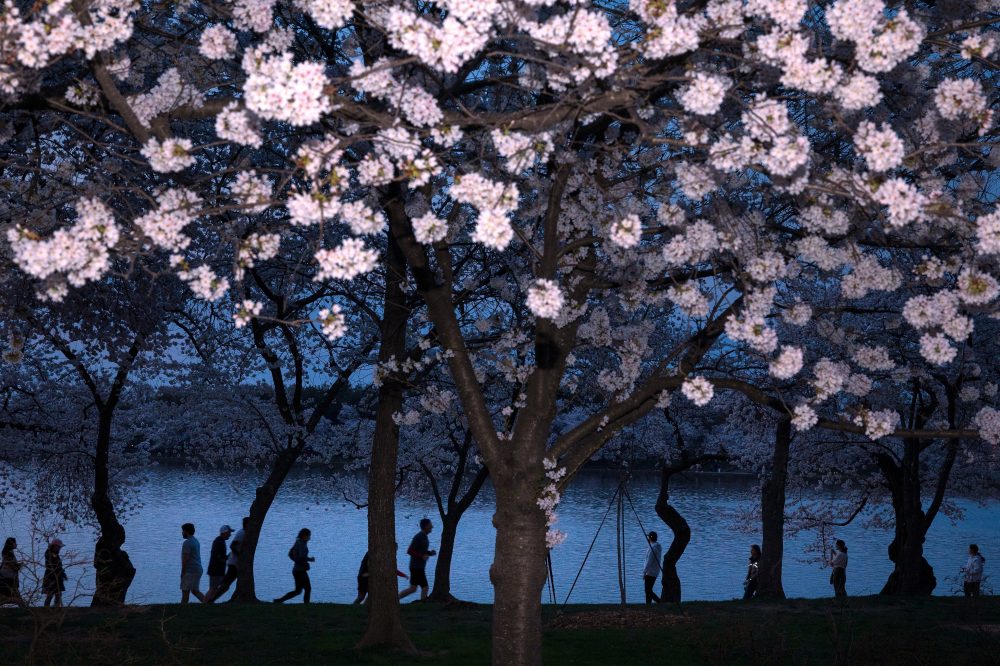

Spring has officially arrived in the nation’s capital as Washington D.C.’s iconic cherry trees have reached their peak flowering stage, bringing delicate pink blooms to a city typically dominated by stone buildings and political gravitas.
Thousands of cherry trees throughout D.C. have now opened their temporary blossoms, signaling the start of the city’s busy tourism period. However, visitors should act quickly, as these fragile flowers are vulnerable to changing weather conditions.
The National Park Service, responsible for maintaining 3,500 cherry trees citywide, determines peak bloom when 70% of Yoshino Cherry flowers have opened. This year’s timing aligns perfectly with the typical schedule, which usually occurs during late March through early April, though dates have ranged from March 15 to April 18 in previous years.
Beyond the natural display, the month-long National Cherry Blossom Festival started March 20 and continues until April 12, featuring live music, Japanese cultural activities, and fireworks shows.
Festival officials report that last year’s events attracted over 1.6 million international visitors, while their online bloom camera received more than 2.3 million views.
Weather conditions remain crucial for viewing opportunities. The Park Service notes that Yoshino trees generally flower for only a few days, with optimal conditions being cool and calm weather.
A single day of rain or strong winds can quickly end the brief pink display around the Tidal Basin and other locations, stripping away all the petals.
Fortunately, no late frost occurred this season, which could have prevented the trees from blooming entirely.
These celebrated cherry trees originated from a 1912 donation of 3,000 trees from Tokyo’s mayor, and Japan continues participating in their maintenance and festival activities.
In 2024, Fumito Miyake, minister for public affairs at the Japanese Embassy, announced his government’s contribution of 250 additional trees as a “birthday present” ahead of this summer’s 250th anniversary celebration of American independence.
Visitors this year face some viewing limitations at the Tidal Basin, where the most concentrated tree groupings exist. The National Park Service is conducting a three-year seawall restoration project in preparation for the summer anniversary, leaving portions of the basin blocked off.
The renovation required removing over 100 trees, which will be replanted after construction completion.
Fans of “Stumpy” — the twisted tree that gained internet fame — cannot visit their beloved landmark this year. Stumpy was among the trees removed for renovations, though cloned versions await planting once work concludes.
Organizers added a special memorial pedal-boat race last year to celebrate the city’s most recognizable tree.