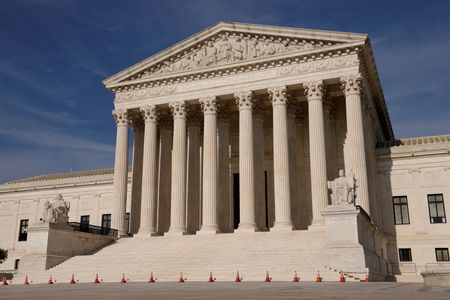

The nation’s highest court revealed Tuesday it has implemented automated technology designed to flag potential ethical conflicts among the nine justices, who maintain the final say on whether to remove themselves from cases.
Developed by the court’s IT department working alongside other staff members, this new system will cross-reference details about attorneys and case participants with information supplied by each justice’s chambers, according to a court representative.
Court officials described these “automated recusal checks” as an addition to current methods justices use when evaluating possible conflicts of interest.
Last year, the Supreme Court established its inaugural formal ethics guidelines governing justice behavior. However, critics highlighted the lack of enforcement tools and the continued practice allowing individual justices to personally determine whether to recuse themselves from cases.
According to the court’s ethical standards, justices must step aside from cases where their “impartiality might reasonably be questioned.”
Supporting this technological upgrade, the court announced enhanced documentation standards for certain legal filings, requiring more comprehensive listings of case participants and applicable stock symbols when appropriate. These updated filing rules become effective March 16.
Gabe Roth from Fix the Court advocacy organization described the announcement as “somewhat positive,” while expressing his broader concerns about justices maintaining stock portfolios during their service.
“The court wrote at the end of the code that it would ‘undertake an examination of best practices’ on judicial ethics, and the use of conflict-check software is a best practice,” Roth said, noting software-based checks have long been used by lower courts.