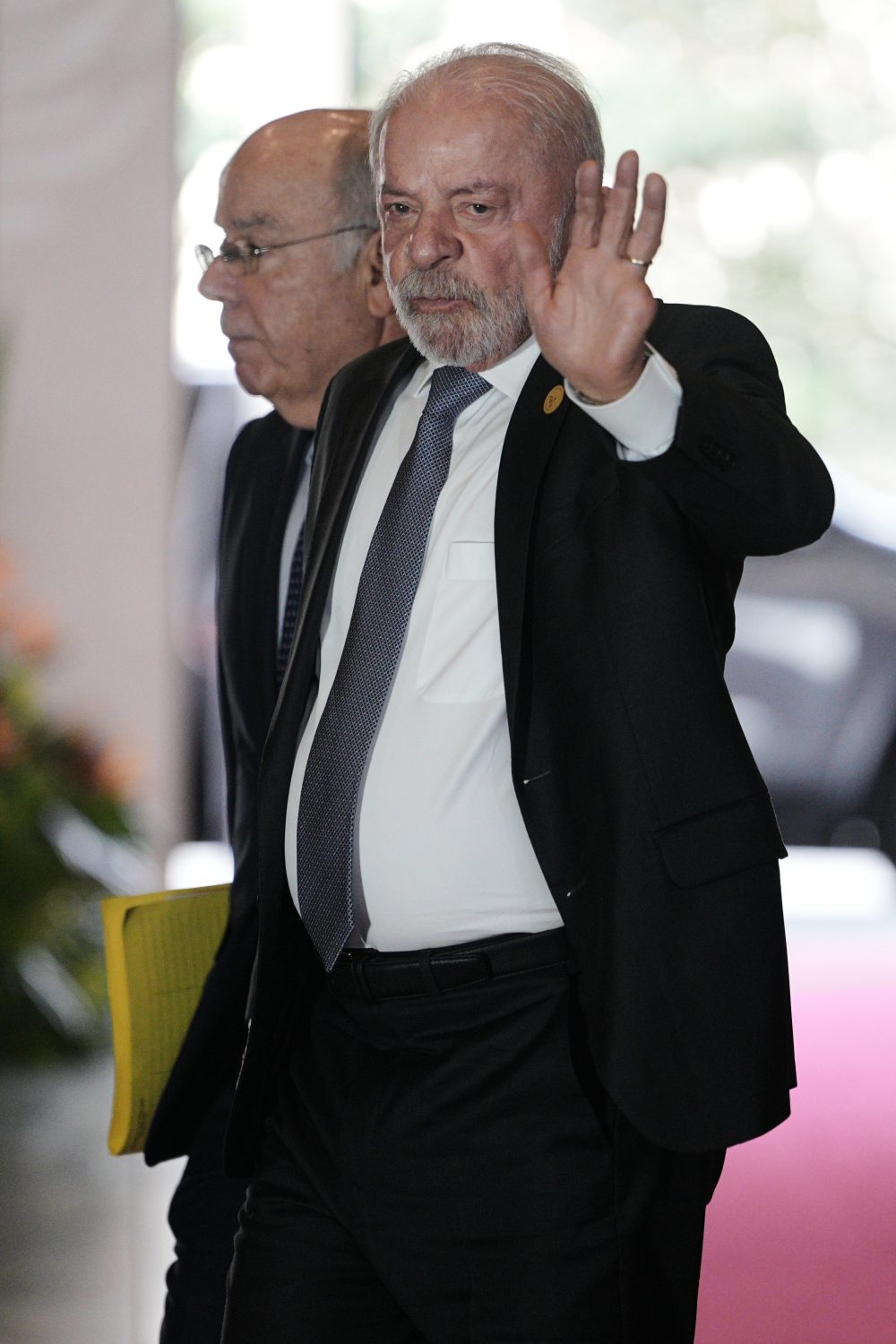

BOGOTA, Colombia — During a weekend summit in Colombia, Brazilian President Luiz Inácio Lula da Silva denounced what he characterized as a revival of colonial-style interference in developing nations, specifically referencing the capture of former Venezuelan leader Nicolás Maduro and ongoing restrictions against Cuba.
Speaking at a high-level gathering that included African delegates and members of the Community of Latin American and Caribbean States, Lula appeared to target U.S. regional policies without directly mentioning the country. “It’s not possible for someone to think that they own other countries,” Lula declared. “What are they doing with Cuba now? What did they do with Venezuela? Is that democratic?”
The leftist leader also condemned military action by the U.S. and Israel against Iran that began February 28, drawing comparisons to the Iraq conflict. “Iran has been invaded under the pretext that Iran was building a nuclear bomb. Where are Saddam Hussein’s chemical weapons? Where are they? Who found them?” he questioned.
Addressing the assembled nations, Lula noted that all present countries had previously suffered exploitation of their natural resources including gold, silver, diamonds and other minerals. He warned that unnamed powers now seek control over critical minerals and rare earth elements. “After taking everything we had, now they want to own the critical minerals and rare earths that we have,” Lula stated. “They want to colonize us again.”
The United States has a lengthy record of regional intervention dating to President James Monroe’s declaration over two centuries ago claiming the hemisphere as America’s sphere of influence. Though major overt U.S. involvement decreased following the Cold War, recent Trump administration actions have revived these concerns.
Since taking office last year, Trump has authorized maritime operations against suspected Caribbean drug traffickers, implemented a naval embargo on Venezuelan oil shipments, and intervened in electoral processes in Honduras and Argentina.
Regarding Brazil specifically, Trump imposed a 50% tariff on Brazilian products last year, citing what he called a ‘witch hunt’ prosecution of former president Jair Bolsonaro. The U.S. has also expressed significant interest in Brazil’s rare earth mineral reserves.
Most recently, on January 3, U.S. forces apprehended Venezuelan leader Nicolás Maduro, transporting him to America to face drug trafficking and weapons charges.
While these measures have pleased right-wing leaders throughout the region, they have sparked alarm among leftist politicians who view them as American intimidation tactics.
“We cannot allow anyone to interfere and violate the territorial integrity of each country,” Lula emphasized Saturday.
The Brazilian president, who has announced plans to seek a fourth non-consecutive term in October’s elections, also criticized the United Nations for its inability to resolve ongoing global conflicts.
“What we are witnessing is the total and absolute failure of the United Nations,” Lula said, citing situations in Gaza, Ukraine and Iran while renewing calls for Security Council reforms.
The Security Council holds responsibility under the U.N. Charter for maintaining international peace and security, yet has proven ineffective in major conflicts due to veto authority held by five permanent members: the United States, Russia, China, Britain and France.
Reform efforts spanning decades have attempted to update the Security Council to reflect current geopolitical realities rather than the post-World War II landscape from 80 years ago when the United Nations formed. All such attempts have failed.
Colombian President Gustavo Petro, whom the U.S. Drug Enforcement Administration has labeled a “priority target,” supported Lula’s criticism of the United Nations.
The organization “is acting in impotence, and that is not what it was created for. It was created after World War II precisely to prevent wars. And yet, what we have today is war,” Petro observed.
However, Petro emphasized the world’s need for U.N. leadership on climate initiatives and global warming prevention. “The more serious humanity’s problems become, the fewer tools we have for collective action. And that path leads only to barbarism.”
Petro criticized U.S. Secretary of State Marco Rubio for promoting Western civilization and called for diplomatic dialogue instead.
The Colombian summit saw limited attendance from Latin American and Caribbean leaders, reflecting the region’s significant political divisions.
Attendees included presidents from Brazil, Uruguay, Burundi and Colombia, along with prime ministers from Guyana and Saint Vincent and the Grenadines, plus various deputy ministers, foreign ministers, and ambassadors.