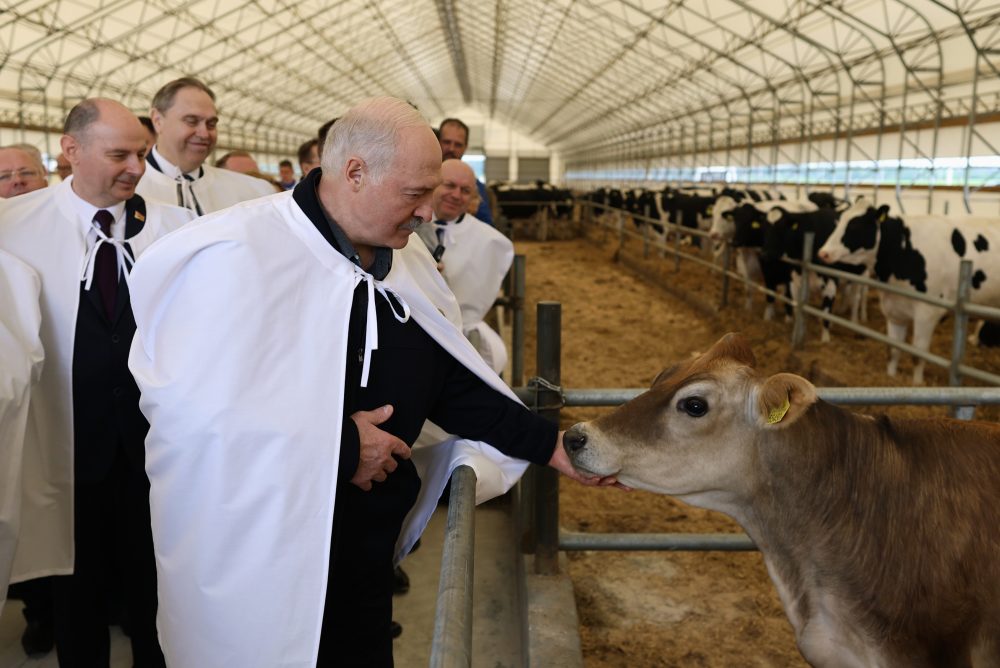

TALLINN, Estonia — Belarusian President Alexander Lukashenko signed a pardon Wednesday for 28 political prisoners, a move aimed at warming his country’s strained relationship with the West.
The pardon was announced through a presidential decree tied to Belarus’ Independence Day, which falls on Friday. The 28 individuals had been serving sentences for what Belarusian authorities labeled “extremist crimes” — a broad classification the government has routinely applied to those who speak out against the regime. The decree cited “humanitarian” reasons for the release.
Lukashenko has governed the nation of 9.5 million people with a tight grip for over 30 years. Western countries have imposed repeated rounds of sanctions on Belarus, citing both its suppression of human rights and its decision to allow Russia to launch its full-scale invasion of Ukraine from Belarusian soil in 2022.
His hold on power was severely tested following a disputed 2020 presidential election that drew hundreds of thousands of protesters into the streets. Authorities responded with a sweeping crackdown — detaining tens of thousands, with many beaten by police, while leading opposition voices either fled the country or were imprisoned. Despite that turbulent period, Lukashenko secured a seventh term last year in an election the opposition dismissed as illegitimate.
Since U.S. President Donald Trump returned to office, Lukashenko has freed hundreds of political detainees through a series of deals brokered with U.S. involvement, some of which have resulted in the easing of American sanctions.
A March agreement, facilitated by Washington, resulted in the release of 250 political prisoners. In return, the U.S. agreed to lift sanctions on two Belarusian state banks and the country’s Finance Ministry, and removed leading Belarusian potash producers from its sanctions list. Then in April, prominent journalist Andrzej Poczobut was freed as part of a swap with Poland that released a total of 10 people.
Even so, the Viasna human rights center reports that 864 political prisoners — among them 21 journalists — remain locked up in Belarus.
A report released earlier this week by Nils Muižnieks, the United Nations special rapporteur on human rights in Belarus, cautioned that the release of several hundred prisoners over the past year has not translated into any broader improvement in the country’s human rights conditions. “Sustainable progress requires an end to politically motivated repression and accountability for past violations,” he stated.
Sviatlana Tsikhanouskaya, the Belarusian opposition leader living in exile, told The Associated Press that while the latest pardons will bring comfort to the families of those freed, “we mustn’t forget that hundreds of political prisoners remain in Belarusian jails, and all of them must be released.”