
Each swimming session leaves traces of sunscreen behind in the water, creating an environmental concern for marine ecosystems.
Research published in Environmental Health Perspectives reveals that roughly one-quarter of applied sunscreen rinses away during water recreation, depositing approximately 5,000 tons yearly into coral reef regions worldwide. This amount equals the mass of roughly 1,000 elephants, with many of these compounds proving harmful to coral organisms. Some scientists believe this figure underestimates the actual impact, since the research didn’t account for additional friction from swimming motions that could increase chemical runoff.
Despite occupying merely 0.1% of ocean space, coral reefs provide habitat for roughly 25% of marine life. These ecosystems already face pressure from rising ocean temperatures, contamination, excessive fishing, and shoreline construction. Now they confront another challenge from sunscreen compounds that harm young corals, cause bleaching events, and interfere with normal development. While researchers acknowledge this represents a lesser threat compared to climate change, it’s one that individuals can directly influence.
The contamination extends beyond direct swimming contact. Sunscreen ingredients reach waterways through post-beach showers, towel washing, and human waste. Sewage systems represent the primary pathway for sunscreen pollution entering oceans, since standard treatment facilities cannot effectively eliminate most UV-blocking compounds. These substances travel from wastewater plants through rivers before reaching marine environments.
Though sunscreen protection prevents burns and lowers skin cancer rates, different formulations create varying environmental impacts.
The most compelling evidence of damage involves oxybenzone and octinoxate, two commonly used chemical UV blockers. Research from 2016 in Archives of Environmental Contamination and Toxicology demonstrated that oxybenzone converts healthy, swimming coral larvae into malformed, motionless specimens. This compound forces corals to reject the algae that supply most of their nutrition and coloration, creating a stress reaction called bleaching. Bleached corals become weakened, more susceptible to illness, and may starve or perish if harsh conditions continue. Scientists also discovered that oxybenzone harms DNA and causes early skeleton development that can trap entire larvae. The chemical can trigger bleaching at reduced temperatures, amplifying damage from ocean warming caused by climate change.
This substance becomes harmful at levels as minimal as 62 parts per trillion, comparable to a single drop in six Olympic swimming pools. At Hanauma Bay, a well-known Hawaii diving location, roughly 2,600 daily guests deposited about 412 pounds of sunscreen into ocean waters each day, based on 2017 research by the Haereticus Environmental Laboratory nonprofit.
Scientists express increasing worry about octocrylene, avobenzone, and homosalate as well.
These compounds spread throughout marine systems. UV-blocking ingredients have been found in fish and other ocean creatures, creating concerns about seafood consumption safety.
“We measured the level of oxybenzone in locally caught fish. It was scary,” said Craig Downs, executive director of nonprofit Haereticus Environmental Laboratory, who led the 2016 study. “These chemicals move through the food chain, then we eat it.”
Zinc oxide and titanium dioxide represent generally safer options compared to chemical UV blockers, though they require careful consideration. Specialists recommend non-nano versions, since larger particles prove less likely to be breathed in or absorbed by marine creatures.
Zinc oxide may contain small amounts of heavy metal contaminants including lead, chromium, and mercury, Downs explained, while few products have received thorough environmental safety evaluation.
Buyers should also examine inactive components, as oils, scents, and other additives can damage marine ecosystems.
Certain mineral sunscreen companies include UV filters like butyloctyl salicylic acid and ethylhexyl methoxycrylene to maintain SPF effectiveness in zinc oxide products, which Downs has connected to possible cancer dangers and coral harm.
Specialists suggest using protective clothing, swim shirts, headwear, and shade structures.
“If you put on a rash guard or long sleeve swim shirt, you basically cover up 50% of your body, which means you don’t need 50% of the sunscreen,” Downs said. “From a conservation perspective, that’s a massive win.”
When sunscreen becomes necessary, choose products containing non-nano zinc oxide or titanium dioxide as primary ingredients. While studies continue examining how these minerals affect marine settings, most experts prefer them over chemical UV blockers.
Although mineral sunscreens historically leave white residue, newer versions provide more transparent coverage.
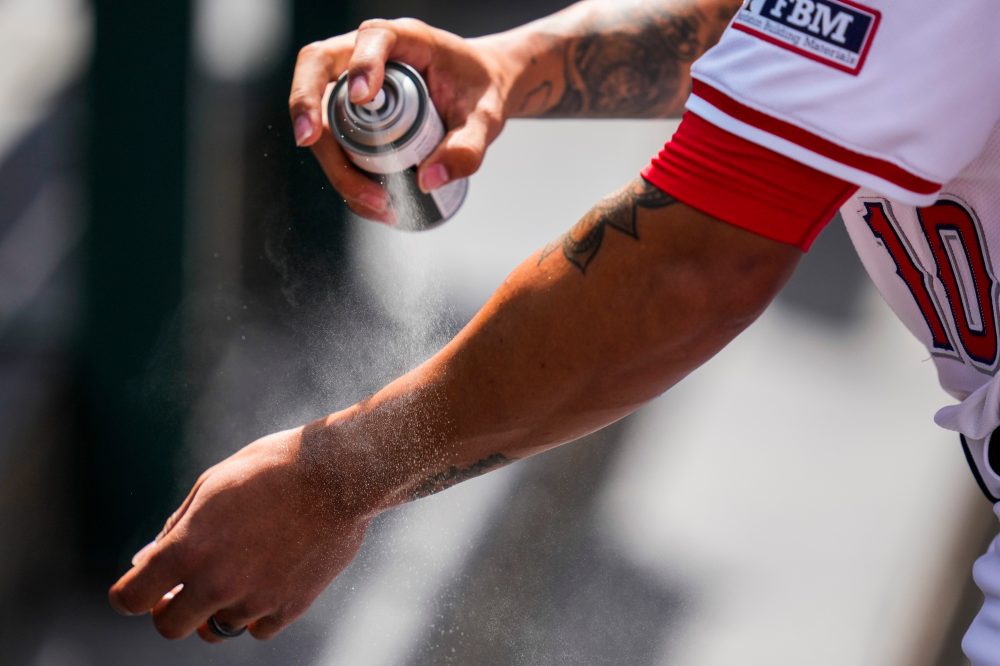
Specialists also suggest avoiding spray applications, which can scatter sunscreen particles into air and nearby areas. Allowing at least 15 minutes after application before entering water helps the product bond with skin instead of immediately washing away.
Hawaii became the initial U.S. state in 2018 to ban sales of sunscreens containing oxybenzone and octinoxate, referencing their coral reef damage. Key West, Florida, has implemented comparable restrictions. Palau and the U.S. Virgin Islands have established broader prohibitions covering additional chemicals associated with reef harm.
Outside these restrictions, the market remains mostly uncontrolled. Terms like “reef safe” or “reef friendly” lack universal meaning or criteria.
“People can just write whatever they want on a bottle, and there’s no validation, no testing, no standardization,” said Michael Sweet, head of the Nature-based Solutions Research Centre and the Aquatic Research Facility at the University of Derby in England.
During laboratory testing, some products “have decimated corals before my very eyes,” he said. “When you see that, you wonder what’s being put into our oceans on a daily basis, from shampoos, skin care, conditioners and shower gels. All this stuff goes into our rivers and ultimately our oceans.”
Several independent verification programs have developed to assist consumer choices. Protect Land + Sea represents one certification created by Downs’ laboratory that confirms products exclude ingredients like oxybenzone, octinoxate, and parabens. Experts point out that ingredient screening provides value, though it differs from complete ecological safety assessment of entire formulations.
“Reefs are being hammered left, right and center,” Sweet said. “Every little bit we can do tips the balance a little bit further up and hopefully gives them that bit of a fighting chance.”