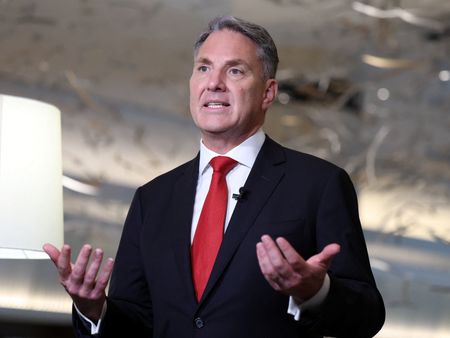

Australia’s defense minister criticized China’s choice to dispatch only university researchers and military academics to Asia’s premier defense conference, calling it a wasted chance for meaningful dialogue during a period when regional nations seek greater clarity about Beijing’s military intentions.
Richard Marles, Australia’s defense minister, made the comments before the start of the three-day Shangri-La Dialogue conference in Singapore on Friday. He described the gathering as an exceptional forum for defense officials and policy experts worldwide to share perspectives and build diplomatic connections.
“We’ve seen China engage in the biggest conventional military buildup in the world since the end of the Second World War, and that has not happened with a strategic reassurance for other countries,” Marles told Reuters in an interview.
China’s Defense Minister Dong Jun chose not to attend the conference for the second consecutive year. Beijing announced plans to send a team composed primarily of military scholars and academic experts from the People’s Liberation Army instead of senior government officials.
The conference will feature Marles alongside U.S. Defense Secretary Pete Hegseth, Japanese Defence Minister Shinjiro Koizumi, and defense leaders from France, Britain, Malaysia, the Philippines and additional countries.
“(China’s) presence is something that we welcomed in the past, and having opportunities to engage with China are important,” Marles said.
The Australian official explained that his country continues building defense partnerships throughout the Asia-Pacific region, while maintaining its strategic alliance with America as the foundation of Australia’s security framework.
Addressing concerns about potential American distraction from Asian affairs due to conflicts involving Iran, Marles stated: “We see that America remains very committed to the Indo-Pacific, and from our point of view, our alliance with the United States is absolutely fundamental to our national security.”
“The global rules-based order is under pressure in the Indo-Pacific,” he added, referring to the international system of shared laws, agreements, and institutions established after World War Two.
“This is a moment in time where we are looking to all the relationships that we have around the world, where we have common ground and where we can work together and where we can, we do.”
Marles, Hegseth and British defence minister John Healey have scheduled an announcement on Saturday regarding their AUKUS project, through which Australia will obtain nuclear-powered submarines.
While Marles refused to provide specifics, news outlets have reported the three nations are preparing to reveal substantial cooperation on unmanned underwater vehicles.