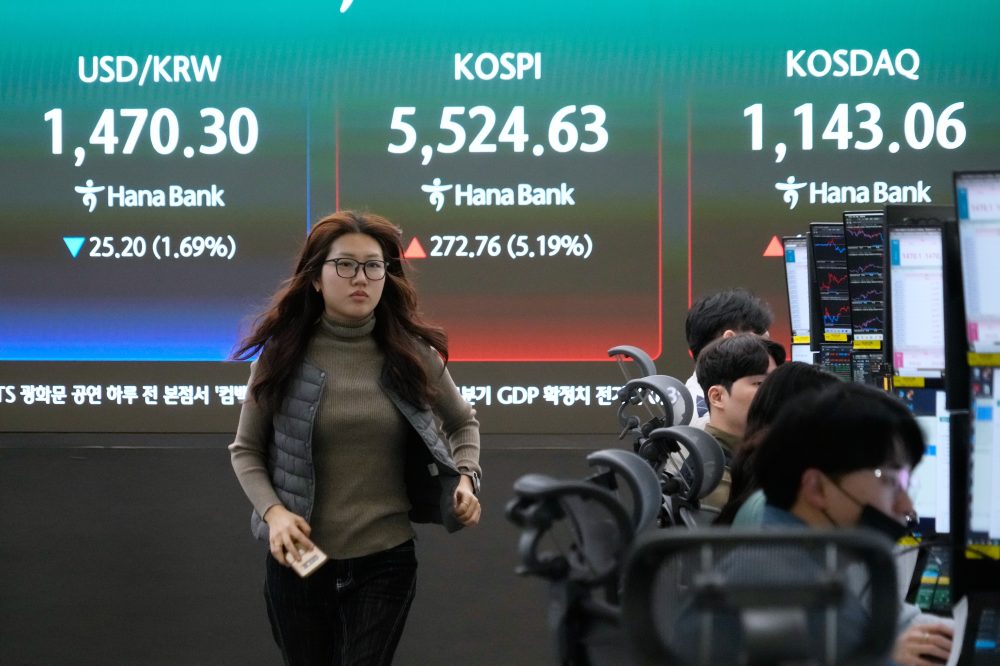

Stock markets across Asia posted solid gains Tuesday while investors closely monitored developments in the Iran conflict for indications of when hostilities might conclude.
U.S. market futures and crude oil prices both moved upward during trading.
Japan’s Nikkei 225 index climbed 2.1% to reach 55,387.75, while South Korea’s Kospi jumped dramatically by 3.5% to 5,724.30.
Hong Kong’s Hang Seng index posted a modest 0.3% increase to 26,039.23, and China’s Shanghai Composite index edged up slightly by 0.1% to 4,127.34.
Australia’s S&P/ASX 200 increased 0.5% to $8,738.50.
Taiwan’s main stock index surged 3.9%.
Meanwhile, U.S. markets showed mixed results Tuesday, with the S&P 500 declining 0.2% to 6,781.48, following a day of dramatic fluctuations driven by extreme oil market movements. The Dow Jones Industrial Average dropped 34 points, or 0.1%, closing at 47,706.51, while the Nasdaq composite managed a slight gain of less than 0.1% to 22,697.10.
Crude oil prices continued trading well below Monday’s peak levels. These dramatic price swings have created turbulence in financial markets globally due to concerns that the conflict might disrupt international oil and natural gas supplies for an extended period.
In early Wednesday trading, Brent crude oil, which serves as the international benchmark, increased 9 cents to $85.36 per barrel. This represents an 11% decline from the previous day’s closing price.
U.S. benchmark crude gained 36 cents to reach $83.81 per barrel.
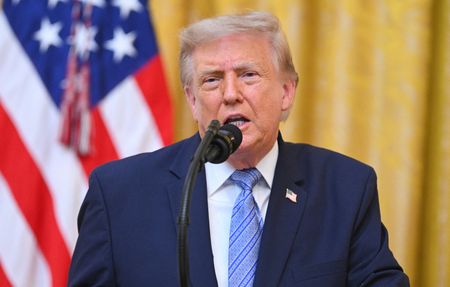
Oil markets experienced a dramatic drop Monday afternoon from nearly $120 per barrel, the highest price point since 2022, following President Donald Trump’s comments to CBS News that he believes “the war is very complete, pretty much.” These remarks sparked optimism that the conflict could end soon, potentially restoring normal oil shipments from Middle Eastern producers to global customers.
Despite this, tensions have escalated as the conflict enters its 11th day. U.S. Defense Secretary Pete Hegseth announced plans for the most aggressive strikes to date, while Pentagon officials provided details about the expanding number of injuries among American military personnel.
American forces reported destroying more than a dozen Iranian mine-laying vessels Tuesday, prompting Iran to threaten a complete blockade of regional oil exports, declaring it would prevent “even a single liter” from reaching enemy nations.
President Trump has consistently emphasized his commitment to maintaining access through the Strait of Hormuz. The ongoing conflict has effectively shut down this critical waterway along Iran’s coastline, through which approximately 20% of global oil typically passes daily.
“If Iran does anything that stops the flow of Oil within the Strait of Hormuz, they will be hit by the United States of America TWENTY TIMES HARDER than they have been hit thus far,” Trump wrote on his social media platform late Monday.
Historical data shows stock markets typically recover fairly quickly from military conflicts, provided oil prices don’t remain elevated for extended periods. Uncertainty about the duration of current price levels has caused dramatic market volatility worldwide, with significant fluctuations occurring even within single trading sessions.
Extended high oil prices could severely impact household budgets already strained by inflation. Businesses would face increased costs for fuel and inventory transportation to retail locations and distribution centers. This scenario raises concerns about “stagflation,” an economic condition combining stagnant growth with persistent high inflation.
In currency markets early Wednesday, the dollar strengthened to 158.26 Japanese yen from 158.23 yen. The euro gained ground against the dollar, rising to $1.1625 from $1.1610.